Emerging Technologies: Tracking the Top 3 Innovations Set to Disrupt US Gaming in the Next 12 Months.
The United States gaming market, a colossal industry generating billions in revenue annually, is perpetually on the brink of its next big leap. Driven by an insatiable appetite for innovation and increasingly sophisticated player demands, the landscape of digital entertainment is anything but stagnant. As we peer into the next 12 months, a trifecta of groundbreaking technologies is not merely knocking on the door but is set to fundamentally reshape the very fabric of US Gaming Innovation. These aren’t just incremental upgrades; they are foundational shifts that promise to redefine player engagement, ownership, and accessibility.

How would you like to receive it?
Select the option that suits you best.
From hyper-personalized experiences driven by artificial intelligence to the revolutionary implications of true digital ownership through blockchain, and the ubiquitous access promised by advanced cloud gaming, the future of play is accelerating at an unprecedented pace. This article will delve deep into these three transformative forces, exploring their current state, their potential impact, and what both developers and players can expect as they become increasingly integrated into the mainstream gaming experience. Understanding these trends is not just about staying informed; it’s about anticipating the next frontier of interactive entertainment.
1. Artificial Intelligence (AI): The Brains Behind the Next-Gen Gaming Experience
Artificial Intelligence has long been a part of gaming, primarily in the form of NPC (Non-Player Character) behavior and procedural generation. However, the AI we’re discussing now is a beast of an entirely different nature. We’re talking about advanced machine learning, deep learning, and neural networks that are moving beyond scripted responses to create truly dynamic, adaptive, and personalized gaming worlds. This evolution of AI is poised to be a cornerstone of US Gaming Innovation in the coming year.
Dynamic NPCs and Adaptive Storylines
Imagine NPCs that don’t just follow a pre-programmed script but learn from your playstyle, adapt their strategies, and even develop unique personalities based on your interactions. This is the promise of advanced AI. Game developers are leveraging AI to create more believable and engaging characters, from allies who remember your past deeds to enemies who learn your combat patterns and exploit your weaknesses. This elevates the challenge and immersion, making every playthrough feel unique.
Beyond individual characters, AI is beginning to influence narrative structures. Instead of linear or branching storylines, we could see games where the plot dynamically shifts based on player choices, emergent gameplay, and even emotional responses detected from the player. This level of adaptive storytelling could lead to infinitely replayable games, where the player truly feels like the architect of their own adventure. For the US Gaming Innovation landscape, this means a significant leap in narrative complexity and player agency.
Procedural Content Generation on Steroids
Procedural generation has given us vast, sprawling worlds in games like No Man’s Sky. With advanced AI, this concept is taken to a whole new level. AI algorithms can analyze successful game design principles, player preferences, and even real-world geographical data to generate not just landscapes, but entire quests, puzzles, and environmental details that are both novel and coherent. This significantly reduces the manual development time for vast game worlds and ensures a fresh experience for players.
The beauty of AI-driven procedural generation lies in its ability to maintain quality and consistency while offering endless variety. This means more content, faster development cycles, and a constantly evolving game world that keeps players engaged for longer. This aspect is particularly exciting for the future of US Gaming Innovation, as it allows for greater experimentation and scale.
Personalized Gaming Experiences and Accessibility
AI’s ability to analyze vast amounts of data about player behavior opens up incredible opportunities for personalization. This could range from dynamically adjusting difficulty levels based on individual skill, suggesting new content or games tailored to a player’s tastes, or even dynamically altering game mechanics to suit cognitive or physical accessibility needs. Imagine a game that intuitively understands if you prefer stealth over combat and subtly adjusts encounters accordingly, or one that adapts its interface for players with visual impairments without needing manual settings. This focus on individual player experience is a major driver of US Gaming Innovation.
Furthermore, AI can power sophisticated anti-cheat systems that learn and adapt to new cheating methods, creating a fairer competitive environment. It can also enhance customer support through intelligent chatbots that can resolve common issues, freeing up human staff for more complex problems. The implications for player satisfaction and retention are immense.
The integration of AI in game development is not without its challenges. Ethical considerations around data privacy, potential biases in algorithms, and the need for human oversight remain crucial. However, the potential for AI to create more immersive, dynamic, and accessible gaming experiences is undeniable, making it a pivotal force in the next wave of US Gaming Innovation.
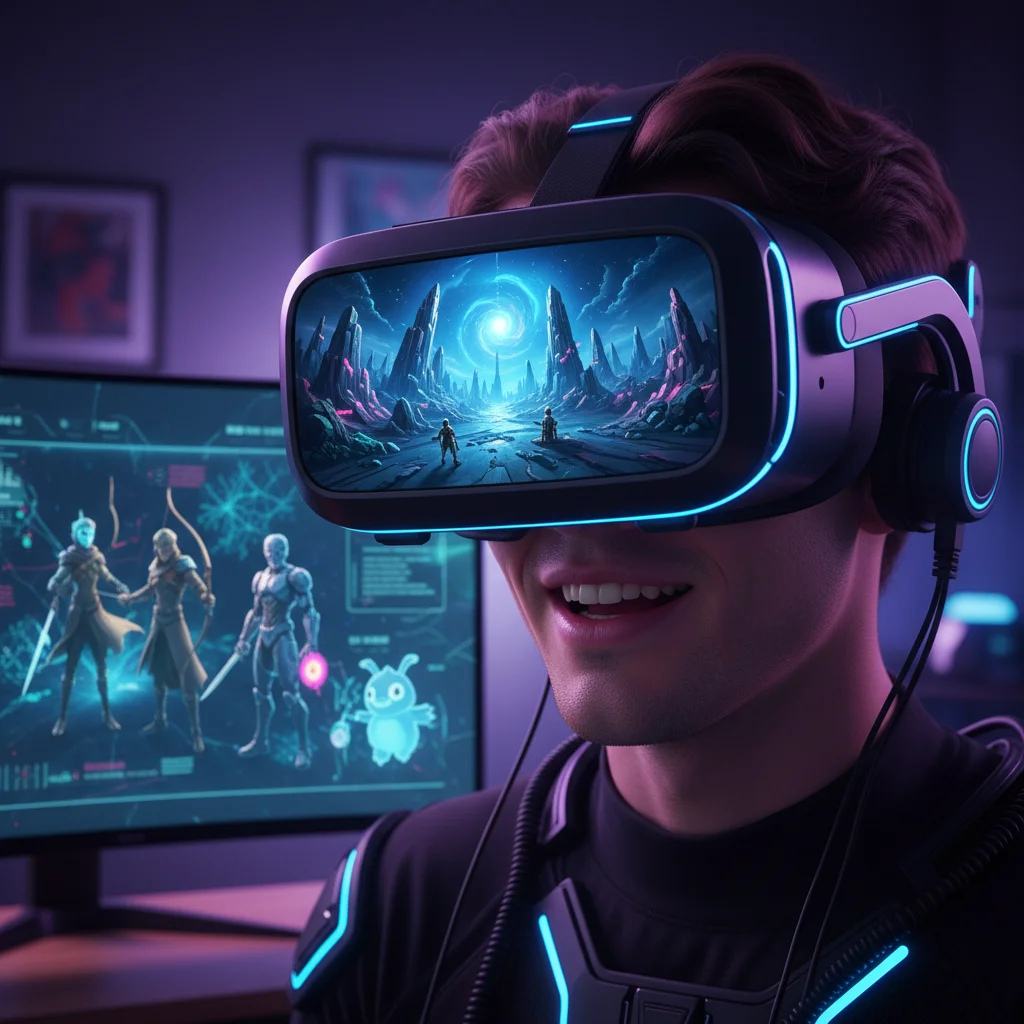
2. Blockchain Technology: Redefining Ownership and Economy in Gaming
Blockchain technology, often associated with cryptocurrencies, is rapidly finding its footing in the gaming world, promising a paradigm shift in how players interact with and own their digital assets. While still in its nascent stages for mainstream adoption, the next 12 months will see significant strides in blockchain’s integration into US Gaming Innovation, particularly concerning digital economies and player empowerment.
True Digital Ownership (NFTs)
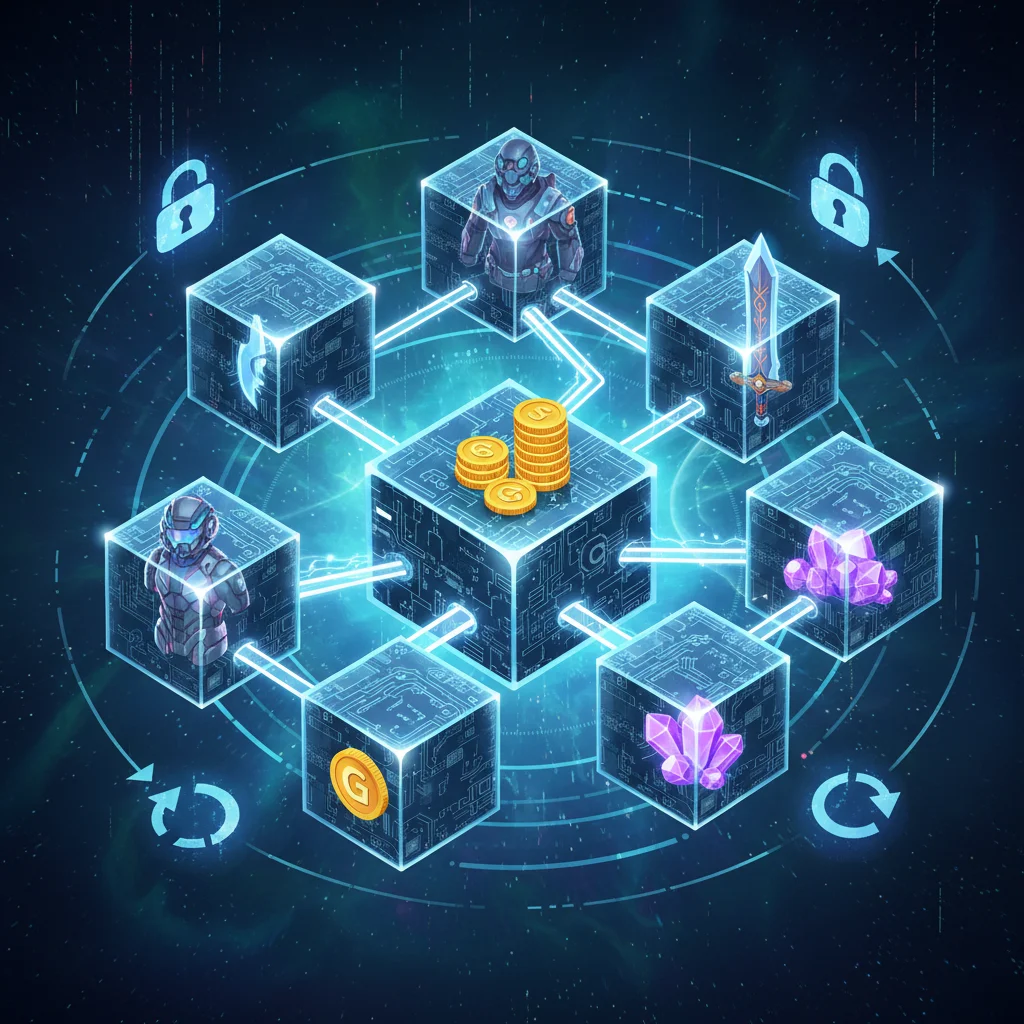
One of the most talked-about applications of blockchain in gaming is Non-Fungible Tokens (NFTs). NFTs allow for true, verifiable digital ownership of in-game items, characters, skins, and even virtual land. Unlike traditional in-game items, which are essentially licenses granted by the game developer, NFTs are unique digital assets stored on a blockchain, meaning players truly own them.
This ownership opens up a world of possibilities: players can buy, sell, and trade these assets on open marketplaces, potentially even transferring them between different games (if interoperability standards are established). This creates a real-world economy within games, where the time and effort invested by players can translate into tangible value. For the US Gaming Innovation market, this represents a massive shift from a consumer model to a participant-owner model.
Play-to-Earn (P2E) Models
Building on the concept of true ownership, Play-to-Earn (P2E) games are gaining traction. These models reward players with cryptocurrency or NFTs for their in-game achievements, participation, or contributions to the game’s ecosystem. Players can then sell these rewards on the open market, effectively earning real income by playing games. While early P2E models faced criticism for their sustainability and game design, newer iterations are focusing on creating compelling gameplay first, with the P2E aspect as a bonus.
The potential for P2E to democratize access to economic opportunities, particularly in emerging markets, is significant. In the US, it offers new avenues for players to monetize their skills and time, adding another layer of engagement to the gaming experience. This innovative economic model is a key component of US Gaming Innovation.
Decentralized Autonomous Organizations (DAOs) in Gaming
Beyond individual assets, blockchain can empower players through Decentralized Autonomous Organizations (DAOs). A gaming DAO allows players to collectively own and govern aspects of a game, from voting on future development decisions and content updates to managing community treasuries. This shifts power from centralized developers to the community, fostering a more transparent and player-centric development process.
Imagine a game where players vote on the next character class, the balance changes for certain weapons, or even how marketing funds are spent. This level of community involvement can lead to stronger, more engaged player bases and games that truly reflect the desires of their audience. While still experimental, DAOs represent a powerful tool for US Gaming Innovation in community building and governance.
Challenges for blockchain in gaming include scalability issues, regulatory uncertainties, environmental concerns related to energy consumption (though many new blockchains are addressing this), and the need for user-friendly interfaces. Despite these hurdles, the promise of true ownership, new economic models, and community governance makes blockchain a technology that will undoubtedly leave its mark on US Gaming Innovation in the coming year.
3. Advanced Cloud Gaming: Gaming Without Limits
Cloud gaming, or game streaming, isn’t a new concept, but its maturation and widespread adoption are set to reach critical mass in the next 12 months, profoundly impacting US Gaming Innovation. Services like Xbox Cloud Gaming, GeForce Now, and PlayStation Plus Premium are continually refining their offerings, making high-fidelity gaming accessible to a broader audience than ever before.
Ubiquitous Accessibility
The core promise of cloud gaming is simple: play any game, anywhere, on almost any device, without the need for expensive hardware. By offloading the processing power to remote servers, cloud gaming eliminates the barrier of entry for many potential gamers. A high-end gaming PC or console is no longer a prerequisite; a stable internet connection and a basic device (smartphone, tablet, smart TV, or low-spec laptop) are sufficient.
This expands the gaming market exponentially, bringing AAA titles to demographics that might not have invested in dedicated gaming hardware. For US Gaming Innovation, this means a larger potential player base and new opportunities for developers to reach audiences previously inaccessible. The ability to seamlessly switch between devices without losing progress further enhances the convenience and appeal.
Reduced Latency and Enhanced Performance
Early cloud gaming suffered from noticeable input lag and visual artifacts. However, advancements in networking infrastructure (especially 5G), server technology, and compression algorithms are significantly mitigating these issues. Data centers are becoming more localized, reducing the physical distance data needs to travel, and sophisticated software is optimizing the streaming experience to near-native performance levels.
While competitive esports players might still prefer local hardware for absolute minimal latency, the average gamer will find the experience increasingly indistinguishable from local play. This improvement in performance is crucial for the widespread adoption and success of cloud gaming as a pillar of US Gaming Innovation.
Subscription Models and Game Discovery
Cloud gaming services often come bundled with extensive game libraries under a subscription model. This ‘Netflix for games’ approach offers incredible value to players, allowing them to try a vast array of titles without individual purchases. This fosters game discovery, as players are more likely to experiment with genres or games they might not have otherwise considered.
For game developers and publishers, this presents a new distribution channel and revenue stream. While it shifts the purchasing model, it also offers exposure to a wider audience and potentially longer engagement with titles. The rise of these subscription models is a significant trend in US Gaming Innovation, influencing how games are monetized and consumed.
The challenges for cloud gaming primarily revolve around internet infrastructure – a reliable, high-speed connection is still paramount. Data caps and regional disparities in broadband access can hinder its full potential. However, as global internet infrastructure continues to improve, and as more companies invest in dedicated cloud gaming solutions, its impact on accessibility and the democratization of gaming will only grow, solidifying its place as a top disruptor in US Gaming Innovation.
The Confluence of Technologies: A Synergistic Future
While we’ve discussed AI, blockchain, and advanced cloud gaming as distinct disruptive forces, their true power lies in their potential for synergy. Imagine a game streamed via the cloud, where AI generates dynamic quests and adapts enemy behavior in real-time, and where every unique item you earn is an NFT that you truly own and can trade on a blockchain-powered marketplace. This interconnected future is where the most profound US Gaming Innovation will occur.
AI-Enhanced Cloud Gaming
AI can play a crucial role in optimizing cloud gaming performance. Machine learning algorithms can predict network congestion, dynamically adjust streaming quality, and even pre-load game segments based on anticipated player actions, further reducing latency and improving the seamlessness of the experience. This intelligent management of resources will be key to scaling cloud gaming effectively.
Blockchain for Cloud Gaming Economies
Integrating blockchain with cloud gaming can create secure, transparent, and player-owned economies within streamed titles. Players could earn NFTs or cryptocurrency through cloud-streamed games, and these assets could be managed and traded without ever needing to download the game locally. This combination offers both accessibility and true digital ownership, a potent mix for US Gaming Innovation.
AI and Blockchain for Content Creation and Curation
AI could assist in the creation of blockchain-based assets, generating unique NFT designs or even entire virtual worlds that are then tokenized. Blockchain, in turn, could provide a transparent and immutable record of AI-generated content, ensuring provenance and ownership for creators. This convergence could unlock new models for user-generated content and creative economies within games, pushing the boundaries of US Gaming Innovation.
Impact on the US Gaming Industry Landscape
These emerging technologies will have far-reaching consequences across the entire US gaming ecosystem. Developers will need to adapt their pipelines, embracing new tools and design philosophies. Publishers will explore new monetization strategies and community engagement models. Hardware manufacturers may shift focus from raw processing power to optimized peripherals and robust network solutions. Esports will see new forms of competition, potentially involving AI-driven opponents or blockchain-verified tournament structures.
For players, the experience will be richer, more personalized, and more empowering. The lines between creator and consumer will blur, and the value of time spent in virtual worlds will take on new dimensions. This period of rapid evolution promises an exciting, albeit complex, future for US Gaming Innovation.
Conclusion: The Dawn of a New Gaming Era
The next 12 months are set to be a transformative period for the US gaming industry. Artificial Intelligence, blockchain technology, and advanced cloud gaming are not just buzzwords; they are the foundational pillars upon which the next generation of interactive entertainment will be built. Each technology, in its own right, holds immense potential to disrupt existing models and create entirely new paradigms for play.
From games that learn and adapt to individual players, offering unparalleled personalization, to digital economies where players truly own and can monetize their in-game assets, and finally, to a world where high-fidelity gaming is accessible to anyone with an internet connection, the future is bright and brimming with possibilities. The journey will undoubtedly have its challenges, from technical hurdles to ethical considerations and regulatory frameworks, but the trajectory towards a more immersive, equitable, and accessible gaming landscape is clear.
As these technologies mature and converge, we can expect a synergistic effect that will accelerate US Gaming Innovation even further, pushing the boundaries of what we thought possible in digital entertainment. Players and industry professionals alike should prepare for a thrilling ride, as the very definition of ‘gaming’ is about to be rewritten.