The Unstoppable Rise of Indie Game Developers: Projecting 25% of US Game Launches by 2026
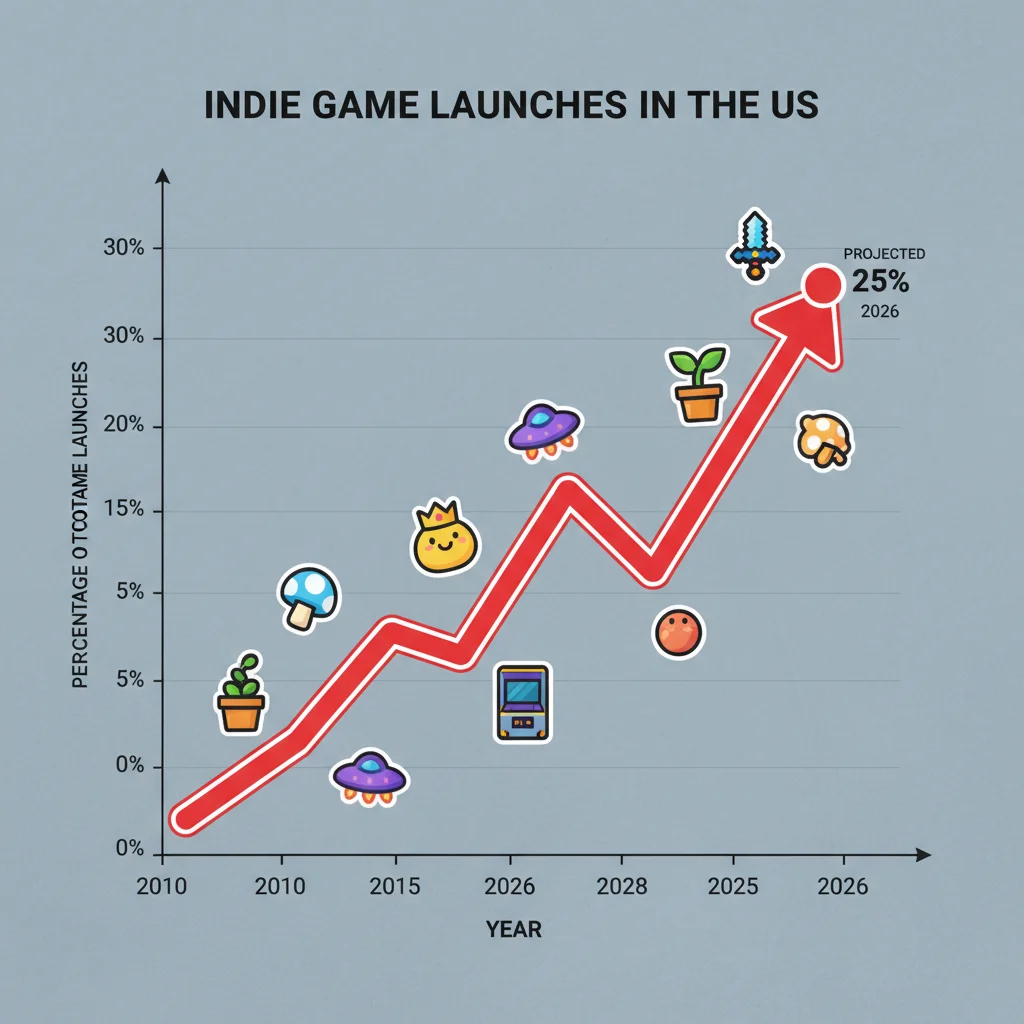
The gaming industry is a dynamic, ever-evolving beast, constantly reshaped by technological advancements, shifting player preferences, and the relentless creativity of its participants. For decades, the landscape was largely dominated by colossal AAA studios, armed with multi-million dollar budgets and extensive marketing machines. However, a seismic shift has been underway, quietly at first, but now with undeniable force. We are witnessing the meteoric rise of indie game developers, a phenomenon so profound that industry analysts project they will account for an astounding 25% of all new US game launches by 2026. This isn’t just a trend; it’s a fundamental rebalancing of power, a testament to innovation, accessibility, and the enduring human desire to create.
This article delves deep into the factors fueling this Indie Game Dominance, exploring the technological democratization, the evolving player base, and the unique advantages that independent creators bring to the table. We will examine the implications of this shift for the broader gaming ecosystem, from established publishers to aspiring developers, and ponder what the future holds for an industry increasingly shaped by the ingenuity and passion of its smallest players.
The Shifting Sands: A Brief History of Indie Gaming’s Ascent
To truly appreciate the current trajectory of indie games, it’s crucial to understand their journey. The concept of independent game development isn’t new; it predates the modern industry itself, with bedroom coders in the 80s and 90s laying the groundwork. However, what we now recognize as the ‘indie game scene’ began to truly crystallize in the early 2000s. Early pioneers like Cave Story, Braid, and World of Goo demonstrated that compelling, innovative experiences could emerge from small teams without massive budgets. These games, often characterized by unique art styles, unconventional mechanics, and deeply personal narratives, resonated with players seeking alternatives to the increasingly homogenized AAA market.
The mid-2000s saw the emergence of digital distribution platforms like Xbox Live Arcade, PlayStation Store, and later, Valve’s Steam, which provided unprecedented access to a global audience for independent developers. This was a game-changer. Suddenly, the barriers to entry, once insurmountable due to retail distribution costs and publisher gatekeeping, were significantly lowered. Developers could directly connect with their audience, fostering communities and building reputations based purely on the quality and originality of their work. This era marked the beginning of true Indie Game Dominance in terms of market presence.
Democratization of Tools and Talent: Fueling the Indie Fire
One of the most significant drivers behind the projected 25% share of new US game launches by indie developers is the democratization of game development tools. Historically, creating a game required specialized, expensive software and highly technical expertise. Today, powerful game engines like Unity and Unreal Engine are not only incredibly sophisticated but also widely accessible, often free or with revenue-share models that favor smaller developers. These engines come equipped with robust asset stores, extensive documentation, and vibrant community support, allowing even individuals with limited programming knowledge to bring their creative visions to life.
Beyond engines, the proliferation of affordable or free art assets, audio libraries, and online tutorials has further lowered the barrier to entry. Aspiring developers can now learn the ropes, acquire necessary resources, and collaborate with like-minded individuals across the globe with relative ease. This accessibility has unleashed a torrent of creativity, allowing diverse voices and perspectives to enter the industry, resulting in a broader spectrum of game experiences. This influx of talent and accessible tools is a cornerstone of the emerging Indie Game Dominance.
The Player’s Appetite for Novelty and Niche Experiences
The evolution of the player base is another critical factor. Modern gamers are increasingly sophisticated and diverse. While the allure of blockbuster AAA titles remains strong, there’s a growing appetite for novelty, unique artistic expression, and experiences that cater to niche interests. Indie games excel in this arena. Free from the commercial pressures and stakeholder expectations that often constrain large studios, indie developers have the freedom to experiment, take risks, and explore unconventional themes and mechanics.
This willingness to innovate has led to the creation of groundbreaking titles that push the boundaries of what games can be, both mechanically and narratively. From deeply emotional story-driven adventures to minimalist puzzle games, from experimental art pieces to challenging roguelikes, indie games offer a breadth of experiences that often can’t be found in the mainstream market. This diversity not only attracts a wider audience but also cultivates a loyal following that actively seeks out and champions independent creations, reinforcing the trend toward Indie Game Dominance.
Digital Distribution: The Great Equalizer
As mentioned earlier, digital distribution platforms have been instrumental in the rise of indie games. Platforms like Steam, itch.io, Epic Games Store, and the digital storefronts on consoles (Nintendo eShop, PlayStation Store, Xbox Games Store) provide a direct pipeline from developer to player. This bypasses traditional retail channels, which were often costly and difficult for smaller studios to penetrate. Digital distribution offers several key advantages:
- Lower Costs: No manufacturing, packaging, or physical distribution expenses.
- Global Reach: Games can be sold to players worldwide without geographical limitations.
- Direct Communication: Developers can directly engage with their communities through forums, social media, and platform-specific features.
- Faster Iteration: Patches, updates, and even new content can be delivered quickly and efficiently.
- Discovery Mechanisms: While discoverability remains a challenge, platforms continually refine algorithms and curation to help players find new indie gems.
The continuous improvement and expansion of these digital marketplaces ensure that the path to market for indie titles remains viable and increasingly competitive, bolstering the case for Indie Game Dominance in the coming years.
The Power of Community and Niche Marketing
Indie developers often thrive on community engagement. Lacking the massive marketing budgets of AAA studios, they rely heavily on word-of-mouth, social media, and direct interaction with their player base. This fosters a strong sense of community around their games, where players feel invested in the development process and become advocates for the titles they love. Early access programs, Kickstarter campaigns, and active developer blogs are common strategies that build anticipation and a dedicated following even before a game fully launches.
Furthermore, indie developers are adept at niche marketing. Instead of trying to appeal to everyone, they often target specific demographics or players with particular tastes. This focused approach allows them to connect deeply with their intended audience, building a passionate fan base that values the unique offerings of independent games. This organic growth and community-driven marketing are powerful engines behind the projected Indie Game Dominance.
Challenges on the Horizon for Indie Developers
While the outlook for indie games is overwhelmingly positive, challenges persist. The very accessibility that fuels their growth also leads to market saturation. Standing out in a sea of new releases requires not just a great game but also effective marketing, excellent communication, and a stroke of luck. Discoverability remains a significant hurdle, with many excellent indie titles struggling to find their audience amidst the sheer volume of new content.
Funding is another perennial challenge. While crowdfunding platforms and grants exist, many indie studios operate on shoestring budgets, often relying on self-funding or small investments. This can lead to burnout, project cancellations, and the difficult choice between creative vision and commercial viability. Despite these hurdles, the resilience and adaptability of indie developers continue to drive their success, reinforcing their path to Indie Game Dominance.
The Impact on the Broader Gaming Industry
The increasing Indie Game Dominance has profound implications for the entire gaming industry:
- Innovation Catalyst: Indie games often serve as incubators for new ideas and mechanics that eventually influence AAA development. Many successful indie concepts have been adopted or refined by larger studios.
- Talent Pipeline: The indie scene is a vital training ground for aspiring game developers, artists, and designers. Many who start in indie eventually move on to larger studios, bringing fresh perspectives and skills.
- Market Diversification: Indie games cater to underserved audiences and expand the definition of what a game can be, broadening the market and attracting new players.
- Pressure on AAA: The success of indie games puts pressure on AAA studios to innovate more, take more risks, and focus on player-centric design, rather than relying solely on established formulas.
- New Business Models: Indie developers often experiment with different pricing strategies, update cycles, and community engagement models, influencing industry best practices.
This symbiotic relationship ensures that the entire industry benefits from the vibrant indie sector, even as it carves out a larger piece of the market for itself. The predicted 25% share of US game launches by 2026 is not just a statistic; it’s a marker of this deep and transformative influence.
Notable Indie Success Stories: Paving the Way
The history of indie gaming is replete with inspiring success stories that exemplify the potential of independent development. Games like Minecraft, originally a solo project, grew into a global phenomenon, purchased by Microsoft for billions. Stardew Valley, developed almost entirely by one person, became a beloved farming simulation that rivaled established franchises. Hades, from Supergiant Games, garnered critical acclaim and numerous awards, proving that a relatively small team can deliver a polished, narrative-rich experience that stands toe-to-toe with AAA productions.
These examples, among countless others, demonstrate that passion, creativity, and strategic execution can lead to extraordinary success, regardless of studio size. They serve as beacons of inspiration for new developers and concrete evidence of the growing Indie Game Dominance.
Looking Ahead: What 2026 and Beyond Holds
The projection of indie developers accounting for 25% of new US game launches by 2026 is a conservative estimate in the eyes of many. With continued advancements in AI-assisted development tools, further reductions in hardware costs, and an ever-expanding global talent pool, the momentum behind indie gaming is unlikely to wane. We can anticipate:
- Increased Diversity of Genres: Even more niche genres and experimental gameplay concepts will emerge.
- Cross-Platform Accessibility: Indie games will continue to be released across a wider array of platforms, including mobile, PC, consoles, and potentially emerging platforms like cloud gaming and VR/AR.
- New Business Models: Expect more innovation in how games are funded, developed, and monetized, perhaps moving beyond traditional sales to subscription models or community-driven content generation.
- Stronger Publisher-Indie Partnerships: As indie games prove their commercial viability, more traditional publishers may seek to partner with or acquire successful indie studios.
The future of gaming is undoubtedly brighter and more diverse thanks to the tireless efforts of independent developers. Their ability to innovate, connect with players on a personal level, and adapt to changing market conditions positions them not just as a significant force, but as a driving engine of the industry’s evolution. The era of Indie Game Dominance is not just coming; it’s already here, and it’s only set to grow.
Conclusion: The Enduring Spirit of Creation
The forecast that indie developers will constitute a quarter of all new US game launches by 2026 is more than just a statistic; it’s a powerful affirmation of the enduring human spirit of creation and innovation. It speaks to a future where ideas matter more than budgets, where passion can triumph over corporate might, and where diverse voices enrich the cultural tapestry of interactive entertainment. This Indie Game Dominance is not about replacing AAA, but about expanding the universe of possibilities within gaming, making it more vibrant, accessible, and exciting for everyone involved. As technology continues to empower creators and players continue to seek out authentic, meaningful experiences, the influence of indie game developers will only continue to soar, promising a golden age of diverse and imaginative gaming for years to come.