The gaming industry stands at the precipice of a monumental transformation, largely driven by the advent of Web3 technologies. In the United States, a vibrant hub of innovation and early adoption, this shift is not just theoretical but is actively reshaping how games are developed, played, and monetized. The integration of blockchain, non-fungible tokens (NFTs), and decentralized autonomous organizations (DAOs) is giving rise to entirely new Web3 Gaming Business Models, promising unprecedented levels of player ownership, engagement, and economic participation. This comprehensive exploration delves into the foundational concepts of Web3 in gaming and meticulously examines four prominent business models that are poised to dominate the US gaming landscape in 2024 and beyond.
For decades, traditional gaming has operated on a centralized model, where developers and publishers held absolute control over in-game assets, economies, and intellectual property. Players, despite investing countless hours and often significant sums of money, never truly owned their digital possessions. Web3 challenges this paradigm by introducing verifiable digital ownership, transparent economic systems, and community-driven governance. This fundamental shift is not merely an incremental improvement; it represents a revolutionary redefinition of the player-game relationship.
The US market, characterized by its technological prowess, large consumer base, and significant investment in venture capital, is particularly fertile ground for these emerging models. Developers are increasingly experimenting with blockchain-based infrastructures to create immersive, player-centric experiences that go beyond mere entertainment, fostering genuine digital economies. Understanding these evolving Web3 Gaming Business Models is crucial for developers, investors, and players alike who wish to navigate and capitalize on this exciting new frontier. This article will dissect the mechanics, advantages, and potential challenges of each model, providing a clear roadmap to the future of gaming.
Understanding the Core Principles of Web3 in Gaming
Before diving into specific business models, it’s essential to grasp the underlying principles that make Web3 gaming distinct from its predecessors. At its heart, Web3 gaming leverages blockchain technology to introduce decentralization, transparency, and true digital ownership. These aren’t just buzzwords; they are fundamental shifts that empower players in ways previously unimaginable.
Decentralization and Distributed Ledgers
Unlike traditional games where servers and game data are controlled by a single entity, Web3 games often utilize decentralized networks. This means that game logic, asset ownership, and sometimes even game development decisions are distributed across a network of participants. This distribution enhances security, reduces the risk of single points of failure, and fosters a more robust and censorship-resistant environment. The underlying blockchain acts as a transparent, immutable ledger, recording every transaction and ownership transfer, making it impossible for any single party to arbitrarily alter records or revoke ownership.
True Digital Ownership through NFTs
Perhaps the most revolutionary aspect of Web3 gaming is the concept of true digital ownership, primarily facilitated by Non-Fungible Tokens (NFTs). In traditional games, when a player ‘buys’ an in-game item, they are essentially purchasing a license to use that item within the game’s ecosystem, a license that can be revoked by the game publisher at any time. With NFTs, in-game assets like characters, skins, weapons, land, or even entire game components are tokenized on a blockchain. This means players own these digital assets in the same way they own cryptocurrency – they can freely trade, sell, or transfer them outside the game’s immediate marketplace, often across different platforms or even different games if interoperability is supported. This verifiable ownership creates a secondary market, injecting real-world economic value into digital items and empowering players with unprecedented control over their virtual possessions. This shift fundamentally alters the value proposition for players, making their time and investment in games far more tangible and potentially lucrative.
Player-Centric Economies and Tokenomics
Web3 Gaming Business Models are intrinsically linked to new economic structures, often referred to as ‘tokenomics.’ These economies are designed to reward players for their participation, skill, and contributions to the game’s ecosystem. This can involve earning cryptocurrency or in-game tokens for playing, completing quests, winning battles, or creating user-generated content. These tokens can then often be exchanged for other cryptocurrencies, fiat money, or used to purchase other in-game assets. This creates a circular economy where players are not just consumers but active participants and beneficiaries of the game’s success. The design of these tokenomics is critical for the long-term sustainability and appeal of Web3 games, requiring careful balancing to prevent inflation and maintain value.
Community Governance and DAOs
Another powerful innovation within Web3 gaming is the rise of Decentralized Autonomous Organizations (DAOs). Many Web3 games are moving towards a model where the community of players and token holders has a say in the game’s development and future direction. Through DAOs, players can vote on proposals related to game updates, feature implementations, economic policies, and even treasury management. This democratic approach ensures that the game evolves in a way that aligns with the interests of its most dedicated participants, fostering a strong sense of community and collective ownership. It shifts power from a centralized development team to a distributed network of stakeholders, making games more resilient and responsive to player needs.
The Emergence of New Web3 Gaming Business Models in the US
With these foundational principles in mind, let’s explore the four most impactful Web3 Gaming Business Models that are gaining significant traction and innovation within the US market.
1. Play-to-Earn (P2E) and Play-and-Earn (P&E) Economies
The Play-to-Earn (P2E) model was arguably the first major breakthrough for Web3 gaming, demonstrating that players could earn tangible value by simply playing games. In P2E games, players are rewarded with cryptocurrencies or NFTs for achieving in-game milestones, winning battles, completing quests, or contributing to the game’s ecosystem. These rewards often have real-world monetary value, allowing players to convert their digital earnings into fiat currency.
However, the initial P2E wave faced criticism for sometimes prioritizing ‘earning’ over ‘playing,’ leading to games with less engaging gameplay loops. This has led to the evolution of Play-and-Earn (P&E) models, which emphasize fun and engaging gameplay as the primary motivator, with earning opportunities serving as an added bonus rather than the sole purpose. P&E aims to integrate earning mechanisms more seamlessly and sustainably into compelling game designs.
In the US, studios are refining P2E/P&E by focusing on higher production values, deeper narratives, and more sophisticated economic models that incentivize long-term engagement. Examples include games where players can earn tokens by participating in esports, creating user-generated content, or managing virtual land. The US market’s competitive landscape fosters innovation in these models, pushing developers to create more balanced and enjoyable experiences that still offer economic incentives.
2. NFT-Centric Game Asset Ownership and Monetization
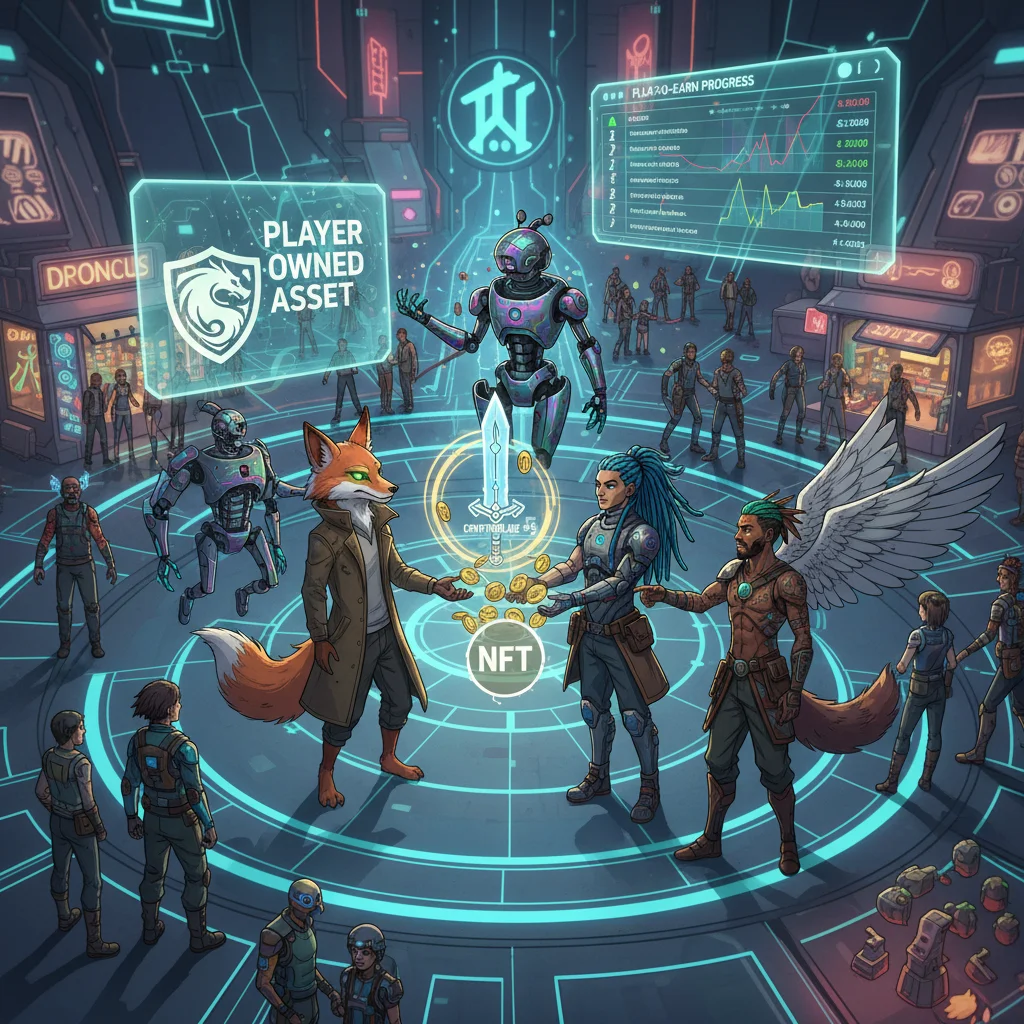
Beyond simply earning NFTs, this model focuses on the intrinsic value and utility of NFTs as the core of the game’s economy and player experience. Instead of just being rewards, NFTs are fundamental to gameplay, progression, and player identity. This includes:
- Collectible NFTs: Unique characters, items, or skins that players can collect, trade, and showcase. Their rarity and utility within the game drive their market value.
- Generative NFTs: Assets that are algorithmically generated, offering truly unique characteristics and fostering a strong sense of individuality and ownership.
- Fractionalized NFTs: Allowing multiple players to own a share of a high-value NFT, making expensive assets more accessible and fostering collective investment.
- Utility NFTs: NFTs that grant specific in-game advantages, access to exclusive content, or voting rights within a DAO.
The US market is seeing a surge in games where the entire game loop revolves around acquiring, utilizing, and trading NFT assets. This model empowers players to not only own their digital items but also to participate in a vibrant secondary market, generating revenue through trading fees or royalties when their assets are resold. Developers can also implement royalty systems, earning a small percentage each time an NFT is traded, creating a continuous revenue stream beyond initial sales. This model transforms players from mere consumers into active participants in a dynamic digital economy, fostering a sense of true ownership and investment in their game world.
3. Metaverse Worlds and Virtual Land Ownership
The concept of the metaverse – a persistent, interconnected virtual world – is intrinsically linked with Web3. In these metaverses, virtual land, properties, and even entire regions are tokenized as NFTs, allowing players to truly own a piece of the digital realm. This ownership opens up a plethora of business opportunities:
- Virtual Real Estate: Players can buy, sell, and develop virtual land, creating businesses, hosting events, or renting out their properties to other players. The value of this land can appreciate based on its location, utility, and the popularity of the metaverse.
- User-Generated Content (UGC) Monetization: Landowners and creators can build and monetize their own experiences, games, or digital assets within the metaverse. This could range from virtual art galleries to mini-games or concert venues. The US market, with its strong creator economy, is a natural fit for this model, empowering artists, developers, and entrepreneurs to build and profit within these digital spaces.
- Advertising and Brand Presence: Companies can purchase virtual land to establish a brand presence, host virtual events, or advertise their products within the metaverse, creating new avenues for marketing and customer engagement.
- Interoperability Potential: While still in its early stages, the long-term vision for metaverses involves interoperability, allowing assets and avatars to move between different virtual worlds. This would significantly enhance the value and utility of virtual land and assets, creating a truly expansive digital economy.
US-based projects are leading the charge in developing sophisticated metaverse platforms that not only offer virtual land ownership but also robust tools for content creation and social interaction, aiming to build truly immersive and economically viable digital societies. The potential for these open, player-owned worlds to evolve into massive digital economies is immense, attracting significant investment and creative talent.
4. Decentralized Autonomous Organizations (DAOs) for Game Governance and Funding
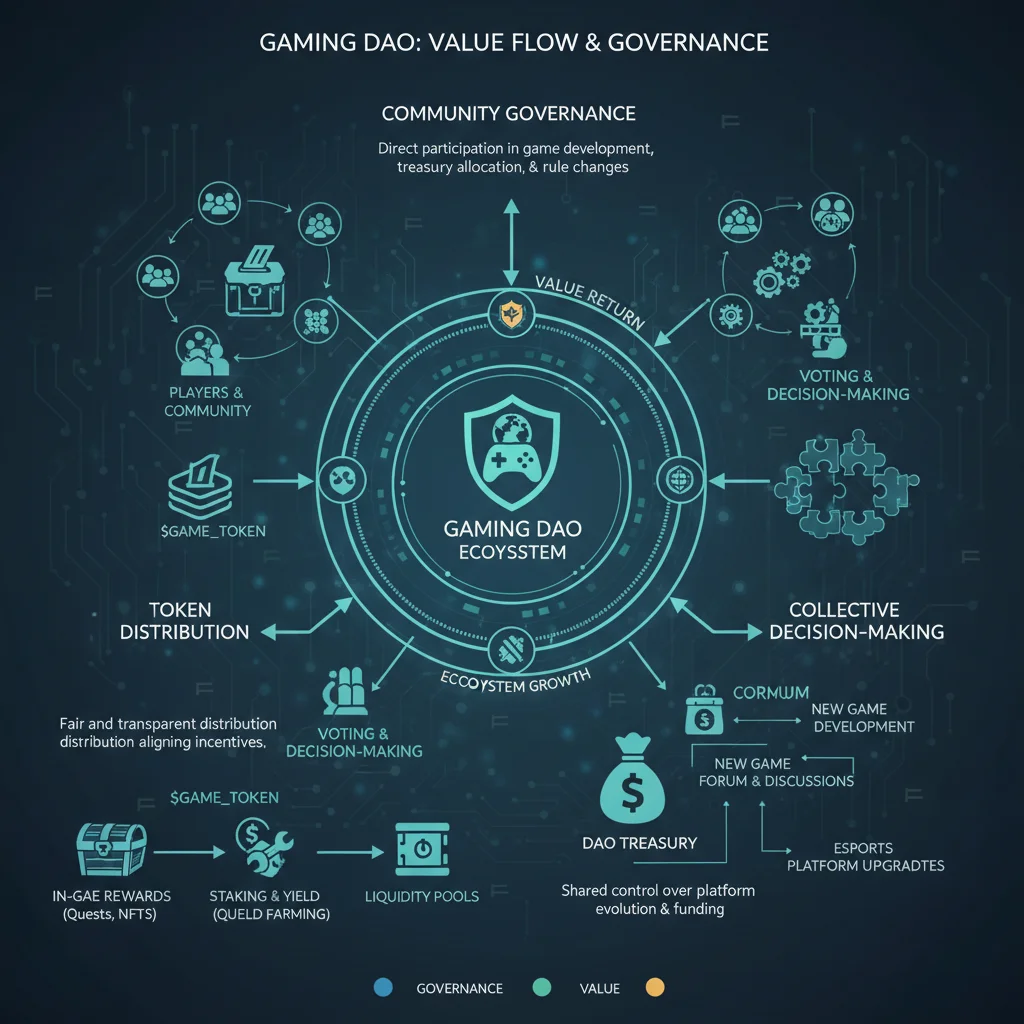
While mentioned as a core principle, DAOs are also emerging as a distinct business model for Web3 games in the US. Instead of a traditional corporate structure, many new game projects are launching as DAOs, where ownership and decision-making power are distributed among token holders. This model offers several advantages:
- Community-Driven Development: Token holders can vote on critical game decisions, including updates, feature prioritization, economic adjustments, and even the allocation of development funds. This fosters a highly engaged and invested community that feels genuine ownership over the game’s direction.
- Transparent Funding and Treasury Management: DAO treasuries are often funded by initial token sales, NFT sales, or ongoing game revenue. Decisions on how these funds are used (e.g., for development, marketing, community grants, or player rewards) are made through transparent, on-chain voting processes. This level of transparency builds trust and aligns incentives between developers and players.
- Reduced Centralized Risk: By decentralizing governance, the game becomes less susceptible to the whims of a single company or a small group of executives. The game’s future is determined by its community, making it more resilient and censorship-resistant.
- New Funding Mechanisms: DAOs can offer innovative ways to fund game development, moving beyond traditional venture capital or publisher funding. Community funding through token sales or NFT drops can empower independent developers and foster a more diverse ecosystem of games.
In the US, DAOs are being explored not just for new game launches but also for established titles looking to transition towards more community-centric models. This model represents a significant shift in power dynamics, putting the collective vision of the community at the forefront of game development and long-term sustainability. The legal and regulatory frameworks for DAOs are still evolving in the US, but the potential for this cooperative governance model to reshape the gaming industry is undeniable.
Challenges and Opportunities in the US Web3 Gaming Market
While the promise of Web3 Gaming Business Models is immense, their adoption in the US market also faces several challenges and presents unique opportunities.
Challenges:
- Regulatory Uncertainty: The regulatory landscape for cryptocurrencies and NFTs in the US is still evolving. Clarity on issues like securities laws, taxation, and consumer protection is crucial for mainstream adoption and institutional investment.
- Scalability and User Experience: Current blockchain technology can sometimes struggle with the high transaction volumes and low latency required for seamless gaming experiences. High gas fees and complex onboarding processes also create barriers for new players. Layer 2 solutions and more user-friendly wallet integrations are actively addressing these issues.
- Market Volatility: The value of in-game tokens and NFTs can be highly volatile, which can deter players and investors looking for stability. Designing sustainable tokenomics that can withstand market fluctuations is a continuous challenge.
- Security Risks: Blockchain technology, while inherently secure, is not immune to smart contract vulnerabilities, scams, and phishing attacks. Protecting player assets and data requires robust security measures and continuous vigilance.
- Mainstream Adoption: Overcoming the perception that Web3 games are primarily about ‘earning’ rather than ‘fun’ is critical for attracting a broader audience beyond crypto enthusiasts. The focus needs to shift towards compelling gameplay and engaging narratives first.
Opportunities:
- Massive Untapped Market: The US has one of the largest and most lucrative gaming markets globally. Even a small percentage of this market embracing Web3 gaming represents significant growth potential.
- Innovation Hub: The US is a hotbed for technological innovation, attracting top talent and significant venture capital. This environment fosters rapid development and refinement of Web3 gaming technologies and business models.
- Player Empowerment: Web3’s core promise of true ownership and community governance strongly resonates with a growing segment of players who feel disenfranchised by traditional gaming’s centralized control.
- New Revenue Streams: For developers, Web3 offers diverse monetization avenues beyond traditional sales and microtransactions, including NFT royalties, tokenomics, and metaverse land sales, creating more sustainable and equitable revenue models.
- Interoperability and Open Metaverses: The long-term vision of interconnected digital worlds where assets and identities can seamlessly move between games and platforms unlocks unprecedented possibilities for creativity, commerce, and social interaction.
The Future Outlook for Web3 Gaming in the US
The trajectory of Web3 Gaming Business Models in the US is undeniably upward. While challenges remain, the rapid pace of technological advancement, coupled with increasing investment and a growing understanding of blockchain’s potential, suggests a bright future. We are moving beyond the initial experimental phase into a period of maturation, where the focus will increasingly be on creating high-quality, engaging games that seamlessly integrate Web3 elements.
The US market will likely continue to lead in pioneering new approaches to tokenomics, fostering interoperability standards, and exploring the legal and ethical implications of decentralized gaming. As infrastructure improves, user experience simplifies, and regulatory clarity emerges, Web3 gaming is poised to move from a niche interest to a mainstream phenomenon. Developers who prioritize compelling gameplay, robust economies, and genuine player ownership will be the ones to truly capture the hearts and minds of the next generation of gamers.
Ultimately, the success of these new business models hinges on their ability to deliver superior value to players. This means offering not just earning opportunities, but also richer social experiences, more creative freedom, and a deeper sense of belonging and influence within the game worlds they inhabit. The convergence of entertainment, technology, and finance within Web3 gaming is creating an entirely new digital frontier, and the US is at the forefront of this thrilling revolution.
As we advance further into 2024 and beyond, the evolution of these Web3 Gaming Business Models will be a critical indicator of the broader adoption of decentralized technologies. The gaming industry, with its massive global reach and inherent drive for innovation, serves as an ideal testbed for these transformative concepts. The lessons learned and the successes achieved in the US Web3 gaming market will undoubtedly pave the way for a more open, equitable, and player-empowered future for digital entertainment worldwide.
The shift from ‘players as consumers’ to ‘players as stakeholders’ is not just a trend; it’s a fundamental change in philosophy that redefines the relationship between creators and their communities. This new era of gaming promises to unlock unprecedented creativity, foster vibrant digital economies, and empower players in ways that traditional models simply cannot. The US gaming industry is embracing this change with open arms, setting the stage for a truly revolutionary chapter in the history of interactive entertainment.