
Gaming Data Privacy: New Compliance Challenges for US Developers Effective January 2026
The landscape of gaming data privacy is undergoing a transformative shift, with significant implications for US developers. As of January 2026, a new wave of compliance challenges will sweep across the industry, demanding meticulous attention to how player data is collected, processed, stored, and shared. This isn’t just about avoiding hefty fines; it’s about building trust with an increasingly privacy-conscious player base and safeguarding the reputation of gaming companies. The stakes have never been higher for ensuring robust gaming data privacy.
For years, the gaming industry has operated in a somewhat gray area concerning data privacy, often falling under broader consumer protection laws without specific, tailored regulations. However, the rapid evolution of online gaming, the proliferation of in-game purchases, personalized experiences, and the sheer volume of data generated by players have brought data privacy to the forefront. Regulatory bodies, both at the state and potentially federal levels, are now catching up, introducing stricter guidelines that will fundamentally alter how gaming companies operate. The focus on gaming data privacy is intensifying.
This comprehensive guide will delve into the intricacies of these upcoming compliance challenges. We’ll explore the specific regulations coming into effect, analyze their potential impact on game development, marketing, and operational practices, and provide actionable strategies for US developers to navigate this complex new environment successfully. Understanding and proactively addressing these changes in gaming data privacy is not merely a legal obligation but a strategic imperative for long-term success and player loyalty.
The Evolving Landscape of US Data Privacy Laws Affecting Gaming
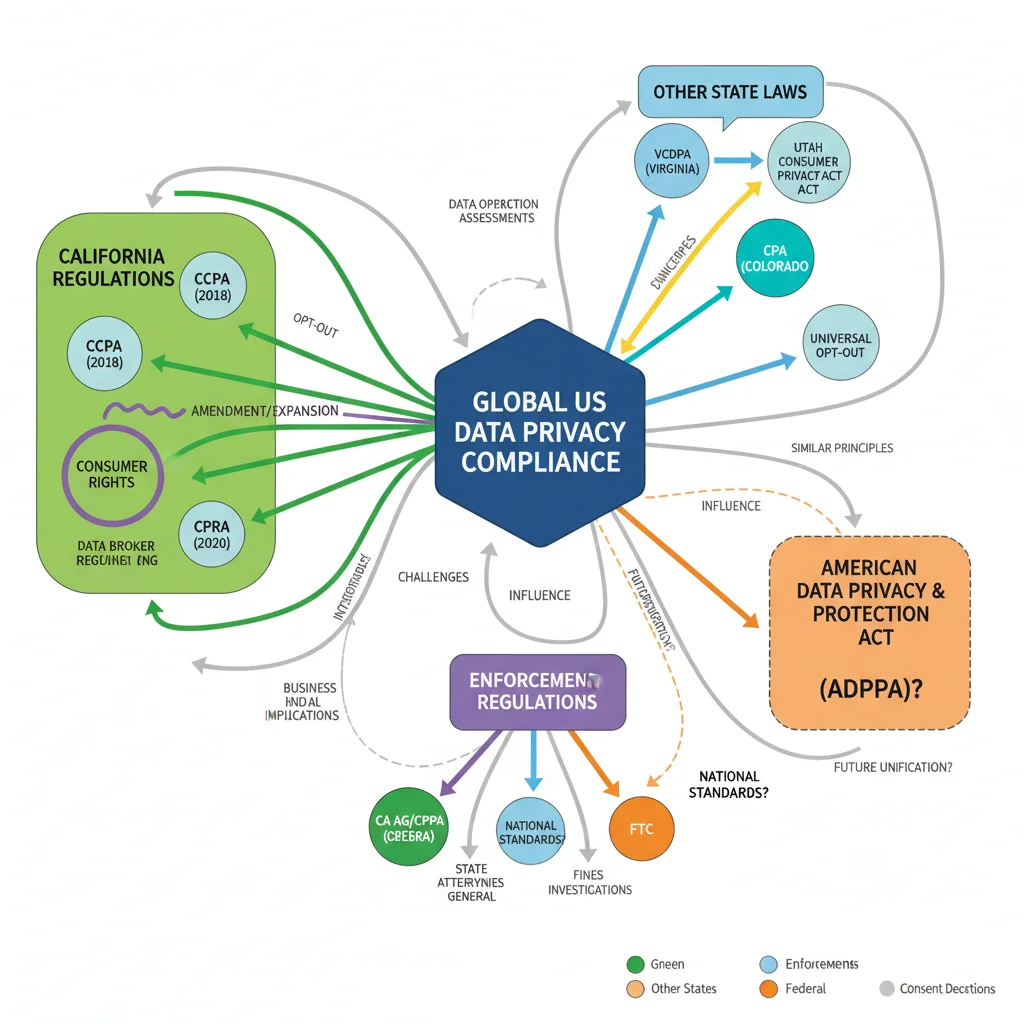
Before diving into the specifics of 2026, it’s crucial to understand the patchwork of US data privacy laws that currently exist and are setting the stage for future regulations concerning gaming data privacy. Unlike the European Union’s GDPR, the United States lacks a single, overarching federal data privacy law. Instead, it relies on a combination of sector-specific laws (like HIPAA for healthcare or COPPA for children’s online privacy) and a growing number of state-level comprehensive privacy statutes. This fragmented approach creates significant complexity for developers operating nationwide, especially when it comes to gaming data privacy.
Key State-Level Regulations and Their Influence
The California Consumer Privacy Act (CCPA), effective January 2020, and its amendment, the California Privacy Rights Act (CPRA), effective January 2023, have been groundbreaking. These laws grant California consumers significant rights over their personal information, including the right to know what data is collected, the right to delete it, and the right to opt-out of its sale. For gaming companies, this means re-evaluating data collection practices, implementing robust data subject access request (DSAR) mechanisms, and updating privacy policies to be transparent and easily understandable. The principles established by CCPA and CPRA are increasingly being adopted by other states, creating a ripple effect on gaming data privacy.
Following California’s lead, states like Virginia (Virginia Consumer Data Protection Act – VCDPA), Colorado (Colorado Privacy Act – CPA), Utah (Utah Consumer Privacy Act – UCPA), and Connecticut (Connecticut Data Privacy Act – CTDPA) have enacted their own comprehensive privacy laws. While sharing common principles, each law has its unique nuances regarding definitions of personal data, consumer rights, enforcement mechanisms, and applicability thresholds. This divergence necessitates a granular approach to compliance, often requiring companies to adhere to the most stringent requirements across all applicable jurisdictions to ensure comprehensive gaming data privacy.
The Push for Federal Data Privacy Legislation
The increasing complexity of state-by-state compliance has fueled calls for a federal data privacy law in the US. Proponents argue that a unified federal standard would simplify compliance for businesses, provide consistent protections for consumers nationwide, and strengthen the US position in international data governance. While various proposals have been introduced in Congress, none have yet gained sufficient bipartisan support to pass. However, the ongoing discussions and the growing momentum suggest that a federal law, or at least a framework that harmonizes state laws, could emerge in the coming years, further shaping the future of gaming data privacy.
The potential for a federal law, even if not fully realized by 2026, influences the direction of state legislation and industry best practices. Developers should monitor these discussions closely, as any federal framework would undoubtedly impact their compliance strategies for gaming data privacy. The trend is clear: more regulation, more rights for consumers, and greater accountability for companies handling personal data.
Specific Compliance Challenges for US Gaming Developers by January 2026
The January 2026 deadline isn’t arbitrary; it represents a convergence of maturing state laws and the anticipated enforcement of new provisions, potentially alongside expanded scope or new regulations. For US gaming developers, this means a multi-faceted set of challenges specifically around gaming data privacy.
Enhanced Player Data Rights and Data Subject Access Requests (DSARs)
Players will have more robust rights concerning their data. This includes the right to access personal information, the right to correct inaccuracies, the right to delete data (the ‘right to be forgotten’), and the right to opt-out of certain data processing activities, particularly those related to targeted advertising or profiling. Gaming companies must establish efficient, secure, and verifiable processes for handling DSARs within statutory timeframes. This requires mapping all data flows, understanding where player data resides, and having the technical capabilities to retrieve, modify, or delete it upon request. This is a critical aspect of gaming data privacy.
Transparency and Consent Management
Beyond simply having a privacy policy, developers will need to ensure that their data collection and processing practices are transparent and that player consent is freely given, specific, informed, and unambiguous. This can be particularly challenging in gaming, where data often fuels personalized experiences, in-game analytics, and monetization strategies. Mechanisms for granular consent management, allowing players to easily opt-in or opt-out of specific data uses, will become essential. This impacts everything from initial game setup to ongoing in-game interactions and is central to ethical gaming data privacy.
Data Minimization and Purpose Limitation
The principle of data minimization dictates that companies should only collect the data absolutely necessary for a specified purpose. Purpose limitation means that data collected for one purpose should not be used for another incompatible purpose without further consent. For gaming, this challenges traditional approaches to collecting vast amounts of telemetry data or user behavior data ‘just in case’ it might be useful later. Developers will need to critically assess every piece of data they collect and justify its necessity, strengthening their commitment to gaming data privacy.
Data Security and Breach Notification
While data security is an ongoing concern, the new regulations often come with heightened expectations for safeguarding personal data and more stringent breach notification requirements. This includes implementing appropriate technical and organizational measures to protect data from unauthorized access, loss, or disclosure. In the event of a data breach, companies must be prepared to notify affected individuals and regulatory authorities promptly, often within very tight deadlines. A robust incident response plan is not just good practice; it’s a legal necessity for maintaining gaming data privacy.
Third-Party Data Sharing and Vendor Management
Gaming ecosystems often involve numerous third parties: analytics providers, ad networks, payment processors, cloud hosting services, and more. Each of these vendors may process player data on behalf of the developer. The new regulations place increased responsibility on developers for the actions of their third-party vendors. This necessitates rigorous due diligence, robust data processing agreements (DPAs) with clear terms for data handling, and ongoing monitoring to ensure vendors comply with privacy standards. This extended responsibility is a significant challenge for ensuring comprehensive gaming data privacy.
Age Verification and Children’s Data Protection (COPPA and Beyond)
While COPPA (Children’s Online Privacy Protection Act) has been in place for years, the new state laws often expand its scope or introduce additional protections for minors. Accurately determining the age of players and implementing age-appropriate data collection and consent mechanisms is a significant technical and legal hurdle. This is particularly relevant for games popular with younger audiences or those that incorporate social features. Non-compliance in this area carries severe penalties and reputational damage, making it a critical aspect of gaming data privacy.
Data Protection Impact Assessments (DPIAs)
Many new privacy laws, mirroring GDPR, require organizations to conduct Data Protection Impact Assessments (DPIAs) for processing activities that are likely to result in a high risk to the rights and freedoms of individuals. This means that for new games, features, or significant data processing changes, developers must proactively assess and mitigate privacy risks before deployment. DPIAs are a fundamental shift towards a privacy-by-design approach, ensuring gaming data privacy is considered from the outset.
Strategies for US Gaming Developers to Achieve Compliance
Navigating these challenges requires a proactive, strategic, and integrated approach. Waiting until 2026 to act is not an option; preparation must begin now to ensure robust gaming data privacy.
1. Conduct a Comprehensive Data Audit and Mapping
The first step is to understand what data you collect, why you collect it, where it is stored, who has access to it, and how long it is retained. This involves a thorough data audit across all games, platforms, and internal systems. Create data flow maps that visualize the entire lifecycle of player data within your organization and with third parties. This foundational understanding is indispensable for identifying compliance gaps and implementing effective gaming data privacy measures.
2. Appoint a Data Protection Officer (DPO) or Privacy Lead
Even if not legally mandated for all developers, appointing a dedicated individual or team responsible for data privacy oversight is highly recommended. This DPO or privacy lead can guide your organization through compliance efforts, serve as a point of contact for regulatory bodies, and ensure ongoing adherence to privacy standards. Their expertise is crucial for maintaining effective gaming data privacy policies.
3. Implement Privacy by Design and by Default
Integrate privacy considerations into every stage of the game development lifecycle, from conception to launch and ongoing operations. This means designing systems and processes that prioritize data minimization, security, and player control from the ground up, rather than as an afterthought. By default, settings should be the most privacy-protective, requiring players to actively opt-in for less private options. This proactive approach is the cornerstone of modern gaming data privacy.
4. Strengthen Consent Management Systems
Develop robust consent management platforms (CMPs) that allow players to easily understand and control their data preferences. This includes clear, concise consent requests, granular options for different data uses (e.g., analytics, personalization, marketing), and easy mechanisms for withdrawing consent at any time. Ensure your CMP is integrated across all touchpoints where player data is collected. Effective consent management is paramount for respecting gaming data privacy.
5. Enhance Data Security Measures
Review and upgrade your existing data security infrastructure. This includes implementing strong encryption for data at rest and in transit, multi-factor authentication, regular security audits, penetration testing, and employee training on data security best practices. Invest in advanced threat detection and prevention systems to protect against cyberattacks. A strong security posture is non-negotiable for safeguarding gaming data privacy.
6. Update Privacy Policies and Terms of Service
Ensure your privacy policies are transparent, easily accessible, and written in plain language. Clearly articulate what data is collected, why, how it’s used, who it’s shared with, and how players can exercise their rights. Your Terms of Service should also reflect these commitments. Regular reviews and updates are necessary to reflect changes in regulations or data processing practices. Clear communication builds trust and reinforces your commitment to gaming data privacy.
7. Establish a Robust DSAR Fulfillment Process
Develop clear procedures and allocate resources for efficiently handling Data Subject Access Requests (DSARs). This includes verifying the identity of the requester, locating and retrieving the requested data, and fulfilling deletion or correction requests within the legally mandated timeframes. Automation tools can significantly streamline this process and ensure timely compliance, which is vital for gaming data privacy.
8. Vet and Manage Third-Party Vendors
Scrutinize all third-party vendors that process player data. Conduct thorough due diligence on their security and privacy practices, negotiate robust data processing agreements (DPAs) that clearly define responsibilities and liabilities, and implement ongoing monitoring. Remember, you are ultimately responsible for how your vendors handle player data. Diligent vendor management is key to maintaining gaming data privacy.

9. Provide Employee Training and Awareness
Human error remains a leading cause of data breaches. Regular and comprehensive training for all employees who handle player data is essential. This training should cover privacy principles, specific company policies, how to identify and report security incidents, and the importance of gaming data privacy in their daily roles. A privacy-aware culture is a strong defense against compliance failures.
10. Conduct Regular Compliance Audits and DPIAs
Privacy compliance is not a one-time event; it’s an ongoing process. Regularly audit your data practices against current and upcoming regulations. For any new game feature, significant data processing activity, or partnership, conduct a Data Protection Impact Assessment (DPIA) to proactively identify and mitigate privacy risks. These continuous efforts ensure sustained gaming data privacy.
The Impact of Non-Compliance on Gaming Developers
The consequences of failing to comply with the new gaming data privacy regulations are severe and far-reaching, extending beyond financial penalties:
- Hefty Fines: State privacy laws often come with substantial financial penalties, which can be millions of dollars or a percentage of annual revenue, whichever is greater. These fines can cripple smaller studios and significantly impact larger ones.
- Reputational Damage: Data breaches and privacy violations erode player trust, leading to negative publicity, boycotts, and a loss of market share. In the highly competitive gaming industry, a damaged reputation can be difficult, if not impossible, to recover.
- Legal Action and Class-Action Lawsuits: Non-compliance can lead to individual or class-action lawsuits from affected players, resulting in costly legal battles and settlements.
- Operational Disruptions: Regulatory investigations, mandatory data audits, and requirements to cease certain data processing activities can severely disrupt game development and live operations.
- Loss of Player Trust: Ultimately, players are increasingly aware of their data rights. Companies that demonstrate a disregard for gaming data privacy will struggle to attract and retain players in the long run.
The Future of Gaming Data Privacy: Beyond 2026
While January 2026 marks a critical juncture, the evolution of gaming data privacy won’t stop there. The trend towards greater regulation and increased player rights is likely to continue. Developers should anticipate further developments, including:
- More State Laws: Expect more US states to enact their own comprehensive privacy laws, potentially creating an even more complex compliance environment if a federal solution isn’t found.
- Focus on AI and Algorithmic Transparency: As AI in gaming and machine learning become more integral to gaming (e.g., personalized content, dynamic difficulty, anti-cheat), regulations around algorithmic transparency, fairness, and the use of personal data in AI models will likely emerge.
- International Alignment: Global gaming companies will continue to face the challenge of harmonizing compliance with both US and international regulations (e.g., GDPR, LGPD, PIPL), aiming for a unified, high standard of gaming data privacy.
- Increased Scrutiny of AdTech: The use of in-game advertising, behavioral targeting, and data sharing with ad networks will face continued scrutiny, pushing towards more privacy-preserving advertising models.
- Decentralized Identity and Data Ownership: Emerging technologies like blockchain could eventually offer players more direct control over their data, leading to new models of data ownership and consent in gaming.
Conclusion: Embracing Gaming Data Privacy as a Competitive Advantage
The January 2026 deadline for new gaming data privacy compliance challenges for US developers is not merely a regulatory burden; it’s an opportunity. By proactively embracing these changes, developers can transform compliance from a cost center into a competitive advantage. Companies that demonstrate a genuine commitment to protecting player data will foster greater trust, enhance their brand reputation, and ultimately cultivate more loyal and engaged communities.
The path to compliance requires significant investment in resources, technology, and cultural change. However, the long-term benefits – avoiding penalties, building player loyalty, and future-proofing your business – far outweigh the costs. By prioritizing gaming data privacy now, US developers can ensure they are not just meeting legal obligations, but are leading the way in creating a more secure and trustworthy gaming experience for everyone. The future of gaming depends on it.