Volumetric Displays: The Dawn of True 3D Gaming Experiences
For decades, gamers have dreamed of truly immersive experiences, transcending the flat confines of traditional screens. While virtual reality (VR) and augmented reality (AR) have made significant strides, they still rely on projecting 2D images onto the retina or overlaying them onto the real world. The ultimate frontier in visual immersion, especially for gaming, lies in Volumetric Displays Gaming. These revolutionary technologies promise to render genuine 3D objects that occupy physical space, allowing players to view and interact with virtual worlds as if they were tangible.
Imagine a game where a dragon breathes fire right in front of you, its scales shimmering with volumetric light, or where you can walk around a miniature battlefield, observing every intricate detail from all angles without a headset. This isn’t science fiction anymore; it’s the imminent reality that volumetric displays are bringing to the forefront. This comprehensive exploration will delve into the exciting world of volumetric displays, uncovering four leading emerging technologies that are paving the way for an unprecedented era of true 3D gaming experiences.
The journey from 2D pixels to true 3D voxels (volumetric pixels) is complex, requiring breakthroughs in optics, material science, and computational power. However, the potential rewards are immense: a gaming experience that blurs the line between the digital and the physical, offering unparalleled depth, realism, and immersion. Let’s embark on this fascinating exploration of the technologies that will redefine how we play, interact, and perceive digital worlds.
Understanding Volumetric Displays: Beyond Stereoscopy
Before we dive into specific technologies, it’s crucial to understand what distinguishes Volumetric Displays Gaming from other 3D display methods. Traditional 3D TVs and VR/AR headsets primarily utilize stereoscopy. This technique presents two slightly different 2D images, one to each eye, tricking the brain into perceiving depth. While effective, stereoscopic displays suffer from several limitations:
- Vergence-Accommodation Conflict: Your eyes converge on the virtual object’s perceived depth, but your lens accommodates (focuses) on the fixed screen distance, leading to eye strain and fatigue.
- Limited Viewing Angles: The 3D effect often diminishes or breaks entirely when viewed from off-axis positions.
- Lack of Real-World Depth Cues: Features like occlusion (objects blocking others), reflections, and refractions are simulated, not inherently present in the display’s physical nature.
Volumetric displays, in contrast, create actual points of light in three-dimensional space. This means that a virtual object rendered on a volumetric display has true depth, can be viewed from any angle, and naturally exhibits real-world depth cues. This fundamental difference is what makes them so transformative for Volumetric Displays Gaming, promising an experience that is not only more immersive but also more comfortable and natural for the human visual system.
The core principle involves emitting or scattering light from specific points in a volume, rather than from a flat surface. This can be achieved through various methods, each with its own set of advantages, challenges, and applications. The goal is to create a display where the light rays originate from the actual spatial location of the virtual object, mimicking how we perceive real-world objects.
1. Swept-Volume Displays: Rotating the Future of 3D
One of the earliest and most conceptually straightforward approaches to Volumetric Displays Gaming is the swept-volume display. This technology relies on rapidly moving a 2D display surface through a volume while synchronizing the projection of images onto it. The persistence of human vision (the ability of our eyes to retain an image for a short period after it has disappeared) then fuses these rapidly projected 2D slices into a coherent 3D image.
How Swept-Volume Displays Work:
Typically, a swept-volume display consists of a rotating or oscillating screen (often a translucent or reflective panel, or an array of LEDs) onto which a series of 2D cross-sections of a 3D object are projected. As the screen moves, the projection system (e.g., a high-speed projector or laser) illuminates the correct slice at the correct depth. The rotation or oscillation is so fast – often hundreds or even thousands of revolutions per minute – that the human eye perceives a continuous, solid 3D image.
Imagine a rapidly spinning propeller with LEDs on its blades. If you light up specific LEDs at precise moments as the blade spins, you can effectively draw a 3D shape in the air. This is the essence of a swept-volume display.
Advantages for Gaming:
- True 3D Perception: Offers genuine depth cues, eliminating vergence-accommodation conflict.
- Full 360-Degree View: Multiple users can view the 3D image simultaneously from any angle without special glasses.
- Brightness and Contrast: Can achieve high brightness and contrast, leading to vivid images.
Challenges and Future Outlook:
Despite their appeal, swept-volume displays face significant hurdles. Mechanical moving parts introduce noise, vibration, and wear, limiting scalability and robustness. The refresh rate needs to be extremely high to avoid flicker, and rendering complex scenes at such speeds requires immense computational power. Furthermore, creating large-scale displays without significant mechanical bulk remains a challenge.
However, ongoing research is exploring novel materials and more compact rotation mechanisms. For niche applications like arcade games or specialized training simulations, swept-volume displays could offer unique immersive experiences. The vivid, tangible nature of the projected objects makes them particularly exciting for interactive gaming, allowing players to gather around a central display and collectively engage with the game’s world.
2. Static-Volume Displays: Filling Space with Light
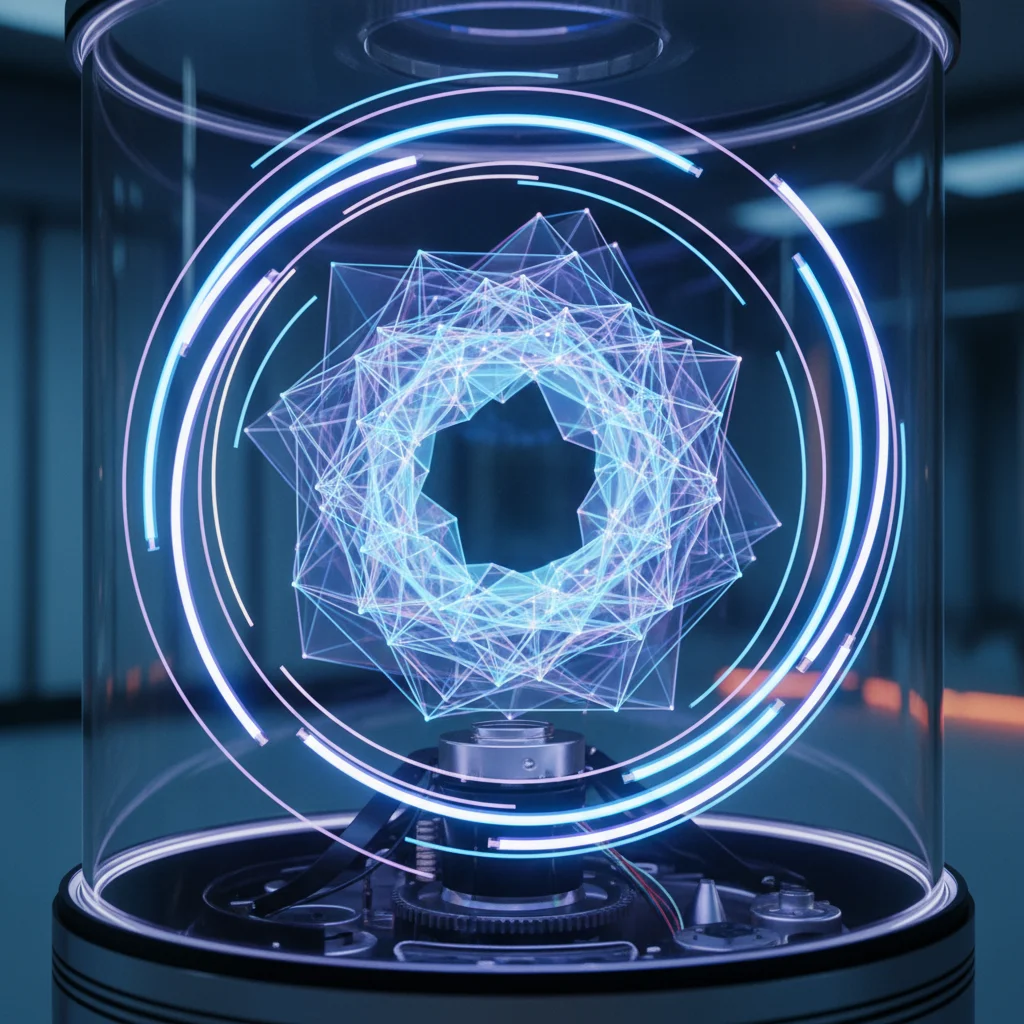
Unlike swept-volume displays, static-volume displays aim to create 3D images within a fixed, transparent volume without any moving parts. This approach typically involves activating light-emitting or light-scattering elements at specific points within the volume. The absence of mechanical motion makes them potentially more robust, quieter, and scalable, making them a strong contender for future Volumetric Displays Gaming applications.
How Static-Volume Displays Work:
There are several sub-categories within static-volume displays:
- Light-Emitting Element Arrays: These displays use a grid of tiny light-emitting elements (like LEDs or OLEDs) embedded within a transparent medium. By individually controlling the intensity and color of each element, a 3D image can be constructed. The challenge lies in creating a dense enough array while maintaining transparency.
- Multi-Planar Displays: These consist of multiple transparent 2D display panels stacked one behind the other. Each panel displays a slice of the 3D image, and when viewed together, they create a sense of depth. While simpler to construct, they can suffer from occlusion issues where closer panels block parts of farther ones.
- Volumetric Pixels (Voxels) in a Medium: This is perhaps the most exciting area. Technologies like femtosecond laser-induced plasma or upconversion phosphors embedded in a transparent solid or gas are used. A focused laser beam creates a tiny point of light (a voxel) at a precise 3D coordinate within the medium. By rapidly scanning the laser, complex 3D images can be drawn in mid-air.
Advantages for Gaming:
- No Moving Parts: Increased reliability, reduced noise, and quieter operation.
- High Resolution Potential: Especially with voxel-based systems, the ability to create incredibly detailed 3D imagery.
- True 3D Interaction: The potential for direct interaction with virtual objects in physical space.
Challenges and Future Outlook:
The primary challenges for static-volume displays include achieving high resolution over a large volume, power consumption (especially for laser-based systems), and the transparency of the medium. Creating a truly clear and large display medium that can be precisely addressed is a significant engineering feat. The cost of such systems is also currently very high.
However, the promise of a stable, genuinely 3D image floating in space makes them incredibly appealing for Volumetric Displays Gaming. Imagine playing a strategy game where your units are tangible miniatures on a table, or dissecting a virtual anatomical model in a medical simulation. As laser technology and material science advance, static-volume displays could become the gold standard for high-fidelity 3D visualization.
3. Light Field Displays: Recreating Light Rays
Light field displays, also known as autostereoscopic displays, take a different approach to Volumetric Displays Gaming by not necessarily creating light at every point in 3D space, but rather by accurately reproducing the light rays that would emanate from a real 3D object. This means that each eye receives slightly different information, and as the viewer moves, the perspective of the virtual object changes naturally, just as it would in the real world.
How Light Field Displays Work:
Light field displays typically consist of a high-resolution 2D display panel combined with a complex optical element, such as a lenticular lens array or a microlens array. Each tiny lens directs a specific pixel or sub-pixel from the underlying 2D display in a particular direction. By carefully arranging these pixels and lenses, the display can project different images into different viewing zones, essentially creating multiple perspectives of a 3D scene.
The effect is that viewers can move their heads and see around virtual objects without needing any special glasses. It’s akin to looking through a window at a real 3D scene, where your perspective shifts naturally with your head movements.
Advantages for Gaming:
- Glasses-Free 3D: Eliminates the need for cumbersome eyewear, enhancing comfort and accessibility.
- Natural Motion Parallax: As users move, the perspective changes realistically, improving immersion.
- Multiple Viewers: Can support several viewers simultaneously, each seeing the correct perspective.
Challenges and Future Outlook:
The main challenges for light field displays are achieving high resolution and a wide viewing angle simultaneously. To create many distinct viewing angles, the underlying 2D display needs to have an extremely high pixel density, and the optical elements must be precisely manufactured. Current light field displays often suffer from lower resolution than traditional 2D screens or have a limited ‘sweet spot’ for optimal 3D viewing.
However, advancements in display technology (like micro-LEDs) and computational imaging are rapidly improving light field capabilities. For Volumetric Displays Gaming, a high-quality light field display could offer an unparalleled shared experience, allowing friends to gather around and enjoy true 3D games together, much like board games but with dynamic, interactive virtual elements. The naturalness of the 3D effect makes them very promising for reducing eye strain and increasing long-term comfort during gaming sessions.
4. Plasmonic and Metasurface Displays: Manipulating Light at the Nanoscale
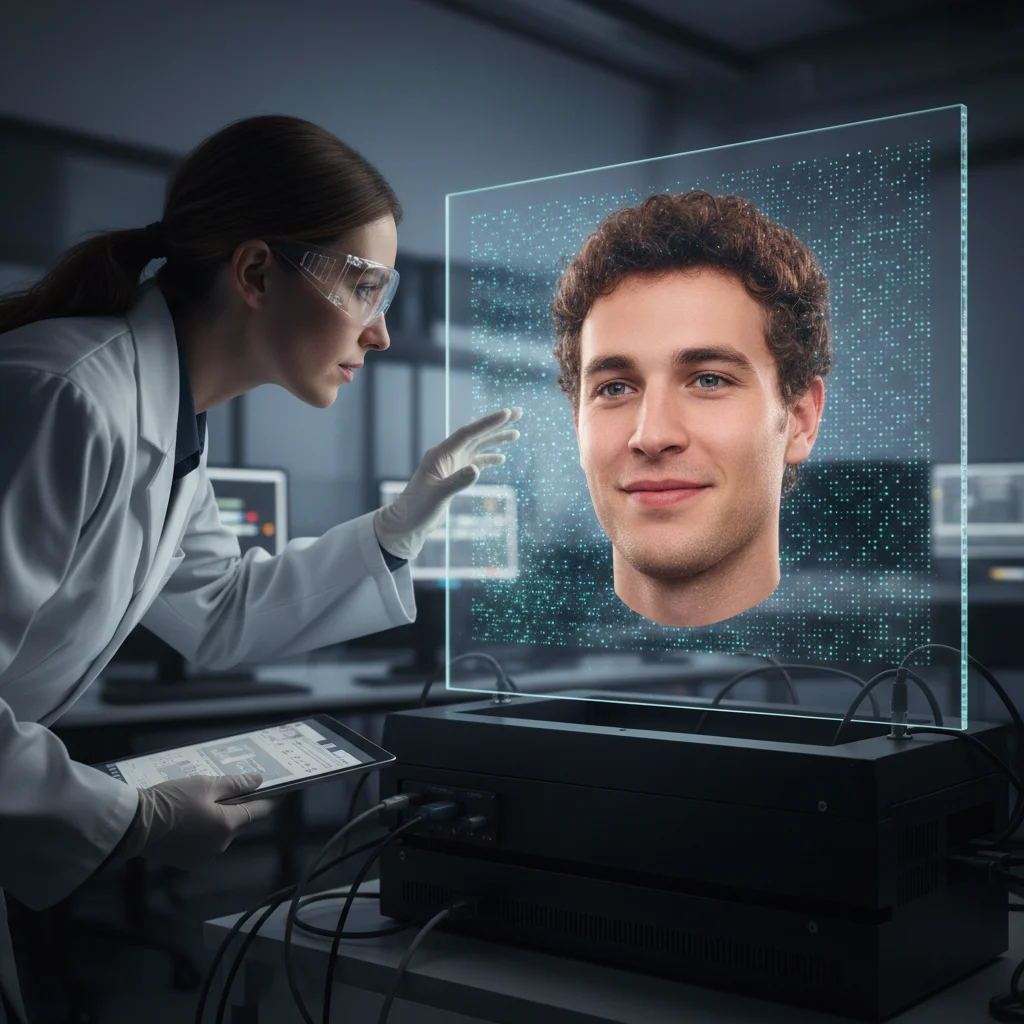
Perhaps the most cutting-edge and futuristic approach to Volumetric Displays Gaming involves manipulating light at the nanoscale using plasmonics and metasurfaces. These technologies aim to create holographic or quasi-holographic 3D images by precisely controlling the wavefront of light, effectively reconstructing a 3D scene directly in the air.
How Plasmonic and Metasurface Displays Work:
- Plasmonics: This field explores the interaction of light with free electrons in metals at the nanoscale. Surface plasmon polaritons (SPPs) are electromagnetic waves that propagate along the interface between a metal and a dielectric. By engineering metallic nanostructures, researchers can excite and control SPPs to create specific light patterns, potentially leading to holographic projections.
- Metasurfaces: These are ultra-thin, artificially engineered surfaces composed of subwavelength nanostructures (meta-atoms). Unlike traditional optical elements that rely on refraction and reflection over long distances, metasurfaces can manipulate light’s phase, amplitude, and polarization at a single interface. By designing specific meta-atoms and arranging them in a pattern, a metasurface can act as a flat lens, a holographic projector, or even create arbitrary light fields.
The goal is to create a display surface that can emit light as if it were coming from a real 3D object, effectively generating a hologram that can be viewed from multiple angles. This is a significant leap beyond simple stereoscopy or multi-view displays.
Advantages for Gaming:
- True Holographic Projections: The potential for generating genuine 3D images that float in free space, viewable from all angles.
- Compact and Thin: Metasurfaces are incredibly thin, potentially leading to highly compact and lightweight display devices.
- Dynamic and Interactive: Future iterations could allow for real-time manipulation of holographic content.
Challenges and Future Outlook:
These technologies are still largely in the research and development phase. The primary challenges include achieving high resolution, wide viewing angles, full color, and dynamic refresh rates. Fabricating these nanoscale structures with sufficient precision and at scale is also a major hurdle. The computational power required to calculate and render dynamic holographic patterns in real-time is immense.
However, the long-term potential for Volumetric Displays Gaming is revolutionary. Imagine playing a game where the characters and environments are truly present in your living room as stable, interactive holograms. This would represent the pinnacle of immersive gaming, allowing for completely new forms of interaction and storytelling. As nanotechnology and computational optics advance, plasmonic and metasurface displays could one day deliver the ultimate holographic gaming experience.
The Impact of Volumetric Displays on Gaming
The advent of widespread Volumetric Displays Gaming will fundamentally alter the gaming landscape in several profound ways:
Enhanced Immersion and Realism:
The most immediate and obvious impact will be an unparalleled level of immersion. Gamers will no longer be looking at a screen but into a truly 3D world. This will make game environments feel more tangible, characters more present, and action more impactful. The natural depth cues will reduce eye strain and motion sickness, making for a more comfortable and believable experience.
New Gameplay Mechanics:
True 3D interaction opens up a wealth of new gameplay possibilities. Imagine strategy games where you can physically lean in to inspect units, puzzle games that require manipulating holographic objects in real space, or adventure games where clues are hidden within a dynamically projected environment. These displays could enable hybrid physical-digital games, where real-world objects interact with volumetric projections.
Social Gaming Reinvented:
One of the limitations of current VR/AR is its often solitary nature. Volumetric displays, especially those that are glasses-free and support multiple viewers, could bring back and revolutionize social gaming. Friends and family could gather around a shared volumetric display, each seeing the game from their own perspective, fostering a truly collaborative and shared immersive experience that goes far beyond split-screen or online multiplayer.
Accessibility and Comfort:
By eliminating the need for headsets or glasses, volumetric displays can make true 3D gaming more accessible and comfortable for a wider audience. This removes barriers for players who experience discomfort with head-mounted devices or prefer a more natural viewing experience.
Beyond Entertainment:
While gaming is a powerful driver, the implications of volumetric displays extend far beyond. Training simulations, architectural visualization, medical imaging, design, and education will all be profoundly transformed by the ability to interact with genuine 3D content in physical space. Gaming often pushes the boundaries of these technologies, and breakthroughs in Volumetric Displays Gaming will undoubtedly benefit other sectors.
Challenges on the Road to Widespread Adoption
Despite the incredible promise, several significant challenges must be overcome before Volumetric Displays Gaming becomes a mainstream reality:
- Cost: Current prototypes and early commercial versions of volumetric displays are extremely expensive. Mass production and economies of scale are needed to bring prices down to consumer-friendly levels.
- Resolution and Fidelity: Achieving high-resolution, full-color, and dynamic imagery across a significant volume remains a technical hurdle for most technologies. Delivering a visual experience comparable to or exceeding high-end 2D displays is crucial for gamer adoption.
- Computational Power: Rendering true 3D content in real-time for volumetric displays requires immense computational resources, far exceeding what’s needed for traditional 2D or even stereoscopic 3D. Graphics processing units (GPUs) will need to evolve significantly to meet this demand.
- Content Creation: Game developers will need new tools, pipelines, and design philosophies to create games specifically for volumetric displays. This represents a significant shift from current 2D/3D asset creation.
- Interaction Methods: While the displays offer true 3D visuals, developing intuitive and precise interaction methods (e.g., haptic feedback, gesture control, or specialized controllers) that complement the volumetric experience is essential.
- Form Factor and Ergonomics: For home use, volumetric displays need to be compact, aesthetically pleasing, and easy to integrate into living spaces. Large, bulky, or noisy devices will face resistance.
Conclusion: The Future is Volumetric
The journey towards true 3D gaming experiences is an exciting one, propelled by the relentless innovation in display technology. Volumetric Displays Gaming represents the ultimate evolution, moving beyond tricks of perception to render light in actual three-dimensional space. From the mechanically elegant swept-volume displays to the precise light manipulation of static-volume systems, the natural viewing of light field technologies, and the futuristic promise of nanoscale plasmonic and metasurface displays, the future of gaming is undeniably volumetric.
While significant challenges in cost, resolution, and computational power remain, the progress being made is astounding. As these technologies mature, we can anticipate a paradigm shift in how we interact with digital content, making gaming more immersive, social, and intuitive than ever before. The dream of stepping into virtual worlds will soon become a tangible reality, with characters and environments truly inhabiting our physical space. Prepare for a future where your games aren’t just on a screen, but right there, in front of your eyes, in breathtaking 3D.
The next generation of gamers will experience worlds not just pixel by pixel, but voxel by voxel, opening up a universe of possibilities that today we can only begin to imagine. The era of Volumetric Displays Gaming is not just coming; it’s already here, taking its first luminous steps into our homes and gaming spaces.