The dawn of blockchain gaming has ushered in a revolutionary era for the video game industry. No longer are players mere consumers; they are now true owners of in-game assets, participants in decentralized economies, and active contributors to the evolution of virtual worlds. This paradigm shift, powered by non-fungungible tokens (NFTs) and decentralized finance (DeFi) principles, promises unprecedented levels of transparency, security, and player empowerment. However, as the popularity of blockchain games surges, a critical challenge has emerged: network congestion. The underlying blockchain infrastructure, often designed for slower, high-value financial transactions, struggles to keep pace with the high transaction throughput demanded by dynamic, real-time gaming experiences. This bottleneck directly impacts user experience, leading to slow transaction confirmations, high gas fees, and ultimately, hindering the mass adoption of what many believe is the future of gaming.
Understanding the intricacies of this problem is the first step towards appreciating the solutions being developed. Traditional blockchain networks, like Ethereum 1.0, process transactions sequentially, meaning each transaction must be validated by every node in the network. While this ensures robust security and decentralization, it inherently limits the number of transactions per second (TPS) that can be processed. Imagine a single-lane highway attempting to handle the traffic of a bustling metropolis – that’s essentially the challenge facing many blockchain games today. The interactive nature of gaming, where players might execute dozens or even hundreds of micro-transactions (moving items, attacking enemies, trading resources) within minutes, exacerbates this issue. Without effective scalability solutions, the promise of a seamless and enjoyable blockchain gaming experience remains elusive.
This article delves deep into the infrastructure challenges plaguing blockchain gaming and explores five cutting-edge blockchain gaming scalability solutions that are actively addressing network congestion. From innovative Layer 2 protocols to fundamental architectural overhauls, these technologies are not just theoretical concepts; they are being implemented and refined to unlock the full potential of decentralized gaming. By understanding these solutions, players, developers, and investors alike can gain a clearer perspective on the exciting future that awaits this burgeoning industry. The journey towards truly immersive and scalable blockchain gaming is complex, but with these advancements, the path forward becomes increasingly clear.
The Urgent Need for Blockchain Gaming Scalability
Before we explore the solutions, it’s crucial to fully grasp the magnitude of the scalability problem in blockchain gaming. The core issue stems from the fundamental design principles of early blockchain networks. Decentralization and security were prioritized, often at the expense of throughput. For applications like cryptocurrencies, where transaction frequency is relatively low and value is high, this trade-off was acceptable. However, gaming introduces an entirely different set of requirements.
Consider a typical online multiplayer game. Players expect instantaneous actions: a click to pick up an item, a button press to cast a spell, a trade with another player – all these actions need to be reflected in the game state almost immediately. If each of these actions requires a transaction on a congested blockchain, players will experience significant delays, often measured in minutes, not milliseconds. This latency completely breaks the immersive experience that modern gamers have come to expect. Furthermore, the associated transaction fees (gas fees) on congested networks can quickly accumulate, making frequent in-game actions prohibitively expensive. Imagine paying a small fee every time you wanted to move an item from your inventory to your equipped slot – it simply wouldn’t be viable for a fun gaming experience.
The implications of poor blockchain gaming scalability extend beyond just user experience. For game developers, building complex, dynamic worlds becomes incredibly challenging when the underlying infrastructure cannot support the necessary transaction volume. This limits innovation and the types of games that can be created on-chain. It also creates a barrier to entry for new players, as the technical hurdles and cost associated with interacting with a congested blockchain can be intimidating. Therefore, addressing network congestion is not just about making existing games run smoother; it’s about enabling the next generation of blockchain games to flourish and reach a mainstream audience.
The demand for faster, cheaper, and more efficient transaction processing is undeniable. As more players enter the Web3 gaming space and more sophisticated games are developed, the pressure on existing blockchain infrastructure will only intensify. This makes the development and implementation of robust scalability solutions paramount for the long-term success and widespread adoption of blockchain gaming. Without these advancements, the promise of true digital ownership and player-driven economies risks being overshadowed by technical limitations.
1. Layer 2 Scaling Solutions: Offloading the Mainnet
One of the most prominent and widely adopted approaches to enhance blockchain gaming scalability involves Layer 2 (L2) solutions. These technologies operate on top of an existing blockchain (Layer 1, or L1) and are designed to process transactions off-chain, thereby reducing the load on the main network. This allows for significantly higher transaction throughput and lower fees, while still leveraging the security and decentralization of the underlying L1. There are several types of L2 solutions, each with its own nuances and trade-offs:
Rollups (Optimistic and ZK-Rollups)
Rollups are a leading L2 solution that bundles (or ‘rolls up’) hundreds or thousands of off-chain transactions into a single transaction that is then submitted to the Layer 1 blockchain. This single transaction contains cryptographic proof that all the bundled transactions are valid, significantly reducing the data that needs to be processed by the mainnet.
- Optimistic Rollups: These assume that all transactions processed off-chain are valid by default, hence ‘optimistic.’ They allow for a ‘challenge period’ during which anyone can submit a fraud proof if they detect an invalid transaction. If a fraud is proven, the invalid transaction is reverted, and the responsible party is penalized. While efficient, the challenge period (typically 7 days) can lead to withdrawal delays, which can be a minor inconvenience for gamers. Examples include Arbitrum and Optimism.
- ZK-Rollups (Zero-Knowledge Rollups): These use cryptographic proofs (zero-knowledge proofs) to instantly verify the validity of off-chain transactions without revealing any underlying data. This means there’s no need for a challenge period, offering instant finality and faster withdrawals. ZK-Rollups are generally more complex to implement but offer superior security and efficiency. Projects like ZkSync and StarkNet are at the forefront of this technology. For blockchain gaming, the instant finality of ZK-Rollups is particularly attractive, as it aligns better with the real-time demands of gaming.
Both optimistic and ZK-Rollups significantly boost blockchain gaming scalability by moving the bulk of computation and transaction processing off the main chain. This translates to a much smoother and more responsive gaming experience, with lower costs per transaction. Many emerging blockchain games are actively building on or integrating with these L2 solutions to ensure their platforms can handle a large influx of players and in-game actions without performance degradation.
2. Sidechains: Dedicated Blockchains for Gaming
Sidechains represent another powerful approach to enhance blockchain gaming scalability. Unlike Layer 2 solutions that directly inherit security from the mainnet, sidechains are independent blockchain networks that run in parallel to the main chain. They have their own consensus mechanisms, validators, and tokenomics, but they are designed to be interoperable with the main chain, allowing assets to be moved between them via a two-way peg.
The primary advantage of sidechains for gaming is their ability to be highly optimized for specific use cases. A sidechain can be tailored to prioritize speed and low transaction costs, making it ideal for the high-frequency, low-value transactions common in gaming. Because they operate independently, they don’t contribute to the congestion of the main chain, and issues on the sidechain don’t directly impact the main chain’s performance.
Prominent examples of sidechains making significant strides in the blockchain gaming space include:
- Polygon (Matic Network): Polygon is one of the most widely adopted sidechains for blockchain gaming. It offers a fast, low-cost, and EVM-compatible environment, making it easy for developers to migrate or build dApps. Many popular blockchain games and NFT projects have chosen Polygon as their primary network due to its robust infrastructure and strong community support. Its PoS (Proof of Stake) consensus mechanism allows for high transaction throughput.
- Ronin Network: Specifically built for the popular blockchain game Axie Infinity, Ronin is a prime example of a game-centric sidechain. Its creation was a direct response to the severe congestion and high fees that Axie Infinity experienced on the Ethereum mainnet. By moving Axie’s core economic activities to Ronin, players could enjoy near-instant, gas-free transactions, dramatically improving the gaming experience and enabling the game’s explosive growth.
While sidechains offer significant scalability benefits, it’s important to note that their security can sometimes be less robust than the mainnet, as they rely on their own set of validators. However, for many gaming applications where the value of individual transactions might be lower (compared to, say, transferring large sums of cryptocurrency), the trade-off for speed and cost-effectiveness is often justified. Sidechains provide game developers with the flexibility to create custom environments perfectly suited for the unique demands of their games, significantly contributing to overall blockchain gaming scalability.
3. Sharding: Dividing and Conquering the Blockchain
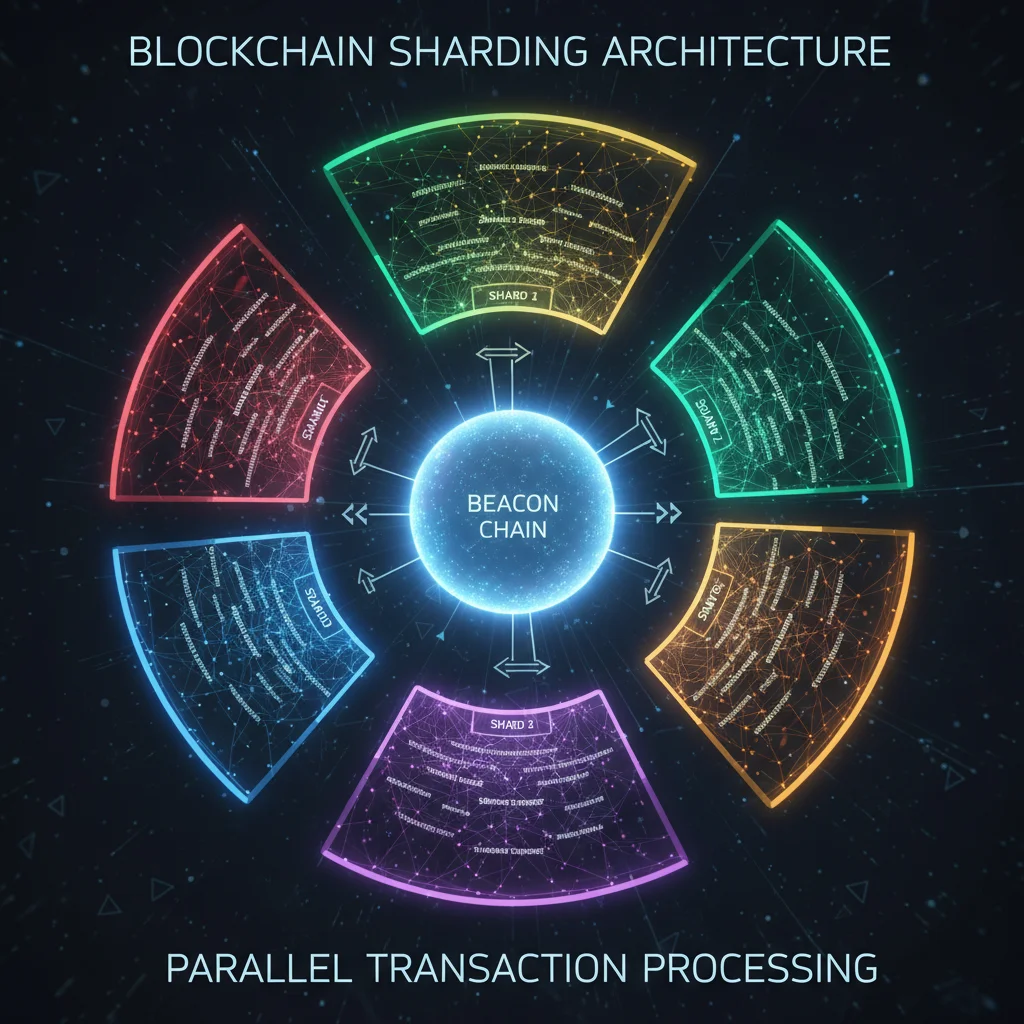
Sharding is a fundamental scalability technique borrowed from traditional database management systems and adapted for blockchain networks. In essence, sharding involves dividing a blockchain into smaller, more manageable segments called ‘shards.’ Each shard processes a subset of the network’s transactions and maintains its own state, effectively allowing multiple transactions to be processed in parallel across different shards. This dramatically increases the overall transaction throughput of the network, a critical factor for achieving robust blockchain gaming scalability.
Imagine a single, long queue at a bank. If you introduce multiple tellers and multiple queues, each teller can serve customers simultaneously, significantly reducing waiting times. Sharding works on a similar principle. Instead of every node validating every transaction across the entire network, nodes are assigned to specific shards and only need to validate transactions within their assigned shard. This reduces the computational load on individual nodes and allows the network to process many more transactions concurrently.
Ethereum 2.0 (Eth2) and Shard Chains
The most prominent example of sharding in action is the ongoing upgrade of Ethereum to Ethereum 2.0 (now often referred to as the ‘Merge’ and subsequent upgrades like ‘Surge’ and ‘Shankhai’). While the initial Merge focused on transitioning to Proof-of-Stake, future phases (specifically the ‘Surge’) will introduce shard chains. Ethereum plans to implement 64 (or more) shard chains, which will run in parallel and communicate with a central ‘Beacon Chain.’ This architecture is designed to vastly improve Ethereum’s transaction capacity and reduce gas fees, making it a much more viable base layer for demanding applications like blockchain games.
The benefits of sharding for blockchain gaming scalability are profound:
- Increased Throughput: By parallelizing transaction processing, the network can handle a much larger volume of transactions per second.
- Reduced Latency: Faster transaction processing leads to quicker confirmation times, enhancing the real-time nature of gaming.
- Lower Costs: With increased capacity, network congestion decreases, which in turn leads to lower transaction fees.
- Enhanced Decentralization: While it might seem counterintuitive, sharding can actually improve decentralization by making it easier for individual nodes to participate, as they only need to store and process data for a specific shard, rather than the entire blockchain.
However, sharding also introduces complexities, particularly concerning cross-shard communication and maintaining overall network security. Ensuring that transactions across different shards can interact seamlessly and securely is a significant engineering challenge. Despite these complexities, sharding remains a cornerstone of long-term blockchain gaming scalability strategies for many foundational blockchain networks, promising a future where high-performance, decentralized games can thrive on the mainnet.
4. Data Availability Layers and Validiums
As Layer 2 solutions, particularly ZK-Rollups, gain traction, a new set of challenges and solutions related to data availability has emerged. For an L2 solution to be truly secure, the data for all transactions processed off-chain must be publicly available on the mainnet. This allows anyone to reconstruct the L2 state and verify the validity of transactions, acting as a safeguard against malicious operators. However, posting all transaction data to the L1 can still be expensive and contribute to L1 congestion, somewhat negating the benefits of L2s.
This is where Data Availability (DA) Layers and Validiums come into play, offering innovative ways to manage data while maintaining security and significantly improving blockchain gaming scalability.
Data Availability Layers
Dedicated Data Availability Layers are specialized blockchains or networks designed solely to provide a highly efficient and cost-effective way to make transaction data available. Instead of posting all rollup transaction data directly to the expensive L1, the rollup posts a cryptographic commitment to the data on the L1, and the actual raw transaction data is stored on the DA layer. This significantly reduces the amount of data the L1 needs to process, leading to lower costs and higher throughput for the L2.
Projects like Celestia are pioneering the concept of modular blockchains, where different layers are specialized for specific functions (execution, settlement, consensus, data availability). A rollup built on a DA layer like Celestia can achieve much higher throughput and lower fees than a rollup that posts all its data directly to a monolithic L1, making it incredibly attractive for the demanding environment of blockchain games.
Validiums
Validiums are similar to ZK-Rollups in that they use zero-knowledge proofs to verify transaction validity. However, the key distinction lies in where the transaction data is stored. Unlike ZK-Rollups, which post all transaction data on the L1, Validiums store transaction data off-chain, typically with a trusted third party or a committee of data availability providers. This makes Validiums extremely fast and cheap, as the L1 doesn’t need to store any of the transaction data.
While Validiums offer superior blockchain gaming scalability in terms of raw speed and cost, they come with a trade-off: a slightly reduced level of decentralization and censorship resistance compared to ZK-Rollups, because the data isn’t directly on the L1. If the off-chain data providers collude or become unavailable, users might not be able to reconstruct the L2 state. However, for certain gaming applications where speed and cost are paramount and the value of individual assets is not astronomically high, Validiums can be an excellent solution. They strike a balance between performance and security, making them a viable option for specific game types.
By optimizing how data is made available and verified, both DA layers and Validiums push the boundaries of what’s possible for blockchain gaming scalability, enabling a new generation of high-performance decentralized applications.
5. Application-Specific Blockchains and Subnets
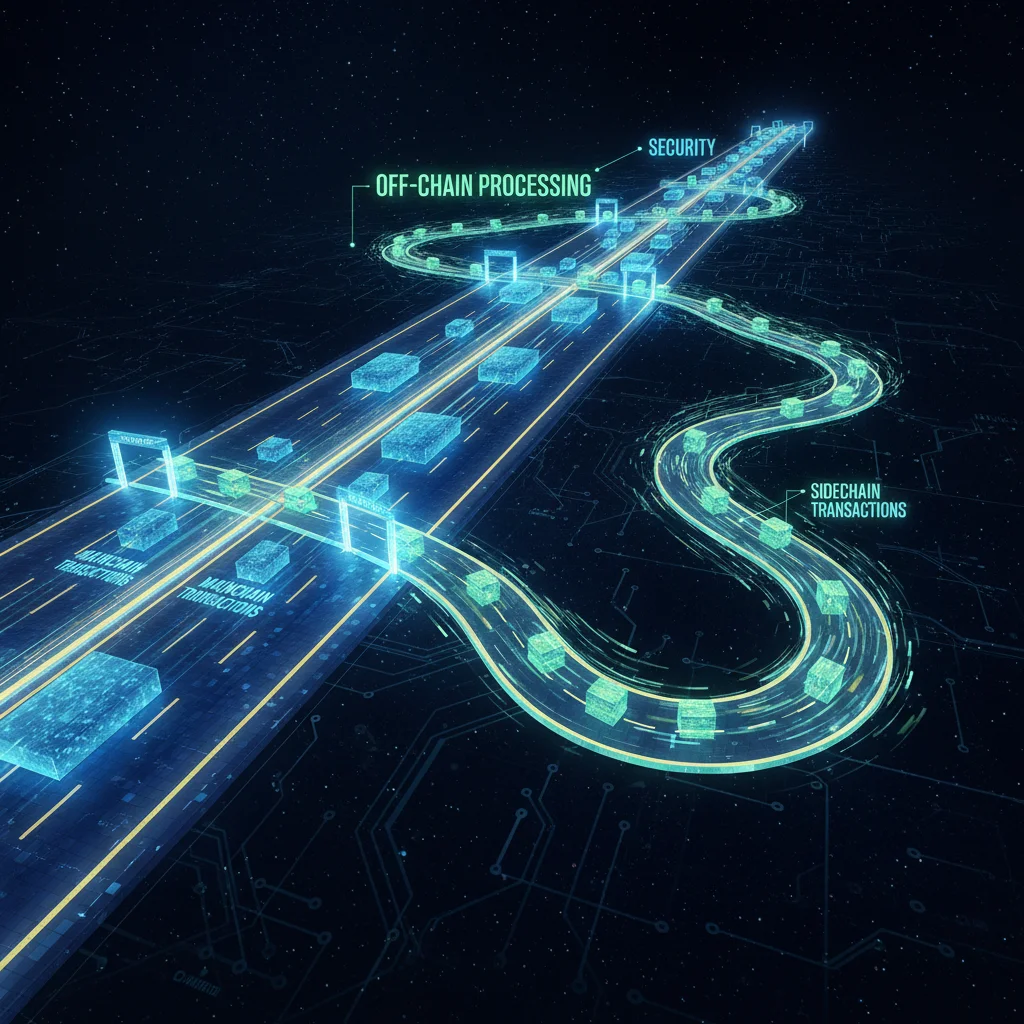
The fifth significant trend addressing blockchain gaming scalability involves the development of application-specific blockchains, often referred to as ‘app-chains’ or ‘subnets.’ This approach takes the concept of sidechains a step further by creating entire blockchain networks that are custom-built and optimized for a single application or a specific set of related applications, such as a particular blockchain game or an ecosystem of games.
Instead of building a game on a general-purpose blockchain (even an L2 or sidechain), developers can launch their own dedicated blockchain. This allows for unparalleled customization and control over the network’s parameters, consensus mechanism, and overall architecture. This level of specialization means that the blockchain can be finely tuned to meet the exact performance requirements of the game, without being affected by other dApps or general network congestion.
Examples and Benefits:
- Avalanche Subnets: Avalanche is a platform that allows anyone to launch custom, application-specific blockchains called ‘Subnets.’ Each Subnet can have its own virtual machine (VM), its own native token for gas fees, and its own validator set. This offers immense flexibility. For example, a game developer can launch a Subnet where transaction fees are paid in the game’s native token, or even be completely free for certain in-game actions, significantly enhancing the player experience. The entire processing power of the Subnet is dedicated to the game, ensuring optimal performance.
- Cosmos SDK and Polkadot Parachains: Similar to Avalanche Subnets, frameworks like Cosmos SDK and Polkadot Parachains enable developers to build highly customized, interoperable blockchains. These platforms provide the tools to create sovereign chains that can communicate with each other, forming an ‘internet of blockchains.’ This allows game developers to design their blockchain from the ground up, choosing the most suitable consensus algorithm and economic model for their game.
The benefits of application-specific blockchains for blockchain gaming scalability are considerable:
- Dedicated Resources: The entire network’s resources are dedicated to the game, eliminating competition for block space from other applications.
- Customization: Developers have complete control over the blockchain’s parameters, allowing for deep optimization for gaming needs (e.g., faster block times, specific transaction types, custom fee structures).
- Economic Flexibility: Native game tokens can be used for gas, creating a more integrated and player-friendly economic model.
- Enhanced Security and Control: While requiring their own validator sets, these chains offer developers more direct control over security and governance, which can be tailored to the game’s specific needs.
While launching and maintaining an entire blockchain requires more resources and expertise than simply deploying a smart contract on an existing L1 or L2, the long-term benefits in terms of performance, customization, and user experience make app-chains an increasingly attractive option for large-scale and ambitious blockchain gaming projects looking for ultimate blockchain gaming scalability.
The Road Ahead for Blockchain Gaming
The journey to achieve seamless and universally accessible blockchain gaming is an ongoing process, but the advancements in blockchain gaming scalability solutions are rapidly accelerating this evolution. The five approaches discussed – Layer 2 solutions (Rollups), Sidechains, Sharding, Data Availability Layers/Validiums, and Application-Specific Blockchains/Subnets – are not mutually exclusive. In fact, many projects are exploring hybrid approaches, combining the strengths of different technologies to create robust and highly performant infrastructures.
The impact of these innovations cannot be overstated. By alleviating network congestion and reducing transaction costs, these solutions are breaking down significant barriers to entry for both players and developers. Gamers can look forward to more responsive, immersive, and economically viable experiences, where their actions are reflected instantly and their digital assets are truly their own, without the burden of exorbitant fees or frustrating delays. Developers, in turn, are empowered to build more complex, dynamic, and ambitious games, pushing the boundaries of what’s possible in decentralized virtual worlds.
As the blockchain gaming ecosystem matures, we can anticipate further refinements and new breakthroughs in scalability. The focus will likely shift towards greater interoperability between different L2s and sidechains, ensuring that assets and experiences can flow freely across various networks. User experience will also be paramount, with efforts directed at abstracting away the underlying blockchain complexities, making Web3 gaming as intuitive and accessible as traditional gaming.
The future of blockchain gaming is bright, and its trajectory is inextricably linked to the continuous innovation in scalability. The solutions discussed here are not just technical fixes; they are foundational pillars that will support the growth of a new digital economy, where players are at the heart of creation, ownership, and governance. The era of truly scalable, decentralized gaming is not just a distant dream – it’s rapidly becoming a reality, thanks to the relentless efforts to solve the critical challenge of network congestion and enhance blockchain gaming scalability across the board. The next few years promise to be transformative, as these technologies enable mainstream adoption and unlock the full potential of this revolutionary sector.