The Future of Gaming Displays: MicroLED and QD-OLED Innovations for 2026
The gaming landscape is in a constant state of evolution, with advancements in hardware continually pushing the boundaries of what’s possible. While powerful GPUs and CPUs grab headlines, the unsung hero of the immersive gaming experience is undoubtedly the display. By 2026, we are on the cusp of a monumental shift in display technology, with MicroLED and QD-OLED leading the charge. These gaming display innovations promise to redefine visual fidelity, offering gamers unprecedented levels of clarity, color accuracy, and responsiveness.
For years, gamers have chased higher refresh rates, lower response times, and ever-increasing resolutions. While these metrics remain crucial, the next generation of displays will elevate the entire visual experience through fundamental changes in how light and color are produced. Imagine games rendered with perfect blacks, infinite contrast, colors that pop with lifelike vibrancy, and motion so fluid it blurs the line between virtual and reality. This isn’t a distant dream; it’s the imminent reality brought forth by MicroLED and QD-OLED technologies. This article will delve deep into these groundbreaking advancements, exploring their technical underpinnings, their distinct advantages, and what they mean for the future of gaming.
Understanding the Current Gaming Display Landscape
Before we dive into the future, it’s essential to understand where we currently stand. Today’s gaming displays are primarily dominated by LCD (Liquid Crystal Display) and OLED (Organic Light-Emitting Diode) technologies. Each has its strengths and weaknesses, shaping the gaming experiences we’ve come to know.
LCD Technology: The Workhorse of Gaming
LCDs, particularly IPS (In-Plane Switching) and VA (Vertical Alignment) panels, are ubiquitous. They offer a good balance of cost, performance, and availability. IPS panels are lauded for their wide viewing angles and accurate color reproduction, making them popular for competitive gaming and content creation. VA panels, on the other hand, typically boast higher contrast ratios due to their ability to block more light, leading to deeper blacks than IPS, though often at the expense of viewing angles and response times.
However, LCDs inherently rely on a backlight. This means that even when displaying black, some light bleed can occur, leading to less-than-perfect black levels and a phenomenon known as ‘IPS glow’ or ‘backlight bleed’. While local dimming technologies have improved contrast by selectively dimming parts of the backlight, they still struggle to achieve true per-pixel black levels.
OLED Technology: The Premium Experience
OLED displays have long been considered the pinnacle of visual quality, especially in the television market, and have recently made significant inroads into the gaming monitor space. Unlike LCDs, each pixel in an OLED display is self-emissive, meaning it generates its own light. This allows for perfect blacks (by simply turning off individual pixels), an infinite contrast ratio, and incredibly vibrant colors. OLEDs also boast near-instantaneous response times, making them ideal for fast-paced gaming where ghosting and motion blur are unacceptable.
Despite their numerous advantages, OLEDs come with their own set of challenges. Historically, concerns about burn-in (permanent image retention) have been a deterrent, though manufacturers have implemented various technologies to mitigate this risk. They can also be less bright than high-end LCDs, particularly in full-screen white scenes, and are generally more expensive to produce, limiting their accessibility for many gamers. These limitations are precisely what the next wave of gaming display innovations aims to overcome.
MicroLED: The Next Frontier in Display Technology
MicroLED technology represents a radical departure from traditional display manufacturing, promising to combine the best aspects of both LCD and OLED while minimizing their respective drawbacks. It’s a technology that has been talked about for years, and by 2026, we anticipate seeing more widespread adoption in the high-end gaming market.
What is MicroLED?
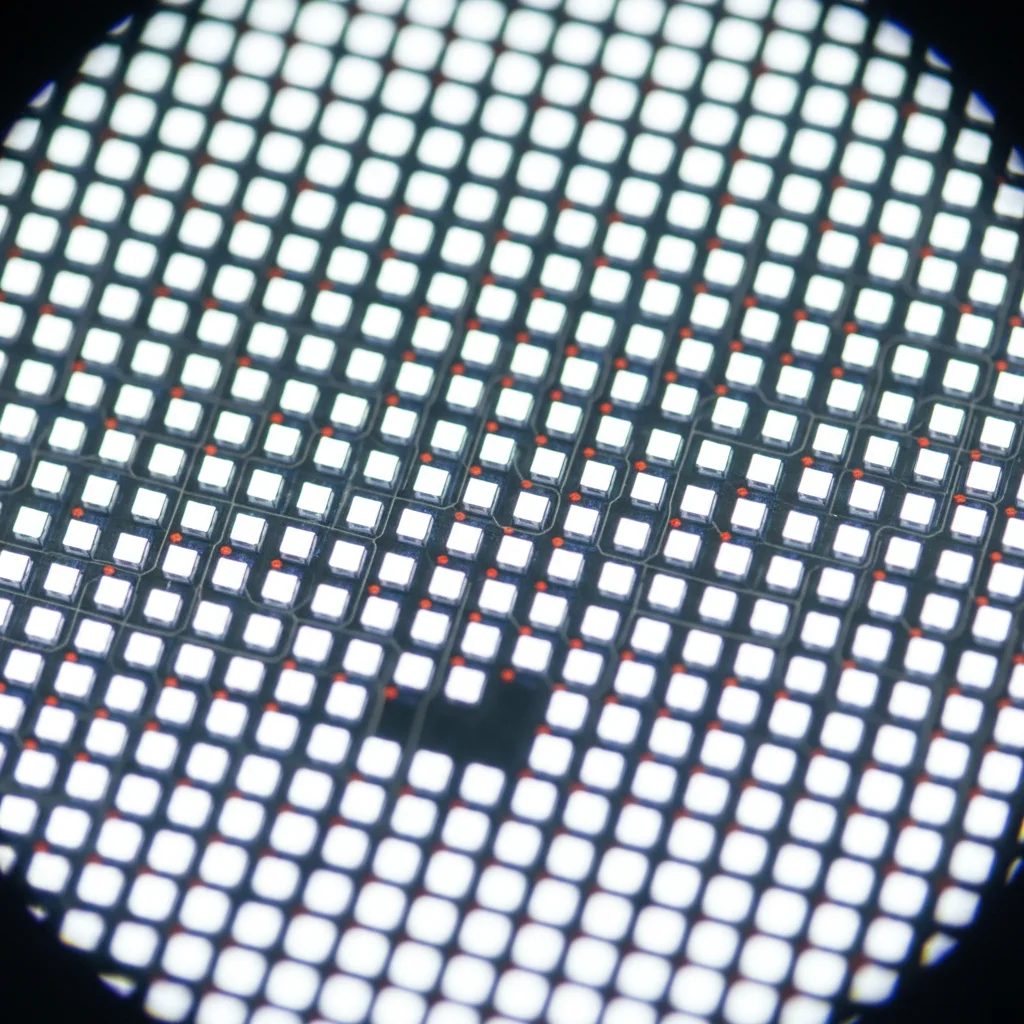
At its core, MicroLED is an emissive display technology, much like OLED. However, instead of using organic light-emitting diodes, it utilizes microscopic, inorganic LEDs for each individual pixel. We’re talking about LEDs that are measured in micrometers, thousands of times smaller than conventional LEDs. Each of these tiny LEDs can be individually controlled, turning on and off to create light and color.
Key Advantages of MicroLED for Gaming
- Perfect Blacks and Infinite Contrast: Like OLED, MicroLED pixels are self-emissive. This means when a pixel needs to display black, it simply turns off, resulting in true, absolute black and an infinite contrast ratio. This drastically enhances the depth and realism of game visuals.
- Exceptional Brightness: Unlike OLED, which can sometimes struggle with peak brightness, MicroLEDs are capable of achieving incredibly high luminance levels. This translates to stunning HDR (High Dynamic Range) performance, with bright highlights that truly pop and a wider dynamic range that makes games feel more lifelike.
- Superior Durability and Longevity: Because MicroLEDs use inorganic materials, they are far less susceptible to burn-in and degradation compared to organic OLED materials. This makes them a more robust and long-lasting option, particularly appealing for static UI elements common in gaming.
- Wide Color Gamut and Accuracy: MicroLEDs can reproduce an incredibly wide range of colors with exceptional accuracy, ensuring that game developers’ artistic visions are displayed precisely as intended.
- Fast Response Times: Similar to OLED, MicroLED pixels can switch on and off almost instantaneously, leading to virtually no motion blur or ghosting, which is crucial for competitive gaming.
- Scalability and Modularity: One of MicroLED’s most exciting prospects is its modular nature. Displays can be constructed from multiple smaller MicroLED panels seamlessly tiled together. This opens the door for truly massive, custom-sized gaming monitors and wall-sized displays without the limitations of single-panel fabrication.
Challenges and the Road to 2026 for MicroLED
Despite its immense potential, MicroLED faces significant manufacturing challenges. The process of precisely placing millions of microscopic LEDs onto a substrate (known as ‘mass transfer’) is incredibly complex and expensive. This is why current MicroLED products are primarily limited to ultra-premium, very large-format displays. However, ongoing research and development are focused on streamlining these processes, driving down costs, and increasing yields. By 2026, we expect to see these advancements translate into more attainable (though still premium) MicroLED gaming monitors and TVs, pushing the boundaries of gaming display innovations.
QD-OLED: The Evolution of OLED with Quantum Dots
While MicroLED offers a revolutionary approach, QD-OLED represents a significant evolution of existing OLED technology, leveraging the power of quantum dots to enhance performance. This hybrid technology aims to address some of the traditional limitations of OLED, making it an incredibly compelling option for gamers.
What is QD-OLED?
QD-OLED combines the self-emissive properties of OLED with the color-enhancing capabilities of quantum dots. In a QD-OLED panel, blue OLEDs act as the light source, and this blue light then passes through layers of red and green quantum dots. These quantum dots convert the blue light into pure red and green light, creating a full-color spectrum without the need for traditional color filters.
Key Advantages of QD-OLED for Gaming
- Perfect Blacks and Infinite Contrast: Inheriting from OLED, QD-OLED offers perfect black levels by turning off individual pixels, leading to unparalleled contrast and depth in game visuals.
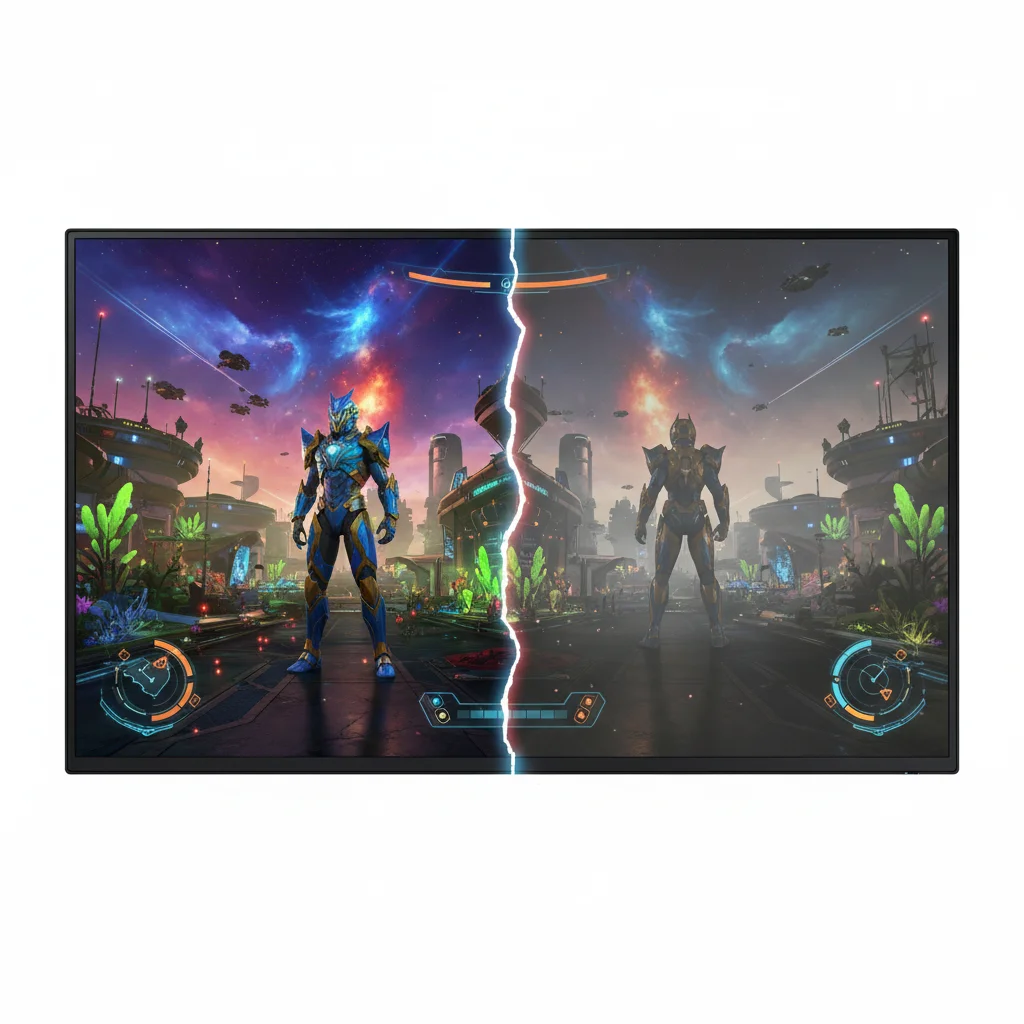
- Enhanced Color Volume and Accuracy: The use of quantum dots allows QD-OLED to achieve an incredibly wide color gamut and exceptional color volume. This means colors remain vibrant and accurate even at very high brightness levels, which is a common challenge for traditional OLEDs. Games will appear more saturated and lifelike than ever before.
- Higher Peak Brightness: By eliminating color filters (which absorb light), QD-OLED can achieve higher peak brightness levels compared to traditional white-OLED (WOLED) panels. This significantly improves HDR performance, allowing for more impactful highlights and a dazzling visual experience.
- Wider Viewing Angles: QD-OLED maintains excellent color and brightness uniformity even at extreme viewing angles, ensuring that the visual experience remains consistent regardless of where you’re sitting.
- Fast Response Times: Like traditional OLED, QD-OLED boasts near-instantaneous pixel response times, virtually eliminating motion blur and ghosting for a smooth, crisp gaming experience.
- Reduced Risk of Burn-in: While still an OLED technology, the specific sub-pixel structure and blue-only OLED emitter design of QD-OLED, combined with sophisticated pixel shifting and compensation algorithms, are designed to further mitigate the risk of burn-in compared to earlier OLED iterations.
QD-OLED’s Impact by 2026
QD-OLED technology is already making its way into the market, and by 2026, we anticipate it will be a dominant force in the premium gaming monitor and TV segments. Its ability to offer the best of OLED (perfect blacks, instant response) with improved brightness and color volume makes it an incredibly attractive proposition for gamers seeking the ultimate visual experience. As manufacturing processes mature, we can expect prices to become more competitive, making these gaming display innovations more accessible to a broader audience.
Comparing MicroLED and QD-OLED for Gaming in 2026
Both MicroLED and QD-OLED represent significant leaps forward, but they approach the problem from different angles and will likely carve out distinct niches in the gaming market by 2026.
Brightness and HDR Performance
MicroLED is expected to hold the edge in raw brightness, potentially reaching levels far exceeding current QD-OLEDs. This makes it the ultimate choice for environments with high ambient light or for those who desire the most impactful HDR experience possible. QD-OLED, while brighter than traditional OLED, will still likely be a step below MicroLED in peak luminance, though its color volume at high brightness remains exceptional.
Color Accuracy and Volume
Both technologies offer incredible color accuracy and wide color gamuts. QD-OLED, with its quantum dot layer, excels in color volume, maintaining vibrant and accurate colors even at high brightness. MicroLED also delivers excellent color, and its self-emissive nature ensures purity.
Contrast and Black Levels
This is where both technologies truly shine, offering perfect blacks and infinite contrast ratios that are a significant upgrade over even the best local-dimming LCDs. The difference here will be negligible, as both achieve true pixel-level light control.
Response Time and Motion Handling
Both MicroLED and QD-OLED boast near-instantaneous response times, ensuring a virtually blur-free gaming experience. For competitive gamers, either technology will offer a substantial advantage in motion clarity.
Durability and Longevity
MicroLED, being inorganic, is inherently more durable and resistant to burn-in than any organic-based display, including QD-OLED. While QD-OLED has made significant strides in mitigating burn-in, MicroLED will likely remain the king of longevity, especially for displays with static elements or extended use.
Cost and Availability by 2026
By 2026, QD-OLED is likely to be more widely available and relatively more affordable than MicroLED. MicroLED will probably remain a luxury item, primarily for very large-format installations or ultra-premium niche products, given its complex manufacturing. QD-OLED will likely become the go-to premium choice for mainstream gaming monitors and TVs.
The Impact on Gaming Experiences
These gaming display innovations are not just about technical specifications; they are about fundamentally transforming how we interact with games. Here’s what gamers can expect:
Unprecedented Realism and Immersion
Perfect blacks, infinite contrast, and vibrant colors will make game worlds feel more tangible and alive. Dark scenes will have true depth without graying, and bright scenes will dazzle with unparalleled brilliance. This will significantly enhance immersion, pulling players deeper into the narrative and action.
Superior HDR Gaming
HDR content will truly shine on MicroLED and QD-OLED displays. The ability to render a much wider range of luminance and color will bring a new level of detail and impact to games designed with HDR in mind. Explosions will be brighter, shadows will be deeper, and the overall visual fidelity will be breathtaking.
Competitive Edge and Smoother Gameplay
Near-instantaneous response times mean zero ghosting and minimal motion blur, providing crystal-clear visuals even in the fastest-paced competitive games. This clarity can translate to a real competitive advantage, allowing players to react faster and track targets more effectively.
Future-Proofing Your Setup
Investing in a MicroLED or QD-OLED display by 2026 will future-proof your gaming setup for years to come. As game engines and graphics cards continue to evolve, these displays will be capable of showcasing the full potential of future titles, ensuring you’re always at the cutting edge of visual technology.
Beyond 2026: What’s Next?
While MicroLED and QD-OLED will define the premium gaming display market by 2026, research and development never stop. We can anticipate even further refinements and new concepts emerging beyond this timeframe. Hybrid approaches, even more efficient manufacturing, and perhaps entirely new display technologies could be on the horizon. The goal will always be to deliver even more immersive, responsive, and visually stunning experiences to gamers.
Further advancements in pixel density, refresh rates (pushing beyond current limits), and power efficiency will also be key areas of focus. Imagine displays that are not only incredibly vibrant and responsive but also consume minimal power, contributing to more sustainable gaming. The integration of eye-tracking technologies and variable refresh rate (VRR) standards will also continue to evolve, becoming even more seamless and effective on these next-generation panels.
The Role of AI in Display Optimization
Artificial intelligence is already playing a significant role in image processing and upscaling, and its influence on display technology will only grow. By 2026, expect AI-powered algorithms to further optimize picture quality on MicroLED and QD-OLED panels, dynamically adjusting brightness, contrast, and color in real-time based on content and ambient lighting conditions. This will lead to an even more personalized and contextually aware viewing experience.
Form Factors and Flexibility
The modularity of MicroLED, in particular, hints at a future where display form factors are far less constrained. Imagine gaming rooms with entire walls transforming into dynamic, ultra-high-resolution displays, or curved, wrap-around monitors that offer unparalleled peripheral vision and immersion. QD-OLED’s thinner profile also lends itself to sleeker designs and potentially more flexible displays in the long run.
Conclusion: A Bright Future for Gaming Visuals
The year 2026 is shaping up to be a landmark period for gaming display innovations. Both MicroLED and QD-OLED technologies are set to revolutionize how we perceive and interact with our favorite games. With their ability to deliver perfect blacks, infinite contrast, stunning brightness, and unparalleled color accuracy, they promise an era of unprecedented visual fidelity. While MicroLED will likely remain a high-end, aspirational technology due to manufacturing complexities, QD-OLED is poised to become the dominant premium choice, offering a compelling blend of performance and accessibility.
Gamers can look forward to a future where their virtual worlds are rendered with breathtaking realism, where every detail pops, and every motion is flawlessly smooth. The choice between MicroLED and QD-OLED will largely depend on individual priorities, budget, and specific use cases, but one thing is certain: the visual experience of gaming is about to reach new heights. Prepare to be immersed like never before, as these cutting-edge display technologies usher in a golden age for gaming visuals.