
The gaming industry, a powerhouse of entertainment and technological innovation, is in a constant state of flux. While new studios emerge and indie titles capture hearts, the landscape at the top is frequently redrawn by significant corporate maneuvers. In the last six months, the United States gaming market has been particularly active, witnessing two major mergers that are poised to redefine competition, innovation, and consumer experience. These gaming industry mergers are not just financial transactions; they are strategic chess moves with far-reaching implications for developers, publishers, and players alike.
Understanding these shifts is crucial for anyone invested in or impacted by the gaming world. From the potential for exclusive content to the reshaping of development pipelines and the competitive balance among platform holders, the ripple effects are immense. This comprehensive analysis will delve into the specifics of these two pivotal acquisitions, exploring the motivations behind them, their immediate and long-term consequences, and what they signify for the future of the gaming industry. We will examine how these gaming industry mergers are not merely expanding existing empires but are fundamentally altering the competitive dynamics and strategic direction of the entire sector.
The consolidation trend in gaming is not new, but the scale and strategic intent behind recent deals highlight a maturing industry grappling with increasing development costs, the pursuit of subscriber growth in service-based models, and the fierce battle for intellectual property. As companies strive for greater market share and diversified revenue streams, mergers and acquisitions become powerful tools in their arsenal. These recent gaming industry mergers underscore a strategic pivot towards securing valuable franchises, talent, and technological capabilities, setting the stage for an even more competitive and innovative future.
The Rationale Behind Major Gaming Industry Mergers
Before diving into the specifics of the recent transactions, it’s essential to understand the underlying motivations driving such massive gaming industry mergers. These aren’t impulsive decisions; they are the result of meticulous strategic planning aimed at achieving significant competitive advantages and long-term growth. Several key factors typically fuel these large-scale consolidations.
Expansion of Intellectual Property (IP) Portfolio
One of the primary drivers is the acquisition of valuable intellectual property. In the gaming world, popular franchises are goldmines, boasting established fan bases, proven revenue streams, and significant merchandising potential. By acquiring companies with strong IP, buyers can immediately broaden their content offerings, reduce reliance on a limited set of titles, and gain access to new genres and demographics. This allows them to diversify their portfolio and create a more robust and resilient business model. The battle for exclusive content is fiercer than ever, and owning iconic franchises is a direct path to securing a competitive edge, particularly in the subscription service landscape.
Talent Acquisition and Technological Advantage
Mergers often involve acquiring not just assets, but also highly skilled talent and advanced technological capabilities. Game development is an intricate process, requiring specialized expertise in programming, art, design, and project management. When a larger company acquires a successful studio, it gains access to its experienced teams, creative minds, and proprietary technologies, such as game engines, development tools, or specialized rendering techniques. This can significantly accelerate innovation, improve development efficiency, and reduce the time and cost associated with building new capabilities from scratch. These gaming industry mergers effectively serve as a fast-track to talent and tech.
Market Share and Competitive Positioning
Increasing market share is another critical objective. In an increasingly competitive global market, larger entities often seek to consolidate their position by acquiring rivals or complementary businesses. This can lead to increased bargaining power with distributors, platform holders, and advertisers. By expanding their reach, companies can attract a larger player base, enhance their brand visibility, and achieve economies of scale in areas like marketing, infrastructure, and publishing. The goal is often to become an undeniable force in the market, capable of setting trends and influencing industry standards.
Diversification of Revenue Streams
The gaming industry has evolved beyond simple game sales. Subscription services, in-game purchases, esports, and cross-media adaptations (film, TV, merchandise) are now significant revenue contributors. Mergers can help companies diversify their revenue streams by integrating businesses that specialize in these different areas. For example, acquiring a mobile game developer can open up new demographics, while a studio with a strong live-service game can bolster subscription offerings. This diversification reduces financial risk and creates more stable, long-term growth opportunities, making these gaming industry mergers a strategic move for financial resilience.
Strategic Synergy and Ecosystem Building
Ultimately, many mergers are driven by the pursuit of synergy – the idea that the combined entity will be greater than the sum of its parts. This can involve integrating game studios with platform holders to create exclusive content ecosystems, or combining publishers with developers to streamline the game creation and distribution process. The aim is to create a cohesive ecosystem where different parts of the business complement each other, offering a more compelling value proposition to consumers and a more efficient operational model for the company. This ecosystem approach is particularly evident in the console space, where exclusive titles drive hardware sales and subscription sign-ups.
The First Major Merger: A Deep Dive into Acquisition A
Over the past six months, one of the most talked-about gaming industry mergers involved a major platform holder acquiring a renowned multi-platform publisher. This deal, let’s call it ‘Acquisition A’, sent shockwaves across the industry due to its sheer scale and the implications for competition and content exclusivity. The acquiring company, a household name in console and PC gaming, sought to significantly bolster its first-party content library and gain a stronger foothold in several key genres.
The Players Involved and Deal Specifics
The acquiring entity, known for its extensive hardware and software ecosystem, made a strategic move to integrate a publisher that boasts a rich history of critically acclaimed and commercially successful titles. The acquisition price, reportedly in the tens of billions of dollars, underscored the immense value placed on the target company’s intellectual property and development talent. This wasn’t merely about adding a few games; it was about absorbing an entire creative powerhouse with multiple established studios under its umbrella. The deal involved a complex regulatory approval process, scrutinized by antitrust authorities in various regions, including the United States, due to concerns about market dominance.
Motivations and Strategic Intent
The primary motivation for Acquisition A was undeniably content. The acquiring company recognized the increasing importance of exclusive, high-quality games as a differentiator in the subscription service wars. By bringing the acquired publisher’s vast catalog of games and future development pipeline under its wing, the acquirer aimed to create a compelling reason for players to commit to its ecosystem. This move was also a direct response to competitive pressures, as other major players in the tech and entertainment sectors continue to invest heavily in gaming content.
Furthermore, the merger provided an opportunity to integrate the acquired studios’ expertise into the acquiring company’s existing development infrastructure, potentially leading to cross-pollination of ideas and technologies. The long-term vision appears to be about building a sustainable content factory, capable of delivering a steady stream of blockbuster titles and innovative experiences for years to come. This strategic move is a clear indicator of how gaming industry mergers are being used to secure future growth.
Immediate and Long-Term Impact
The immediate impact of Acquisition A was a significant re-evaluation of market dynamics. Competitors immediately faced the challenge of how to counter such a formidable expansion of content. For consumers, the most noticeable change will likely be the increased availability of the acquired publisher’s games on the acquiring company’s subscription service, potentially at launch. This could drive significant subscriber growth and attract new players into the ecosystem.
Long-term, the implications are even more profound. The merger could lead to a shift in development priorities for the acquired studios, with a greater focus on titles that align with the acquiring company’s platform strategy. There’s also the potential for increased investment in existing franchises, breathing new life into beloved series. However, concerns about reduced competition and potential homogenization of game design have also been raised. The ability of the acquiring company to successfully integrate the new studios while preserving their creative autonomy will be crucial for the merger’s ultimate success.
The Second Major Merger: Unpacking Acquisition B
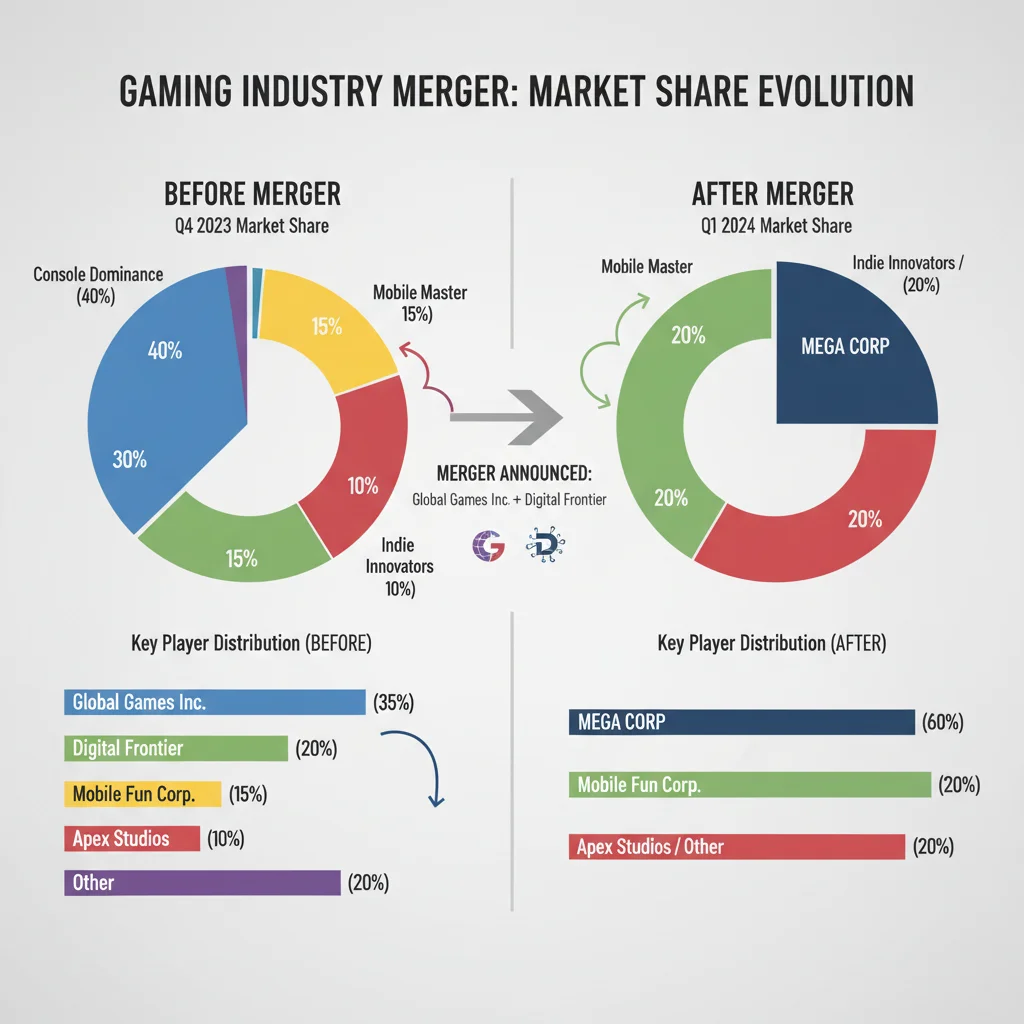
Hot on the heels of the first major deal, another significant transaction, ‘Acquisition B’, reshaped a different segment of the US gaming market. This merger involved a prominent mobile gaming giant acquiring a highly successful independent developer known for its innovative approaches to live-service games and community engagement. While perhaps not as headline-grabbing in terms of sheer dollar value as Acquisition A, its strategic importance for the rapidly expanding mobile and live-service sectors cannot be overstated. This is another prime example of how gaming industry mergers are diversifying portfolios.
The Entities Involved and Transaction Overview
The acquiring company in Acquisition B is a titan in the mobile gaming space, known for its massive player base and expertise in free-to-play monetization. The target was a developer celebrated for creating engaging, long-lasting online multiplayer experiences, often characterized by strong community features and consistent content updates. The deal, valued in the billions, reflected the strategic value of the acquired company’s technology, its established player base, and its proven ability to run successful live-service operations. This acquisition was less about raw IP and more about operational prowess and market penetration within a specific, lucrative niche.
Strategic Motivations and Market Expansion
The primary motivation for Acquisition B was to strengthen the acquiring company’s position in the lucrative and growing live-service gaming market, particularly on mobile platforms. The acquired developer brought with it not only successful titles but also a deep understanding of player retention, community management, and iterative content development – crucial skills for long-term success in the live-service model. By integrating this expertise, the mobile gaming giant aims to enhance its existing portfolio, develop new live-service offerings, and potentially expand into new geographical markets where the acquired developer has a strong presence.
Furthermore, this merger represents a strategic diversification for the acquiring company beyond its traditional casual gaming offerings. It signifies an intent to capture a more dedicated, engaged player base that is willing to invest more time and money into persistent online worlds. The synergy here is clear: leverage the mobile giant’s marketing power and distribution network with the acquired developer’s proven game design and live-ops capabilities. Such gaming industry mergers are vital for staying competitive in evolving market segments.
Anticipated Effects on the Mobile and Live-Service Markets
Acquisition B is expected to have a significant impact on the mobile and live-service gaming markets. For players, it could mean more resources being poured into their favorite live-service games, leading to faster content updates, improved features, and potentially new cross-promotional opportunities within the acquiring company’s ecosystem. The increased financial backing could allow the acquired developer to scale its operations and innovate at a faster pace. This is a very positive outlook for players, as the resources from these gaming industry mergers can be reinvested into game development.
For competitors, this merger intensifies the battle for player engagement in the live-service sector. It sets a new benchmark for what is expected in terms of content delivery and community support. Smaller independent developers in this space might find it harder to compete against a newly empowered giant, potentially leading to further consolidation or a push towards more niche markets. The long-term trend suggests an increasing focus on games as services, and this merger solidifies one company’s position at the forefront of that movement. The implications for talent mobility within this specialized sector are also noteworthy, as developers may be drawn to the stability and resources offered by the larger combined entity.
The Broader Implications for the US Gaming Landscape
These two major gaming industry mergers are not isolated incidents; they are symptomatic of broader trends shaping the entire US gaming landscape. Their combined effects extend beyond the immediate companies involved, influencing everything from consumer choices to indie developer opportunities and regulatory oversight.
Impact on Competition and Market Diversity
The most immediate and debated consequence of such large-scale consolidation is its impact on competition. On one hand, these mergers create fewer, larger players, potentially stifling innovation from smaller entities and limiting consumer choice in the long run. Concerns about monopolistic practices, price increases, and reduced incentives for competitive pricing are frequently raised by critics and regulators. When a few dominant companies control a significant portion of the market, there’s a risk that they might dictate terms to developers, distributors, and even players.
On the other hand, proponents argue that these mergers foster a new kind of competition – a battle of ecosystems. Companies are not just competing on individual game sales but on the overall value proposition of their platforms, subscription services, and integrated experiences. This can drive innovation in service delivery, cloud gaming, and cross-platform play. The challenge for regulators is to strike a balance that allows for strategic growth while preventing anti-competitive behaviors that harm consumers and smaller businesses. The outcome of these gaming industry mergers on market diversity remains a critical area of observation.
The Rise of Subscription Services and Content Exclusivity
Both mergers underscore the undeniable trend towards subscription-based gaming services. As companies vie for recurring revenue and long-term player engagement, exclusive content becomes a powerful weapon. Acquisition A, in particular, highlights how platform holders are willing to spend vast sums to secure a steady stream of high-profile titles for their subscribers. This shift means that access to certain games might become increasingly tied to specific platforms or subscription plans, potentially fragmenting the player base and forcing consumers to make difficult choices or subscribe to multiple services.
This push for exclusivity also impacts developers. While being acquired by a major platform holder can provide financial stability and extensive resources, it also means their games will no longer reach the broadest possible audience. For some, this trade-off is acceptable; for others, it represents a loss of creative freedom or market reach. The long-term implications for how games are developed, distributed, and consumed are still unfolding, but these gaming industry mergers are certainly accelerating the pace of change.
Opportunities and Challenges for Independent Developers
The consolidation at the top creates a mixed bag of opportunities and challenges for independent game developers. On the one hand, a more consolidated market might mean fewer publishing partners, making it harder for indie studios to secure funding and distribution. The increased focus on blockbuster titles by major publishers could leave less room for experimental or niche projects.
However, there are also potential upsides. The demand for unique content remains strong, and larger companies might look to acquire successful indie titles or studios to fill gaps in their portfolios. Furthermore, the rise of powerful digital distribution platforms and crowdfunding means that indie developers still have avenues to reach audiences directly, bypassing traditional publishers. The key for indies will be to differentiate themselves, foster strong communities, and potentially partner with smaller, more agile publishers or self-publish effectively. The landscape created by these gaming industry mergers requires a strategic approach from all players.
Regulatory Scrutiny and Future Outlook
The sheer size and strategic importance of these gaming industry mergers have attracted significant regulatory scrutiny. Antitrust bodies in the US and globally are increasingly concerned about market concentration in the tech and entertainment sectors. Future mergers of similar scale are likely to face even more intense examination, with potential conditions or even outright blocking if they are deemed to harm competition or consumers. The outcomes of these regulatory reviews will set precedents for future consolidation efforts.
Looking ahead, the US gaming landscape is likely to continue evolving rapidly. We can expect further strategic acquisitions, particularly in emerging areas like cloud gaming, virtual reality, and artificial intelligence integration. The battle for talent, IP, and market share will remain fierce, driving both innovation and consolidation. Understanding these dynamics is essential for anyone navigating the exciting and complex world of video games.

Looking Ahead: The Future of Gaming Consolidation
The two major gaming industry mergers witnessed in the US over the last six months are potent indicators of a broader, accelerating trend: the consolidation of power and resources within the global gaming market. This isn’t just a fleeting phenomenon; it’s a structural shift driven by economic realities, technological advancements, and evolving consumer behaviors. As the industry matures and competition intensifies across multiple fronts – from premium console experiences to free-to-play mobile games and burgeoning cloud platforms – companies are compelled to seek strategic advantages through scale and diversification.
Continued Pursuit of IP and Talent
One of the most persistent drivers of future consolidation will undoubtedly be the continued pursuit of valuable intellectual property and top-tier creative talent. As development costs soar and the demand for fresh, engaging content grows, acquiring established franchises and proven studios becomes a less risky and often faster path to market leadership than building from scratch. We can anticipate further acquisitions of studios with strong track records in specific genres or those holding rights to beloved but perhaps underutilized IPs. The battle for exclusive content to fuel subscription services will only intensify, making these gaming industry mergers a recurring theme.
Emergence of New Strategic Areas
Beyond traditional game development, future mergers are likely to target companies specializing in emerging strategic areas. This includes firms focused on cloud gaming technology, AI-driven game development tools, metaverse infrastructure, and advanced analytics for player behavior. As gaming experiences become more interconnected, immersive, and data-driven, companies will seek to acquire the expertise and technology to lead in these nascent fields. The lines between gaming, social media, and other digital entertainment are blurring, suggesting potential cross-industry mergers that could bring entirely new players into the gaming space.
Global Expansion and Regional Dominance
While our focus has been on the US market, the trend of gaming industry mergers is global. Companies will continue to strategize for deeper penetration into key international markets, either by acquiring local developers with strong cultural insights or by expanding their existing operations through M&A. This could lead to a more diversified global gaming ecosystem, but also raise new questions about cultural localization and market access.
Increased Regulatory Scrutiny
As the scale of these mergers grows, so too will the level of regulatory scrutiny. Governments and antitrust bodies worldwide are becoming more assertive in reviewing large tech and media acquisitions. Future deals will likely face longer review periods, stricter conditions, and a higher probability of being challenged or even blocked if they are perceived to harm competition, innovation, or consumer welfare. Companies will need to navigate this complex regulatory landscape with increasing care, articulating clear justifications for their consolidation strategies.
The Role of Financial Investors
Private equity firms and other financial investors are also playing an increasingly significant role in gaming consolidation. Recognizing the industry’s robust growth and resilience, these entities are investing heavily, often acquiring multiple smaller studios or publishers with the aim of bundling them together for a larger sale down the line. This financial engineering adds another layer of complexity to the consolidation narrative, sometimes prioritizing short-term financial gains over long-term creative vision.
In conclusion, the recent gaming industry mergers in the US are more than just business headlines; they are foundational events that will shape the trajectory of interactive entertainment for years to come. They reflect an industry that is both mature and rapidly evolving, driven by an insatiable demand for content, technological advancement, and strategic competitive positioning. For players, developers, and investors alike, understanding these dynamics is paramount to navigating the exciting, yet increasingly consolidated, world of gaming.