Understanding Player Behavior: How Microtransactions are Evolving in US Games Post-2025
The landscape of video game monetization is in a constant state of flux, a dynamic interplay between technological advancement, shifting player expectations, and evolving ethical considerations. As we peer beyond 2025, the trajectory of microtransactions in US games promises to be particularly fascinating. No longer a nascent concept, microtransactions have matured into a multi-billion dollar industry, deeply embedded in the design and economy of countless titles. Yet, their future is far from a simple continuation of past trends. Instead, we anticipate a significant evolution, driven by a more discerning player base, increasing regulatory scrutiny, and a renewed focus on sustainable and ethical game design. This in-depth analysis will explore the intricate ways in which player behavior is shaping and being shaped by the evolving nature of US Gaming Microtransactions in the post-2025 era.

How would you like to receive it?
Select the option that suits you best.
Historically, microtransactions have been a contentious topic. From the early days of cosmetic items and small convenience purchases to the more recent proliferation of loot boxes and battle passes, the industry has navigated a complex path. The initial resistance from some segments of the gaming community has gradually given way to a more nuanced acceptance, albeit one still punctuated by vocal criticism when practices are perceived as exploitative or anti-consumer. This historical context is crucial, as it sets the stage for the innovations and challenges that lie ahead. The lessons learned from past successes and failures will undoubtedly inform the strategies employed by developers and publishers in the coming years, particularly as they seek to cultivate long-term engagement and trust with their player base.
The United States, as one of the largest and most influential gaming markets globally, often acts as a bellwether for broader industry trends. The sheer volume of players and the economic power they wield mean that changes in US player behavior regarding microtransactions have a ripple effect across the international gaming scene. Therefore, understanding these shifts is not merely an academic exercise; it is a critical endeavor for developers, investors, and players alike. Our journey into this future will uncover the key drivers of change, the emerging monetization models, and the ethical frameworks that will define the next generation of in-game purchases.
The Shifting Sands of Player Perception: Beyond Pay-to-Win
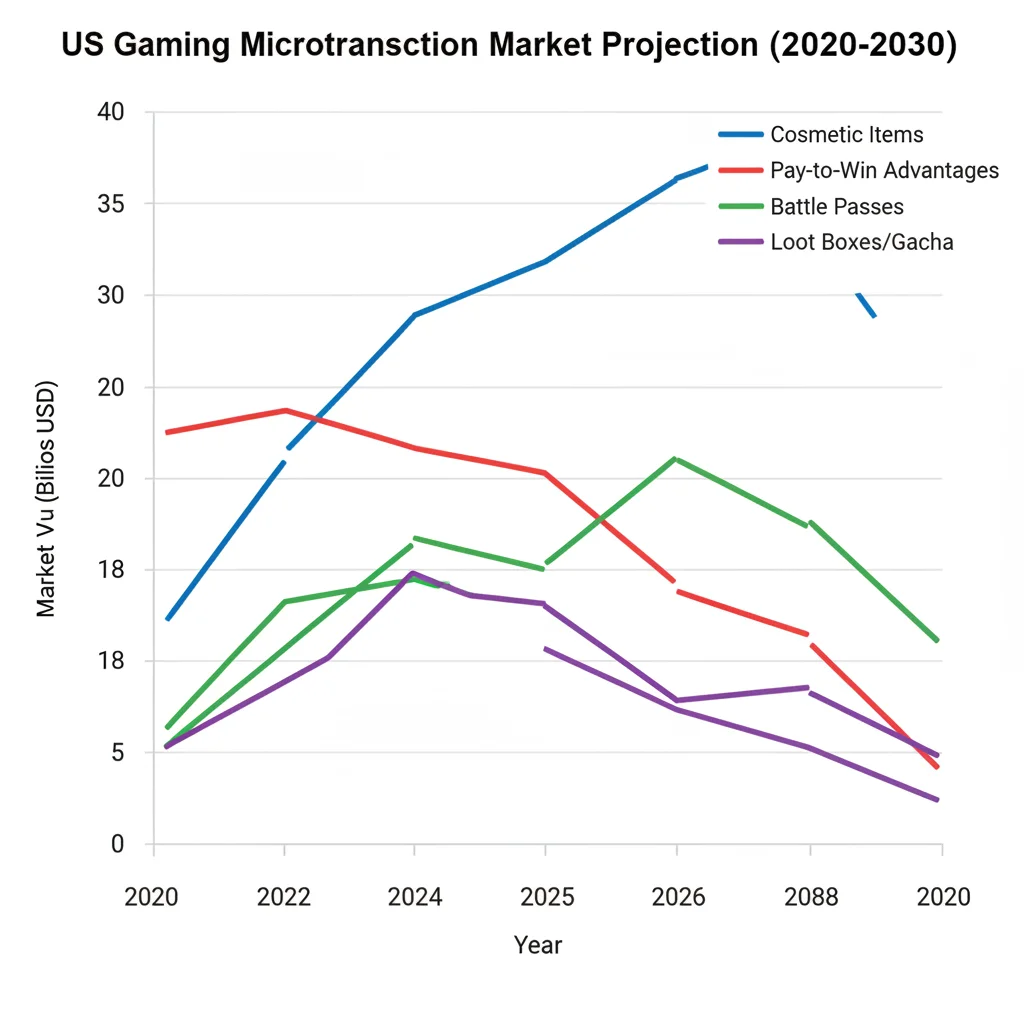
One of the most significant shifts we anticipate in US Gaming Microtransactions post-2025 is a definitive move away from overt ‘pay-to-win’ mechanics. While some games, particularly in competitive mobile markets, may still feature elements that blur this line, mainstream PC and console titles are likely to face increased player backlash and potentially even regulatory pressure if they heavily rely on such models. Players are becoming increasingly savvy, distinguishing between value-added content and exploitative practices. The community’s collective voice, amplified by social media and streaming platforms, has proven to be a powerful force in shaping developer decisions.
Instead, the focus will increasingly be on ‘pay-for-convenience’ and ‘pay-for-cosmetics,’ but with enhanced layers of ethical design. Cosmetic items, which allow players to personalize their in-game avatars and experiences without impacting gameplay balance, will continue to be a cornerstone. However, even these will evolve. We might see a greater emphasis on unique, limited-time cosmetic ownership, perhaps leveraging blockchain technology for true digital scarcity and tradability. This concept, often referred to as Web3 gaming, while still in its nascent stages, holds the potential to redefine how players perceive and value digital assets. The idea of owning a truly unique, transferable in-game item could fundamentally alter the perceived value proposition of cosmetic microtransactions.
Furthermore, ‘pay-for-convenience’ will need to be carefully balanced. While many players appreciate options to save time, such as XP boosts or resource packs, these must not feel essential to enjoying the core game experience. The line between convenience and necessity is delicate, and crossing it can quickly lead to accusations of predatory design. Developers will need to provide clear pathways for players to achieve similar outcomes through gameplay alone, ensuring that monetary transactions are genuinely optional and enhance, rather than gate, the experience. This means a greater emphasis on robust in-game economies that reward engagement and skill, making premium shortcuts feel like a luxury rather than a requirement.
The post-2025 player is also likely to be more educated about the underlying economics of games. Transparency will become a non-negotiable expectation. Players will demand to know what they are getting for their money, the odds associated with randomized items, and how their purchases contribute to the ongoing development and support of a game. This heightened awareness will necessitate clearer communication from developers and could even lead to standardized disclosures, similar to nutritional labels on food products. The gaming community’s growing sophistication is a powerful catalyst for change, forcing the industry to adapt its monetization strategies to be more player-centric and less opaque.
The Rise of Subscription Models and Battle Passes: Sustained Engagement
While traditional microtransactions will persist, subscription models and battle passes are poised for further refinement and widespread adoption in US Gaming Microtransactions post-2025. These models offer a predictable revenue stream for developers and a clear value proposition for players, fostering sustained engagement over time. Battle passes, in particular, have proven incredibly effective by gamifying progression and rewarding consistent play with a steady stream of cosmetic and convenience items.
However, the battle pass model itself is not without its challenges. Player fatigue from managing multiple battle passes across different games is a growing concern. Post-2025, we might see innovations that address this, perhaps through more flexible battle pass structures, cross-game progression systems, or even a tiered approach where a single subscription could unlock benefits across a publisher’s entire catalog. The key will be to offer enough unique content and progression to justify the purchase, without making players feel overwhelmed or pressured to play constantly to ‘get their money’s worth.’
Subscription services, like Xbox Game Pass or PlayStation Plus, are also likely to integrate more deeply with microtransaction ecosystems. Beyond simply offering access to a library of games, these services could provide exclusive in-game currency bonuses, unique cosmetic items, or early access to new content as part of their subscription tiers. This creates a powerful synergy, where the subscription enhances the value of individual game purchases, and in-game spending further enriches the subscription experience.
The appeal of these models lies in their ability to create a sense of community and shared experience. Players are not just buying an item; they are investing in the ongoing life of a game, participating in its seasonal cycles, and feeling a part of its evolving narrative. This sense of belonging and continuous reward is a powerful driver of long-term retention and spending. Developers will leverage data analytics to fine-tune these systems, ensuring that the reward loops are engaging and that players feel consistently valued for their continued participation.
Ethical Considerations and Regulatory Scrutiny: A New Era of Responsibility
The conversation around the ethics of US Gaming Microtransactions will intensify post-2025. Concerns regarding gambling-like mechanics, particularly in loot boxes, continue to draw attention from consumer protection groups and legislators. While the US has not seen the same level of outright bans as some European countries, the pressure for greater transparency and responsible design is mounting. We can anticipate increased self-regulation from the industry, potentially in the form of standardized disclosure requirements for odds, clearer labeling of randomized content, and improved parental controls.
Beyond loot boxes, discussions will expand to include the psychological impact of aggressive monetization strategies. Game design that intentionally preys on addictive tendencies, creates artificial scarcity, or uses manipulative psychological tricks to encourage spending will face greater scrutiny. Developers will need to demonstrate a commitment to player well-being, moving beyond simply maximizing revenue to fostering healthy and enjoyable gaming experiences. This might involve implementing features like spending limits, play-time reminders, and clearer opt-out options for certain types of monetization.
The role of data privacy will also become more prominent. As microtransactions become more sophisticated and personalized, the collection and use of player data will be under a magnifying glass. Players will expect greater control over their data and transparency regarding how it is used to inform monetization strategies. Compliance with evolving data protection regulations will be crucial, and companies that prioritize player privacy will likely gain a competitive edge.
Furthermore, the concept of ‘fairness’ in pricing and accessibility will be a recurring theme. While developers have a right to monetize their creations, there will be ongoing debates about whether certain price points or exclusivity models alienate segments of the player base. The rise of free-to-play games, heavily reliant on microtransactions, means that the initial barrier to entry is gone, but the ongoing cost of truly engaging with the game can be significant. Finding the right balance that allows for sustainable development while remaining inclusive will be a continuous challenge.
The Influence of Emerging Technologies: AI, Blockchain, and Metaverse
Emerging technologies will play a pivotal role in shaping the future of US Gaming Microtransactions post-2025. Artificial intelligence (AI), blockchain, and the burgeoning metaverse concept are not just buzzwords; they represent fundamental shifts in how games are designed, experienced, and monetized.
AI, for instance, could revolutionize personalized monetization. Instead of one-size-fits-all offers, AI algorithms could analyze individual player behavior, spending habits, and preferences to offer highly tailored microtransaction opportunities. This could range from suggesting cosmetic bundles that align with a player’s aesthetic choices to offering time-sensitive deals on items they are genuinely likely to purchase. While this offers immense revenue potential, it also raises ethical questions about algorithmic manipulation and the potential for creating hyper-targeted, potentially addictive spending prompts. Transparency and player control over such personalization will be key.
Blockchain technology, as mentioned earlier, could redefine digital ownership. Non-Fungible Tokens (NFTs) could allow players to truly own unique in-game assets, trade them on secondary markets, and even transfer them between compatible games. This concept of digital scarcity and interoperability could unlock entirely new forms of value for players and revenue streams for developers. However, the current volatility and environmental concerns surrounding blockchain, as well as the ‘speculative’ nature of many early NFT implementations, mean that widespread adoption in mainstream gaming will require careful navigation and a focus on genuine utility rather than pure speculation.
The metaverse, a persistent, interconnected virtual world, represents the ultimate evolution of digital economies. In a fully realized metaverse, microtransactions would extend beyond individual games to encompass a vast ecosystem of virtual goods, services, and experiences. Players might purchase virtual land, build digital businesses, or acquire unique avatars and accessories that are usable across multiple platforms. This vision promises unprecedented opportunities for monetization, but also presents complex challenges related to digital rights, interoperability standards, and the governance of these sprawling virtual economies. The ethical considerations around ownership, labor, and economic disparity within these metaverses will be paramount.
Evolving Game Design: Integrating Monetization Seamlessly
The most successful US Gaming Microtransactions post-2025 will be those that are seamlessly integrated into the core game design, rather than feeling like tacked-on revenue generators. This means a shift towards games that are built from the ground up with monetization in mind, but always with the player experience at the forefront.
We’ll see more games designed as ‘live services,’ constantly evolving with new content, events, and features that encourage ongoing engagement and provide natural opportunities for microtransactions. This isn’t just about selling new items; it’s about selling access to new experiences, new narratives, and new ways to interact with the game world. The monetization should feel like an organic extension of the game’s progression and content release schedule.
Furthermore, developers will increasingly focus on creating diverse revenue streams beyond direct purchases. This could include premium battle passes, optional expansions, community-driven content creation platforms where creators can monetize their work, and even advertising that is integrated in a non-disruptive, contextual manner. The goal is to offer players a wide array of choices for how they wish to support the game, catering to different budgets and preferences.
The concept of ‘value for money’ will be paramount. Players are willing to spend, but they expect a tangible return on their investment, whether that’s in terms of entertainment, personalization, or convenience. Games that consistently deliver high-quality content and a positive player experience will be the ones where microtransactions are most readily accepted and embraced. This means a holistic approach to game design where monetization is a tool to enhance the experience, not a separate, extractive system.

The Role of Community and Feedback in Shaping Microtransactions
The power of the gaming community in shaping the future of US Gaming Microtransactions cannot be overstated. Post-2025, developers will need to be more attuned than ever to player feedback, engaging in transparent dialogue, and demonstrating a willingness to adapt their monetization strategies based on community sentiment. Ignoring player concerns can lead to significant backlash, impacting sales, reputation, and long-term player retention.
Community managers and social media teams will play an increasingly vital role in bridging the gap between developers and players. They will be instrumental in communicating monetization philosophies, gathering feedback, and advocating for player interests internally. This two-way communication will be essential for building trust and ensuring that microtransaction implementations are perceived as fair and reasonable.
We might also see more collaborative approaches to monetization, where players have a direct say in what kinds of items or features are introduced, or even participate in revenue-sharing models for user-generated content. This sense of co-creation and shared ownership can foster a stronger connection between players and the games they love, making them more invested in the game’s success and more accepting of its monetization strategies.
Furthermore, the rise of independent game developers and crowdfunding platforms means that players have more options than ever before. If mainstream titles fail to deliver on ethical monetization, players can simply shift their attention and spending to games that align more closely with their values. This competitive pressure will act as a powerful incentive for the industry to evolve responsibly, ensuring that player satisfaction remains a core priority.
Conclusion: A Future of Conscious Monetization
The evolution of US Gaming Microtransactions post-2025 will be characterized by a growing emphasis on conscious monetization. This means a move away from purely extractive models towards strategies that prioritize player value, ethical design, and sustained engagement. Developers will need to be agile, adapting to shifts in player perception, navigating evolving regulatory landscapes, and harnessing the potential of new technologies responsibly.
The successful games of the future will be those that integrate monetization seamlessly into compelling gameplay experiences, offering diverse options that cater to a wide range of players. Transparency, fairness, and a genuine commitment to player well-being will no longer be optional but essential components of a thriving game economy. As players become more discerning and vocal, the industry will be compelled to innovate not just in gameplay, but in how it earns its revenue, fostering a more sustainable and mutually beneficial relationship between creators and consumers. The future of gaming microtransactions in the US is not just about making money; it’s about building lasting communities and delivering exceptional value in the digital realm.