Audio Immersion: 6 Spatial Sound Technologies Elevating Gaming Experiences This Year
In the dynamic world of video games, visual fidelity has long been a primary focus, pushing the boundaries of graphics cards and display technologies. However, a silent revolution has been brewing, one that promises to transform how we perceive and interact with virtual worlds: spatial sound gaming. This year, the advancements in audio technology are not just about making things sound good; they’re about making them sound real, positioning every rustle, gunshot, and whisper with pinpoint accuracy, thereby elevating the entire gaming experience to unprecedented levels of immersion and competitive advantage.

How would you like to receive it?
Select the option that suits you best.
Imagine being able to accurately locate an enemy’s footsteps above you, behind a wall, or even distinguish the subtle difference in direction of two distant gunshots. This isn’t science fiction; it’s the reality that modern spatial sound gaming technologies are bringing to your ears. These innovations move beyond traditional stereo or even surround sound, creating a true three-dimensional audio landscape that mirrors how we hear in the real world. By simulating how sound waves interact with our ears, head, and environment, spatial audio systems can trick our brains into perceiving sound sources as originating from specific points in a 3D space, not just from left or right speakers.
The impact of this technology extends far beyond mere aesthetic pleasure. For competitive gamers, superior audio cues can be the difference between victory and defeat. Knowing an opponent’s exact location before they even appear on screen provides an invaluable tactical edge. For narrative-driven games, spatial sound gaming deepens immersion, making environments feel more alive and characters more present. The subtle creak of a floorboard in a horror game, the distant roar of a beast in a fantasy epic, or the whirring of a futuristic vehicle passing overhead – all contribute to a richer, more believable virtual world.
This year marks a significant leap forward, with several key technologies vying for supremacy in the realm of immersive audio. From console-specific innovations to cross-platform solutions, the options for experiencing true spatial sound gaming are more diverse and accessible than ever before. This article will delve into six of the most prominent spatial sound technologies that are currently shaping and elevating gaming experiences, exploring their unique features, how they work, and what they bring to the table for gamers eager to fully immerse themselves in their digital adventures.
Understanding the Core of Spatial Sound Gaming
Before we dive into specific technologies, it’s crucial to understand what distinguishes spatial sound gaming from traditional audio setups. Conventional stereo audio provides a left and right channel, giving a basic sense of direction. Surround sound, with its multiple speakers (e.g., 5.1 or 7.1), expands this by adding front, side, and rear channels, creating a more enveloping sound field. However, these systems still largely operate on a horizontal plane and struggle to accurately convey verticality or the precise distance of a sound source.
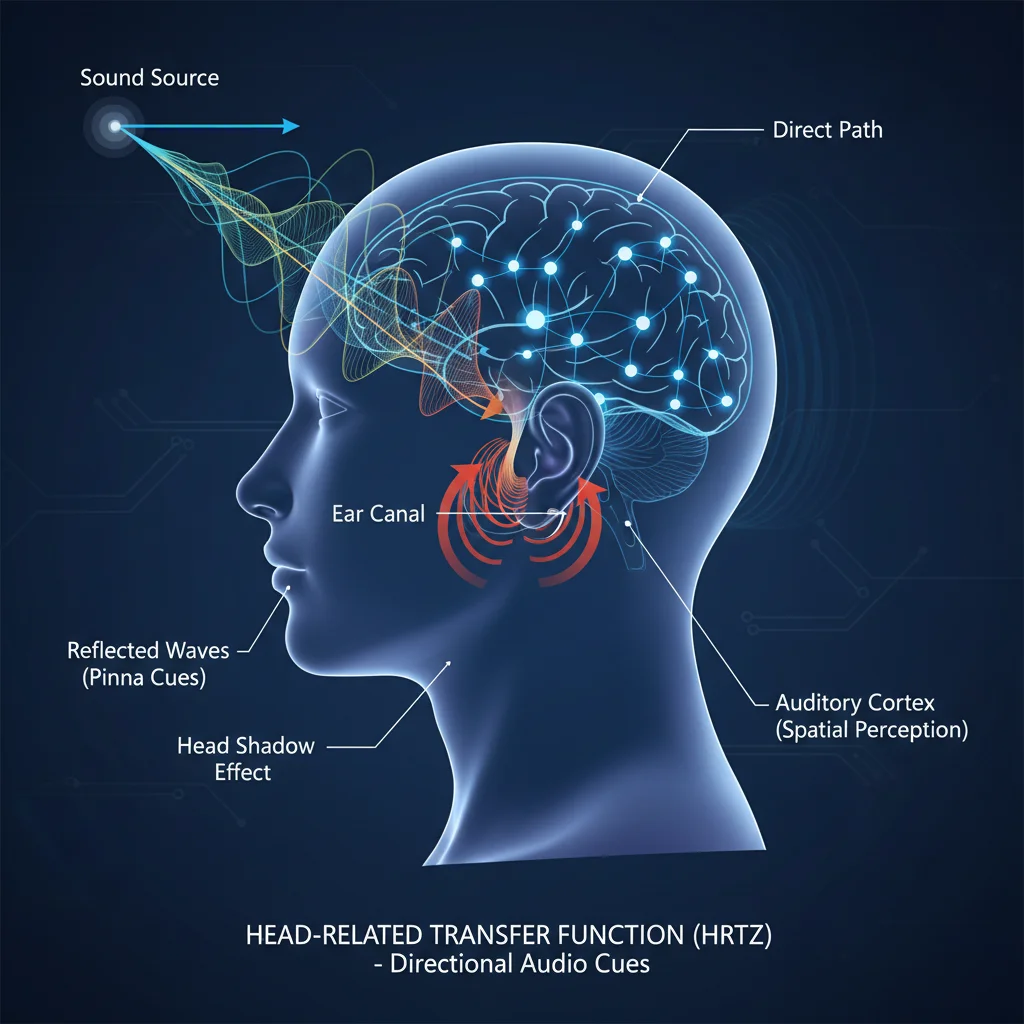
Spatial audio, on the other hand, utilizes advanced algorithms and often Head-Related Transfer Functions (HRTFs) to simulate how sound interacts with our unique anatomy (ears, head, torso) before reaching our eardrums. Every person’s HRTF is slightly different, which is why some spatial audio solutions offer personalization options. By applying these complex filters, spatial audio can accurately trick our brains into perceiving sounds as coming from anywhere in a 3D sphere around us – above, below, in front, behind, and all points in between. This is the fundamental principle that empowers true spatial sound gaming experiences.
Key elements that contribute to effective spatial audio include:
- Positional Audio: The ability to accurately place a sound source in a 3D space.
- Distance Cues: How sound changes (volume, timbre, reverberation) as its source moves further away or closer.
- Environmental Acoustics: Simulating how sound bounces off surfaces, creating realistic echoes and reverberations within a virtual environment.
- Height Information: The crucial ability to distinguish if a sound is coming from above or below the listener.
These elements combine to create an auditory landscape that is not only rich and detailed but also incredibly informative, transforming how players navigate and react within their game worlds. The consistent improvement in these areas is what makes spatial sound gaming such a compelling and rapidly evolving field.
1. Dolby Atmos for Gaming: The Industry Standard for Immersive Sound
Dolby Atmos has become a household name in home theater and cinema, but its application in spatial sound gaming is equally transformative. Unlike channel-based audio, Dolby Atmos treats sounds as ‘objects’ that can be precisely placed and moved anywhere in a 3D space. This object-based audio approach allows game developers to specify the exact coordinates of a sound source, and the Atmos engine then renders that sound dynamically based on the listener’s position and the capabilities of their audio setup.
For gamers, this means a significantly more accurate and enveloping sound experience. Whether you’re using a compatible headset or a full home theater system with upward-firing speakers, Dolby Atmos can create the illusion of sounds coming from above you – a crucial element for true verticality in gaming audio. This technology is supported across various platforms, including PC, Xbox consoles (Xbox One, Xbox Series X|S), and even some mobile devices, making it widely accessible for those seeking premium spatial sound gaming.
Many modern games are now natively mixed in Dolby Atmos, ensuring that developers can fully leverage its capabilities to design intricate and realistic soundscapes. From the subtle drip of water in a cavern to the thunderous roar of an aerial assault, Dolby Atmos enhances both the immersion and the competitive edge by providing crystal-clear positional audio. Its widespread adoption makes it a strong contender for the most impactful spatial sound gaming technology currently available.
2. Sony’s Tempest 3D AudioTech: PlayStation’s Proprietary Powerhouse
When the PlayStation 5 launched, Sony made a bold promise: a new era of audio immersion powered by its proprietary Tempest 3D AudioTech. This dedicated audio engine was designed from the ground up to deliver highly accurate and nuanced spatial sound gaming experiences, primarily through headphones, but with future plans for TV speakers and soundbars.
Tempest 3D AudioTech achieves its impressive capabilities by processing hundreds of sound sources simultaneously and applying sophisticated HRTFs. Sony has invested heavily in researching and mapping various HRTFs to create a more universal yet highly effective spatial audio profile. The goal is to make every sound in a game feel like it’s coming from a specific point in 3D space relative to the player, whether it’s the rustle of leaves behind them or the precise location of an enemy’s footsteps above them on a multi-story map.
The beauty of Tempest 3D AudioTech is its seamless integration with the PS5 hardware and its optimization for gaming. Developers can utilize the full power of the console’s audio engine without significant performance overhead, allowing for incredibly rich and detailed soundscapes even in graphically intensive titles. For PlayStation enthusiasts, Tempest 3D AudioTech is a game-changer, solidifying the PS5’s position as a leader in truly immersive spatial sound gaming.
3. DTS Headphone:X and DTS:X: Multi-Platform Spatial Mastery
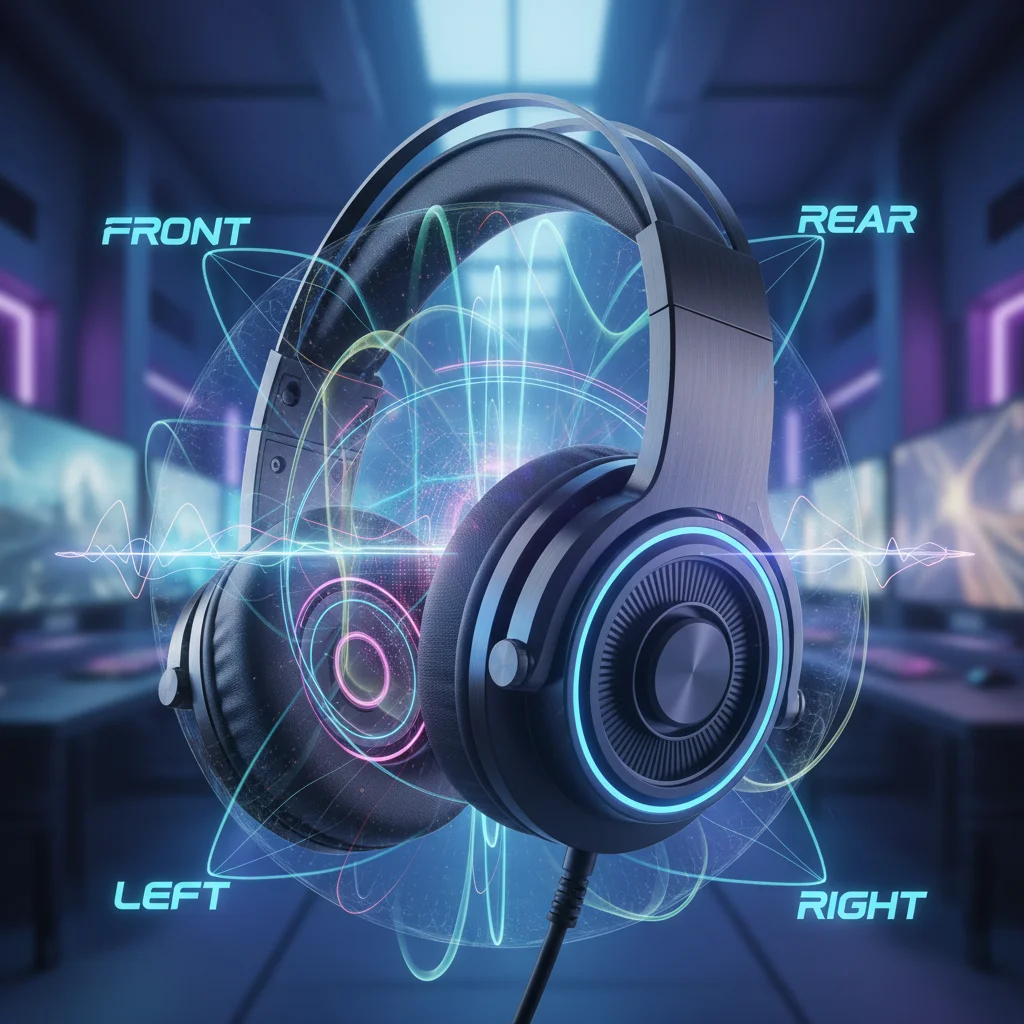
DTS, another veteran in the audio industry, offers its own compelling suite of spatial sound gaming technologies with DTS Headphone:X and DTS:X. While DTS:X is an object-based audio codec similar to Dolby Atmos, designed for home theater systems, DTS Headphone:X is specifically engineered to deliver a convincing 3D audio experience through any pair of stereo headphones.
DTS Headphone:X achieves this by employing advanced audio processing algorithms that simulate a multi-speaker surround sound system within your headphones. It takes a conventional multi-channel audio stream (like 5.1 or 7.1) and applies HRTFs and other spatialization techniques to create the illusion of sound coming from discrete points around you, including overhead. This makes it an incredibly versatile solution for gamers who prefer to use their existing headphones without investing in specialized hardware.
Many gaming headsets and sound cards now come with DTS Headphone:X integration, providing an out-of-the-box solution for enhanced positional audio. The technology is also available as software on PC, allowing users to enable it for a wide range of games. Its ability to transform standard stereo headphones into a powerful spatial sound gaming tool makes it a popular and accessible choice for a broad gaming audience, offering a significant upgrade in audio perception and immersion.
4. Windows Sonic for Headphones: Microsoft’s Built-in Spatial Audio
For PC and Xbox users, Windows Sonic for Headphones offers a readily available and free entry point into the world of spatial sound gaming. Built directly into Windows 10 and 11, and supported on Xbox consoles, Windows Sonic is a software-based spatial audio solution that works with any stereo headphones. While it may not offer the same level of granular detail and object-based precision as Dolby Atmos or Tempest 3D AudioTech, it provides a noticeable improvement over standard stereo audio.
Windows Sonic processes audio to create a virtual surround sound environment, giving players a better sense of direction and distance for in-game sounds. It’s particularly effective for identifying the general location of enemies or environmental cues, enhancing situational awareness in competitive titles. Its ease of access – often just a few clicks in your sound settings – makes it an excellent starting point for gamers curious about spatial audio but not yet ready to invest in premium solutions.
While some purists might argue it’s not as sophisticated as its paid counterparts, Windows Sonic serves as a strong baseline for spatial sound gaming, proving that even basic spatialization can significantly impact the gaming experience. It’s a testament to the growing importance of 3D audio that Microsoft includes such a feature natively in its operating system and console ecosystem.
5. Razer THX Spatial Audio: Precision and Customization for PC Gamers
Razer, a prominent brand in gaming peripherals, has partnered with THX (known for its high-fidelity audio standards) to bring THX Spatial Audio to its gaming headsets and as a standalone software solution for PC. This technology focuses on delivering highly accurate positional audio with an emphasis on user customization, making it a strong contender for PC gamers seeking a tailored spatial sound gaming experience.
THX Spatial Audio goes beyond traditional virtual surround sound by offering advanced positional audio that can be fine-tuned to specific games. It allows users to create custom audio profiles, adjust the virtual speaker positions, and even enhance certain sound cues (like footsteps) to gain a competitive edge. The goal is to provide an immersive soundstage that accurately reflects the game world, enhancing both realism and tactical awareness.
The integration with Razer’s Synapse software allows for deep personalization, enabling gamers to optimize their audio for different genres or even individual games. This level of control, combined with THX’s reputation for audio quality, makes Razer THX Spatial Audio a compelling choice for PC gamers who demand precision and adaptability from their spatial sound gaming setup. It exemplifies how hardware and software can combine to elevate the auditory experience.
6. HRTF-Based Proprietary Solutions (e.g., Audeze, SteelSeries)
Beyond the major players, many high-end gaming headset manufacturers are developing their own proprietary HRTF-based spatial sound gaming solutions. Brands like Audeze with their ‘Mobius’ and ‘Penrose’ headsets (featuring Waves Nx technology) and SteelSeries with ‘Sonar Audio Software’ are leveraging advanced audio processing and personalized HRTFs to deliver incredibly realistic and precise 3D audio.
These solutions often incorporate head tracking, which further enhances the immersion by adjusting the sound field as you move your head. This means that if you turn your head to the left, the sound source that was previously in front of you will now sound like it’s coming from your right, just as it would in real life. This dynamic adjustment significantly reduces the ‘in-your-head’ feeling often associated with headphones and creates a more convincing externalized soundstage.
The focus here is on delivering an unparalleled level of audio fidelity and positional accuracy, often targeting audiophile gamers or professional esports players who demand the absolute best. While these solutions might come at a premium, they represent the cutting edge of spatial sound gaming, pushing the boundaries of what’s possible with headphone audio. Their continuous innovation drives the entire industry forward, constantly raising the bar for what gamers can expect from their auditory experiences.
The Future of Spatial Sound Gaming: Beyond Headphones
While headphones currently dominate the spatial sound gaming landscape, the future promises even more diverse and integrated experiences. We are already seeing companies like Sony exploring how Tempest 3D AudioTech can be optimized for TV speakers and soundbars, bringing spatial audio to a wider audience without the need for a headset. This involves complex room acoustic modeling and psychoacoustic techniques to create a convincing 3D sound field from a limited number of speakers.
Furthermore, the integration of haptic feedback with spatial audio is an exciting frontier. Imagine not only hearing an explosion behind you but also feeling the rumble in your chair from the precise direction. This multi-sensory approach could create an even deeper level of immersion, blurring the lines between the virtual and physical worlds.
Virtual Reality (VR) and Augmented Reality (AR) are also natural beneficiaries of advanced spatial sound gaming. In these highly immersive environments, accurate 3D audio is not just a luxury but a necessity for presence and believability. As VR/AR technologies evolve, so too will the demand for sophisticated spatial audio engines that can keep pace with the visual fidelity.
The ongoing research into personalized HRTFs, where audio systems can be calibrated to an individual’s unique ear and head shape, promises to unlock even more accurate and convincing spatial audio experiences. This could involve simple calibration apps using your phone’s camera or even more advanced biometric scanning, ensuring that the 3D sound is perfectly tailored to your perception.
Ultimately, the trajectory of spatial sound gaming is toward an audio experience that is indistinguishable from reality. Every year brings us closer to a future where sound isn’t just an accompaniment to visuals but an equally powerful, if not more powerful, tool for storytelling, immersion, and competitive play.
Choosing Your Spatial Sound Gaming Setup
With so many options available, choosing the right spatial sound gaming setup can seem daunting. Here are a few factors to consider:
- Platform: Are you primarily a PC gamer, a console enthusiast (Xbox or PlayStation), or do you game across multiple platforms? Some solutions are platform-specific (like Tempest 3D AudioTech for PS5), while others are more universal (Dolby Atmos, DTS Headphone:X, Windows Sonic).
- Budget: Spatial audio solutions range from free (Windows Sonic) to premium (high-end headsets with proprietary tech or dedicated home theater setups). Determine how much you’re willing to invest.
- Hardware: Do you prefer to use your existing stereo headphones, or are you looking to invest in a new gaming headset? Some technologies are designed to work with any headphones, while others are optimized for specific hardware.
- Game Support: Check if your favorite games support specific spatial audio codecs like Dolby Atmos or DTS:X. While many spatial audio solutions can virtualize stereo or surround sound, native integration offers the best experience.
- Personal Preference: Audio perception can be subjective. What one person finds immersive, another might find artificial. If possible, try out different solutions to see which one resonates best with you.
Regardless of your choice, embracing spatial sound gaming will undoubtedly enhance your gaming journey. The ability to hear the world around you with unprecedented clarity and directionality adds layers of depth and excitement that traditional audio simply cannot provide. It transforms a passive listening experience into an active, integral part of gameplay.
Conclusion: The Sonic Revolution in Gaming
The evolution of spatial sound gaming is not just an incremental upgrade; it’s a fundamental shift in how we experience virtual worlds. This year, the six technologies we’ve explored – Dolby Atmos, Tempest 3D AudioTech, DTS Headphone:X/DTS:X, Windows Sonic, Razer THX Spatial Audio, and proprietary HRTF solutions – are at the forefront of this sonic revolution. Each offers a unique approach to creating a three-dimensional audio landscape, providing gamers with enhanced immersion, critical tactical advantages, and a deeper connection to the narratives unfolding on their screens.
From the precise object-based rendering of Dolby Atmos to the dedicated console power of Tempest 3D AudioTech, and the accessible virtualization of DTS Headphone:X and Windows Sonic, there’s a spatial audio solution for every gamer and every budget. The continuous innovation in this field promises an even more exciting future, with advancements in personalized HRTFs, multi-sensory integration, and broader platform support on the horizon.
As visuals push towards hyper-realism, it is audio that increasingly completes the illusion. By engaging our most primal sense of hearing with such accuracy and detail, spatial sound gaming truly allows us to step inside the game, making every virtual world feel more vibrant, dangerous, and utterly captivating. If you haven’t yet experienced the power of 3D audio in your gaming, this year is the perfect time to dive in and discover the profound difference it can make.