
In the rapidly evolving world of gaming, where competition is fierce and new challenges emerge daily, staying ahead requires more than just raw talent. It demands dedication, strategic thinking, and, most importantly, consistent practice. Imagine elevating your gaming prowess by a significant 10% across any genre by 2026, all by dedicating a mere 30 minutes each day. This isn’t a pipe dream; it’s an achievable reality with the right approach to daily gaming practice.
Many aspiring gamers and even seasoned veterans often fall into the trap of aimless play. They log countless hours, yet their skill ceiling seems stubbornly fixed. The key differentiator isn’t the quantity of time spent, but the quality of that time. Deliberate practice, even in short bursts, can yield remarkable results, fostering muscle memory, improving reaction times, and sharpening strategic foresight.
This comprehensive guide will delve into the transformative power of a focused 30-minute daily gaming practice routine. We’ll explore the psychological and physiological benefits, break down effective strategies for various game genres, and provide a roadmap to help you achieve that coveted 10% skill boost. Whether you’re a casual player looking to improve or an aspiring esports enthusiast, the principles outlined here will serve as your foundation for sustained growth and success.
The Science Behind Short, Focused Practice Sessions
The idea that short, consistent practice is more effective than long, infrequent sessions is deeply rooted in cognitive science and sports psychology. Our brains are not designed for endless, high-intensity focus. Instead, they thrive on spaced repetition and deliberate, mindful engagement. This concept is particularly relevant for daily gaming practice.
Cognitive Overload and Retention
When you engage in prolonged gaming sessions without breaks or a specific focus, your brain quickly reaches a state of cognitive overload. This leads to diminished returns, where additional hours yield minimal skill improvement. Short, focused sessions, however, allow your brain to process information more effectively. The hippocampus, crucial for memory formation, functions optimally in bursts, consolidating new information and skills during periods of rest or lower cognitive load. This means that a well-structured 30-minute session followed by a break can be far more productive than a two-hour session filled with distractions and fatigue.
Neuroplasticity and Skill Acquisition
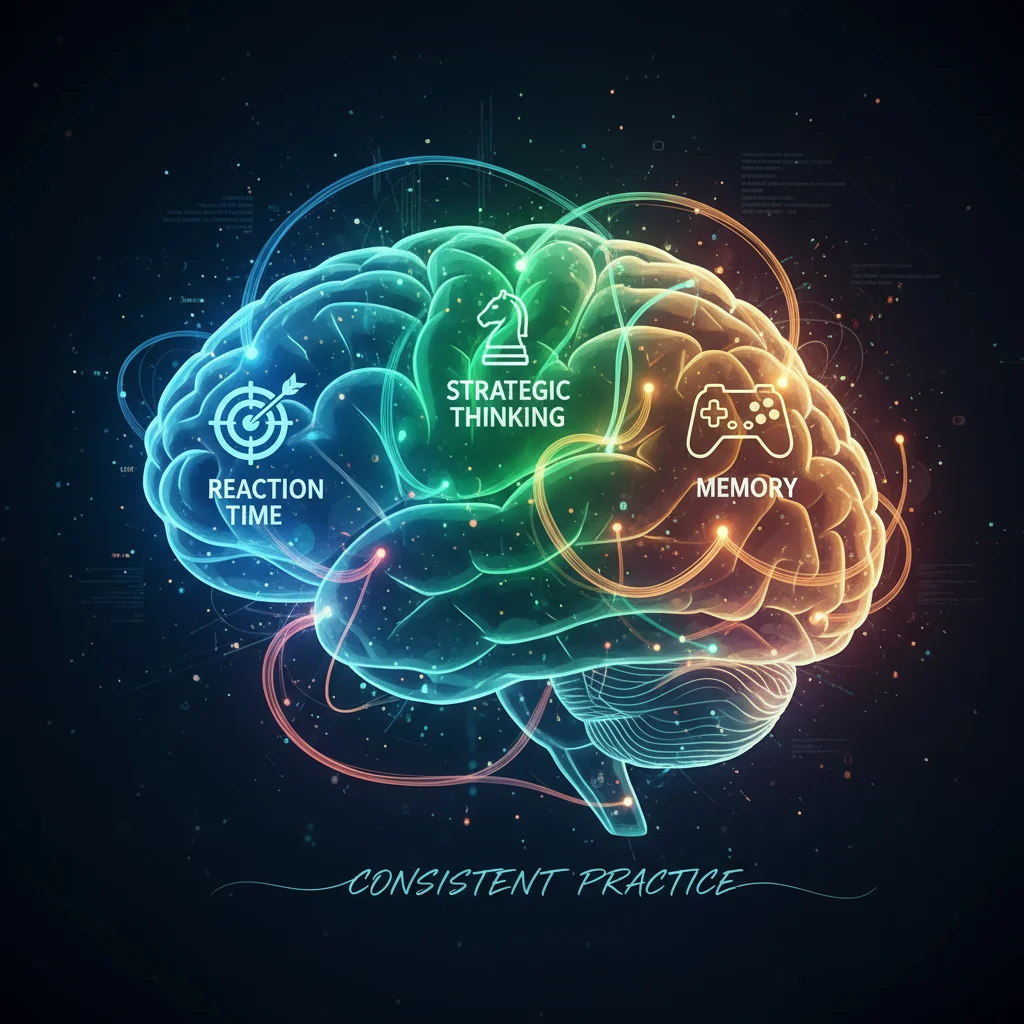
Neuroplasticity, the brain’s ability to reorganize itself by forming new neural connections, is at the heart of skill acquisition. Every time you practice a specific movement, strategize a new approach, or analyze an in-game situation, you’re strengthening these neural pathways. Consistent, deliberate practice, even for just 30 minutes, keeps these pathways active and continuously reinforces the desired behaviors. This constant reinforcement is what leads to lasting skill improvement and makes daily gaming practice so potent.
The Power of Habit Formation
Building a habit is another significant advantage of short daily sessions. It’s far easier to commit to 30 minutes of dedicated practice than to find a two-hour slot multiple times a week. Once the 30-minute routine becomes ingrained, it requires less willpower to initiate, transforming practice from a chore into an automatic, integral part of your day. This consistency is paramount for achieving long-term skill progression and reaching that 10% boost.
Crafting Your 30-Minute Daily Gaming Practice Routine
The effectiveness of your daily gaming practice hinges on its structure. A haphazard 30 minutes won’t cut it. You need a clear objective, a method for execution, and a way to track your progress. Here’s how to design an optimal routine:
1. Define Your Focus (5 minutes)
Before you even launch the game, take 5 minutes to identify one or two specific areas you want to improve. This could be anything from last-hitting in a MOBA, perfecting a specific combo in a fighting game, improving aim in an FPS, or optimizing build orders in an RTS. Avoid trying to tackle too many things at once. Specificity is key.
- Example for FPS: Improve flick shots with a specific weapon, or practice peeking corners effectively.
- Example for MOBA: Focus on jungle pathing efficiency, or perfecting a specific champion’s ability rotation.
- Example for Fighting Game: Master a new character’s basic combos, or practice anti-air responses.
2. Deliberate Practice (20 minutes)
This is the core of your session. Engage in drills, custom games, or specific scenarios designed to target your chosen focus areas. Avoid jumping into competitive matches during this time, as the pressure can detract from deliberate learning. Focus on execution and understanding, not just winning.
- FPS: Use aim trainers (e.g., Aim Lab, Kovaak’s), play deathmatch modes focusing solely on headshots, or practice specific movement patterns on an empty map.
- MOBA: Spend time in practice tool mode, repeatedly practicing last-hitting, jungle camps, or specific ability interactions against AI.
- Fighting Game: Go into training mode. Set the AI to block specific attacks, practice frame data, and execute combos repeatedly until muscle memory takes over.
- RTS: Practice build orders against AI or in custom maps designed for economic optimization. Focus on resource management and unit production without external pressure.
3. Review and Reflect (5 minutes)
The final 5 minutes are crucial for consolidating your learning. Review what you practiced. Did you achieve your goal for the session? What felt good? What still needs work? Briefly jot down notes or self-feedback. This meta-cognition helps solidify improvements and informs your next practice session. This reflective step is often overlooked but is vital for long-term skill acquisition and makes your daily gaming practice truly effective.
Genre-Specific Strategies for Maximizing Your 10% Skill Boost
While the core principles of daily gaming practice remain consistent, the application varies significantly across genres. Here’s how to tailor your 30-minute routine for popular gaming categories:
First-Person Shooters (FPS)
- Focus Areas: Aim (flick, tracking, crosshair placement), movement (strafing, peeking, bunny hopping), utility usage (grenades, abilities), map knowledge.
- 30-Minute Breakdown:
- 5 min: Warm-up in an aim trainer, focusing on a specific drill (e.g., target switching, precision).
- 20 min: Custom game or deathmatch. Focus on one element: e.g., only go for headshots, practice a specific peek, or try to maximize utility usage in key areas. Avoid caring about kill/death ratio; focus purely on the mechanic.
- 5 min: Review mental notes. What felt off? What improved?
- Key Tip: Record your gameplay occasionally and review specific moments where you failed or succeeded. This provides invaluable insight for your next daily gaming practice session.
Multiplayer Online Battle Arenas (MOBAs)
- Focus Areas: Last-hitting/denying, jungle pathing, ward placement, specific champion combos, wave management, itemization decisions.
- 30-Minute Breakdown:
- 5 min: Practice Tool: Warm up with last-hitting drills until you can consistently hit 90%+ of minions in the first 5 minutes.
- 20 min: Practice Tool/Custom Game: Focus on a specific champion. Practice a complex combo multiple times, or try different jungle routes to optimize clear times. Alternatively, practice warding patterns for a specific objective.
- 5 min: Reflect on your chosen champion’s strengths and weaknesses, and how your practice improved your execution.
- Key Tip: Watch professional players or high-ranked streamers who play your main champions. Pay attention to how they execute specific mechanics and integrate their strategies into your daily gaming practice.
Fighting Games
- Focus Areas: Combo execution, anti-airs, block strings, character-specific matchups, punishing whiffed attacks, movement options.
- 30-Minute Breakdown:
- 5 min: Training Mode: Practice basic movement and special move inputs for your main character until they are fluid.
- 20 min: Training Mode: Focus on one specific combo (e.g., a bread-and-butter combo, a high-damage combo, or a specific punish combo). Practice against a dummy set to block or react in a specific way. Alternatively, practice anti-airing repeatedly.
- 5 min: Analyze what inputs were difficult, or what timing requires more attention.
- Key Tip: Utilize the training mode’s recording and playback features to practice against specific character strings or mix-ups that give you trouble. This targeted daily gaming practice is incredibly efficient.
Real-Time Strategy (RTS) Games
- Focus Areas: Build order optimization, hotkey efficiency, unit micro/macro, scouting, economy management, specific army compositions.
- 30-Minute Breakdown:
- 5 min: Custom Map/Arcade: Practice hotkey drills or specific unit control scenarios (e.g., micro-managing a small group of units against another).
- 20 min: Custom Game vs. AI: Execute a specific build order repeatedly, aiming for optimal timing and resource spending. Focus on hitting supply timings or specific tech advancements.
- 5 min: Review your build order execution. Where were the bottlenecks? How can you shave off precious seconds?
- Key Tip: Use replay analysis to identify inefficiencies in your build orders or micro. Then, dedicate your daily gaming practice to correcting those specific flaws.
Overcoming Challenges and Staying Motivated
Consistency is the bedrock of effective daily gaming practice, but maintaining it can be challenging. Here are strategies to help you stay on track and maximize your 10% skill boost by 2026:
1. Track Your Progress
Seeing tangible results is a powerful motivator. Keep a simple practice journal. Note down what you focused on, how well you performed, and any insights gained. Over time, you’ll see a clear progression, which reinforces the value of your 30 minutes. This could be as simple as tracking your last-hit count, your average aim trainer score, or successful combo executions.
2. Be Patient and Realistic
A 10% skill boost is significant and won’t happen overnight. There will be days when you feel like you’re not improving, or even regressing. This is normal. Skill acquisition is rarely linear. Trust the process, and remember that consistency compounds over time. Celebrate small victories, like hitting a difficult combo or improving your reaction time by a few milliseconds.
3. Avoid Burnout
While dedication is important, burnout is a real threat. The 30-minute structure helps mitigate this, but it’s also crucial to ensure your main gaming sessions (outside of practice) remain enjoyable. Don’t let practice turn gaming into a chore. If you’re feeling particularly drained, it’s okay to take a day off from deliberate practice, but try to get back on schedule the next day.
4. Join a Community or Find a Practice Partner
Practicing with others can provide external motivation and valuable feedback. A practice partner can help identify your weaknesses, push you to improve, and offer different perspectives. Online communities often have dedicated channels for drills and discussions, fostering an environment of collective improvement. This social aspect can significantly enhance your daily gaming practice experience.
5. Optimize Your Environment
Ensure your gaming setup is comfortable and conducive to focused practice. Good ergonomics, a reliable internet connection, and minimal distractions can make a huge difference in the quality of your 30-minute sessions. A chaotic environment can undermine even the most well-intentioned practice routine.
The Long-Term Impact: Beyond the 10% Boost
Achieving a 10% skill boost by 2026 through consistent daily gaming practice is a commendable goal, but the benefits extend far beyond just in-game performance. The discipline and strategic thinking cultivated during these short, focused sessions translate into real-world advantages.
Enhanced Cognitive Functions
Regular, deliberate practice sharpens various cognitive abilities. Improved reaction times, enhanced problem-solving skills, better spatial awareness, and superior decision-making under pressure are all direct outcomes. These are not just gaming skills; they are life skills that can benefit you in academic, professional, and personal spheres.
Improved Mental Fortitude
The process of identifying weaknesses, working to overcome them, and dealing with setbacks during practice builds mental resilience. You learn to embrace challenges, maintain focus in the face of frustration, and develop a growth mindset. This mental fortitude is invaluable in any competitive or demanding environment.
A Framework for Future Learning
Once you’ve successfully integrated daily gaming practice into your routine and seen its positive effects, you’ll have a proven framework for learning and improvement that you can apply to any new skill or challenge. The principles of deliberate practice, goal setting, and consistent effort are universal.
Conclusion: Your Path to Gaming Excellence
The journey to becoming a significantly better gamer doesn’t require endless hours or innate genius. It requires strategic, consistent effort. By committing to just 30 minutes of focused daily gaming practice, you are not just logging time; you are actively rewiring your brain, honing your reflexes, and refining your strategies. The goal of a 10% skill boost by 2026 across any genre is not just attainable; it’s a conservative estimate for what dedicated, deliberate practice can achieve.
Start today. Choose one small area to improve, dedicate those 30 minutes, and reflect on your progress. The cumulative effect of these consistent efforts will surprise you. Embrace the power of deliberate practice, and watch as your gaming skills, and indeed your overall cognitive abilities, ascend to new heights. The future of your gaming potential is just 30 minutes away, every single day.