
In the rapidly evolving landscape of video games, developers are constantly seeking innovative ways to enhance player engagement and satisfaction. One of the most significant advancements in recent years has been the proliferation of Adaptive Difficulty Games. These systems move beyond static difficulty settings, instead dynamically adjusting the challenge level in real-time based on a player’s performance, skill, and even emotional state. This ensures that the game is never too easy, leading to boredom, nor too hard, leading to frustration and abandonment. As we look towards 2026, several titles are pushing the boundaries of what these systems can achieve, promising an unprecedented level of personalized gaming experience.
The concept of adaptive difficulty isn’t entirely new; rudimentary forms have existed for decades. However, the sophistication and subtlety of modern implementations, powered by advanced artificial intelligence and machine learning, are truly transformative. Gone are the days of choosing ‘easy,’ ‘medium,’ or ‘hard’ at the start and sticking with it. Now, games are intelligent enough to learn from your playstyle, anticipate your needs, and craft an experience that feels tailor-made for you. This article will delve into four groundbreaking games set to define adaptive difficulty in 2026, exploring their unique approaches and the profound impact they have on the gaming world.
The goal of any adaptive difficulty system is to maintain a state of ‘flow’ for the player – that sweet spot where the challenge perfectly matches their skill, leading to deep immersion and enjoyment. Achieving this requires a delicate balance and sophisticated algorithms that can interpret a vast array of player data, from combat efficiency and puzzle-solving speed to exploration habits and resource management. Let’s explore how these next-generation titles are mastering this art.
The Evolution of Challenge: Why Adaptive Difficulty Matters
Before we dive into specific examples, it’s crucial to understand the fundamental shift that adaptive difficulty represents. Traditional game design often presents a fixed challenge curve. This approach, while straightforward, inevitably leads to a significant portion of players feeling underserved. Beginners might quickly hit a wall, while seasoned veterans might find the early hours of a game tedious. This dichotomy directly impacts player retention and overall enjoyment.
Adaptive Difficulty Games address these issues head-on. By continuously monitoring player performance, these systems can:
- Prevent Frustration: If a player is struggling repeatedly, the game can subtly reduce enemy health, increase available resources, or offer more explicit hints.
- Combat Boredom: Conversely, if a player is breezing through content, the game can introduce tougher enemies, more complex environmental hazards, or stricter time limits.
- Maintain Engagement: The constant, subtle adjustments keep players on the edge of their seats, feeling challenged but never overwhelmed, fostering a sense of accomplishment.
- Personalize Experience: No two players are alike, and adaptive systems acknowledge this by creating a unique difficulty curve for every individual.
- Enhance Replayability: With a dynamically changing challenge, subsequent playthroughs can feel fresh and different, even if the core content remains the same.
The technology underpinning these systems is increasingly sophisticated. Machine learning algorithms can analyze vast datasets of player behavior, identifying patterns and predicting optimal challenge levels. This isn’t just about tweaking numbers; it can involve altering AI behaviors, modifying level layouts, or even dynamically generating new content to suit the player’s current skill and preferences. The implications for game design are profound, allowing for richer, more inclusive, and ultimately, more satisfying experiences for a wider audience.
1. Chronomirror Realms: Temporal Adaptation and Narrative Weaving
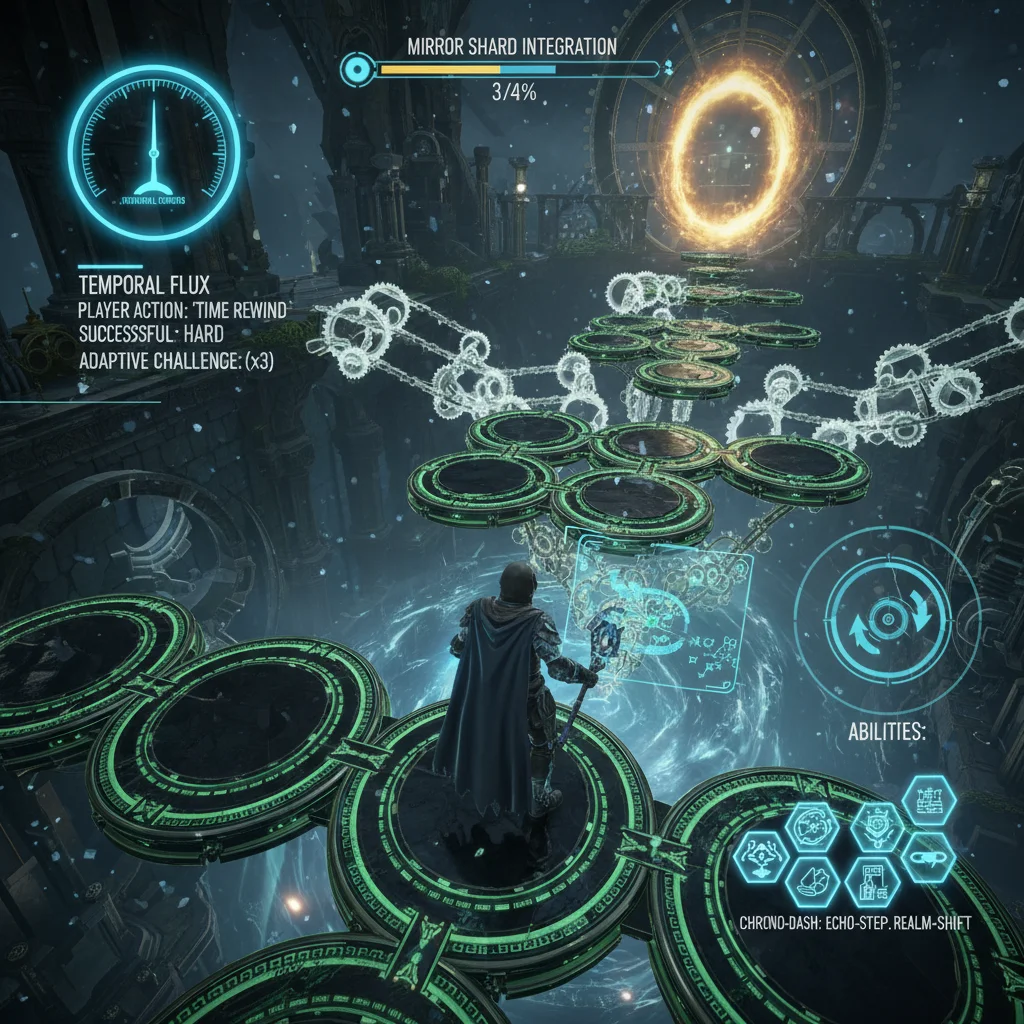
One of the most anticipated titles incorporating advanced adaptive difficulty is ‘Chronomirror Realms,’ an action-adventure RPG set in a fractured timeline. This game doesn’t just adjust combat encounters; it weaves difficulty into the very fabric of its narrative and environmental puzzles. At its core, ‘Chronomirror Realms’ utilizes a ‘Temporal Adaptation Engine’ that analyzes a player’s strategic thinking, resource management, and puzzle-solving efficiency.
If a player consistently solves complex temporal paradoxes quickly, the engine might introduce more obscure clues or multi-layered time manipulation challenges. Conversely, if a player struggles with spatial puzzles, the game might offer visual cues in the environment or introduce an in-game companion character who provides subtle hints. Combat encounters also dynamically shift. Repeatedly defeating enemies with the same strategy might lead to those enemies developing resistances or new attack patterns. The game’s AI learns your preferred combat style and introduces countermeasures, forcing you to adapt and experiment.
What makes ‘Chronomirror Realms’ particularly innovative is how it ties these difficulty adjustments to the game’s lore. The fractured timelines themselves react to the player’s proficiency. For instance, if a player is performing exceptionally well, historical events might become more volatile, leading to more unpredictable and challenging scenarios. If a player is struggling, the timeline might stabilize slightly, offering more predictable paths forward. This narrative integration of adaptive difficulty ensures that the adjustments feel organic and part of the world, rather than arbitrary game mechanics.
The developers have stated that their goal is to make players feel like they are truly mastering the flow of time, rather than just overcoming a fixed set of obstacles. The Temporal Adaptation Engine achieves this by creating a personalized legend for each player, where their triumphs and struggles are reflected in the very fabric of the game’s reality. This intricate blend of adaptive challenge and storytelling sets a new benchmark for Adaptive Difficulty Games.
2. Neural Nexus: Psychological Profiling for Personalized Combat
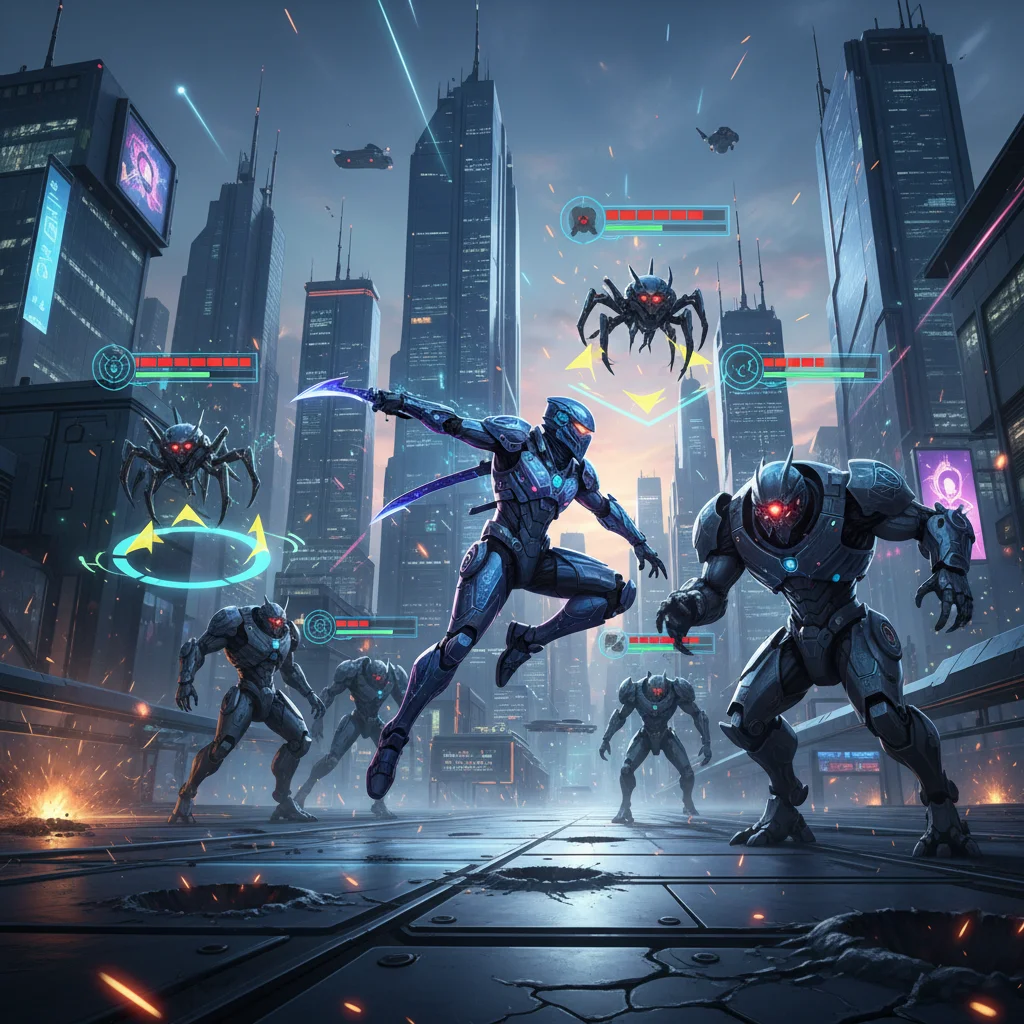
‘Neural Nexus’ is a fast-paced cyberpunk shooter that takes adaptive difficulty to a psychological level. Beyond mere performance metrics like accuracy or kill-death ratio, ‘Neural Nexus’ employs a ‘Cognitive Response System’ that attempts to infer a player’s emotional state and preferred challenge type. This system uses a combination of in-game telemetry, such as reaction times, movement patterns, and even how quickly players navigate menus, to build a psychological profile.
For example, if the system detects signs of frustration (e.g., erratic movements, repeated deaths without adapting tactics), it might subtly reduce enemy aggression, decrease bullet spread on player weapons, or even introduce a temporary ‘overcharge’ ability to give the player a decisive edge. Conversely, if a player exhibits signs of boredom or overconfidence (e.g., rushing through areas, ignoring cover), the system can increase enemy numbers, introduce new enemy types with unique abilities, or tighten resource availability, forcing more tactical play.
The ‘Cognitive Response System’ in ‘Neural Nexus’ also accounts for player preference. Through initial calibration questions and continuous observation, the game tries to determine if a player prefers a high-intensity, constant challenge, or a more relaxed, exploratory experience with spikes of difficulty. This allows the game to not just adjust difficulty, but to adjust the *type* of difficulty, ensuring the challenge aligns with the player’s intrinsic motivation. This level of psychological profiling is a significant leap for Adaptive Difficulty Games, creating an experience that doesn’t just react to what you do, but to how you feel.
The developers have emphasized that this system is designed to be unobtrusive, making the adjustments feel natural and responsive to the player’s internal state. It’s about creating a perfectly tuned experience that keeps players on the edge of their seats, always feeling challenged but never unfairly beaten. This nuanced approach to difficulty ensures that ‘Neural Nexus’ offers a combat experience that is uniquely tailored to each individual, making every firefight feel impactful and meaningful.
3. Echoes of Aethel: Procedural Generation Meets Player Skill
‘Echoes of Aethel’ is an open-world survival crafting game that integrates adaptive difficulty through its procedural generation engine. Unlike games that simply tweak enemy stats, ‘Echoes of Aethel’ dynamically alters the very world around the player based on their performance and progression. Its ‘Environmental Adaptation Algorithm’ monitors a player’s resource gathering efficiency, base building prowess, combat effectiveness against local fauna, and exploration habits.
If a player is rapidly establishing a secure base and accumulating rare resources, the algorithm might increase the frequency of environmental hazards like more severe weather events, introduce new, more dangerous creatures to previously safe zones, or make essential resource nodes scarcer. This forces the player to innovate and expand their strategies, preventing the game from becoming a monotonous grind. On the other hand, if a player is struggling to survive, the game might generate more abundant food sources, reduce the aggression of certain creatures, or even subtly guide the player towards safer areas or hidden caches of supplies.
The procedural generation aspect is key here. It’s not just about changing numbers; it’s about generating new challenges and opportunities. A highly skilled player might find themselves in biomes with unique, highly aggressive flora and fauna, requiring advanced crafting and combat techniques. A struggling player might find themselves in a more forgiving, resource-rich starting area, allowing them to learn the ropes without overwhelming pressure. This dynamic reshaping of the game world ensures that the challenge always feels fresh and relevant to the player’s current capabilities.
Furthermore, ‘Echoes of Aethel’ uses player data to influence the narrative fragments scattered throughout its world. As players overcome greater challenges, the lore they uncover might become more complex, revealing deeper mysteries. If they struggle, the lore might be presented in a more straightforward manner, focusing on immediate survival tips. This innovative approach makes ‘Echoes of Aethel’ a prime example of how Adaptive Difficulty Games can create truly personalized and evolving worlds.
4. Zenith Ascendant: Multiplayer Balancing and Competitive Adaptation
While many adaptive difficulty systems focus on single-player experiences, ‘Zenith Ascendant,’ a competitive online arena brawler, is pioneering adaptive difficulty in a multiplayer context. This is a much trickier endeavor, as fairness and balance are paramount in competitive gaming. ‘Zenith Ascendant’ uses a ‘Matchmaking and Dynamic Balancing Engine’ that goes beyond simple Elo ratings. It analyzes individual player performance within a match, team cohesion, and even the meta-game strategies employed by different factions.
In ‘Zenith Ascendant,’ adaptive difficulty manifests in several ways. During a match, if one team is consistently dominating, the system might subtly adjust cooldowns on certain abilities for the struggling team, slightly increase their damage output, or provide small, temporary buffs. These adjustments are designed to be imperceptible to players, aiming to create closer, more exciting matches without feeling like an artificial handicap. The goal is to reduce snowball effects and ensure that matches remain competitive and engaging until the very end.
Moreover, the game’s matchmaking system uses adaptive principles. Beyond skill rating, it attempts to match players not just by raw skill, but by their ‘adaptive potential’ – how quickly they learn and adapt to new challenges. This creates more balanced teams where players are likely to have a similar capacity for growth and strategic adjustment within a match. Post-match analysis further refines these adaptive profiles, influencing future matchmaking and even suggesting personalized training exercises or character builds to help players improve.
The developers are careful to emphasize that these adjustments in ‘Zenith Ascendant’ are extremely subtle and are primarily aimed at preventing overwhelming stomps, thereby enhancing the overall competitive experience. It’s not about making a bad player good, but about giving every team a fighting chance and making every match feel meaningful. This ambitious application of adaptive difficulty in a competitive multiplayer setting highlights the versatility and potential of these systems, proving that Adaptive Difficulty Games can thrive even in the most balanced environments.
The Technical Underpinnings: AI and Machine Learning
The sophisticated adaptive difficulty systems seen in games like ‘Chronomirror Realms,’ ‘Neural Nexus,’ ‘Echoes of Aethel,’ and ‘Zenith Ascendant’ wouldn’t be possible without significant advancements in artificial intelligence and machine learning. These technologies are the true unsung heroes, working behind the scenes to process vast amounts of player data and make intelligent, real-time decisions.
At the heart of these systems are various machine learning models. Supervised learning might be used to train models on historical player data, identifying patterns associated with frustration or engagement. Reinforcement learning, on the other hand, allows the AI to learn optimal difficulty adjustments through trial and error, rewarding itself for actions that lead to increased player retention and satisfaction. Neural networks are often employed to process complex, multi-dimensional player data, recognizing subtle cues that might escape simpler algorithms.
Beyond the core algorithms, these systems rely on robust data pipelines to collect, process, and analyze player telemetry in real-time. This includes everything from input latency and button presses to movement trajectories, combat statistics, and even environmental interactions. The sheer volume of data processed by these engines is immense, requiring powerful computational resources and optimized code to ensure seamless, lag-free adjustments.
Furthermore, ethical considerations play a crucial role. Developers must ensure that adaptive difficulty systems are transparent enough to avoid feeling manipulative, yet subtle enough not to break immersion. The goal is to enhance the player experience, not to trick them. This involves careful balancing and extensive playtesting to fine-tune the algorithms and ensure they consistently deliver a fair and engaging challenge.
Challenges and Future Prospects for Adaptive Difficulty
While the benefits of adaptive difficulty are clear, implementing these systems is not without its challenges. One major hurdle is the perception of ‘cheating’ or ‘dumbing down’ the game. Some players might feel that if the game is adjusting to them, their accomplishments are less meaningful. Developers must communicate the intent of these systems effectively and ensure they are implemented in a way that feels empowering rather than patronizing.
Another challenge lies in the complexity of development. Building and fine-tuning an effective adaptive difficulty engine requires significant expertise in AI, game design, and data science. The cost and time investment can be substantial, which might limit their adoption in smaller development studios.
However, the future prospects for Adaptive Difficulty Games are incredibly bright. As AI technology continues to advance, we can expect even more sophisticated and personalized experiences. Imagine games that can predict your mood based on external factors like time of day or even biometric data (if players opt-in), adjusting the game’s pacing and challenge accordingly. Virtual and augmented reality platforms could offer even richer data streams for adaptive systems to leverage, creating truly immersive and responsive worlds.
We might also see a greater emphasis on player agency within adaptive systems. Instead of purely automatic adjustments, players might be given more control over how and when the game adapts, allowing for a hybrid approach that combines personalization with player choice. The integration of adaptive difficulty with procedural content generation will likely become even more seamless, leading to infinitely replayable games that constantly surprise and challenge players in new ways.
Conclusion: The Dawn of Personalized Gaming
The year 2026 marks a significant turning point for the gaming industry, with titles like ‘Chronomirror Realms,’ ‘Neural Nexus,’ ‘Echoes of Aethel,’ and ‘Zenith Ascendant’ leading the charge in redefining player engagement through adaptive difficulty. These games are not just offering new stories or graphics; they are fundamentally changing how we interact with and experience virtual worlds. By leveraging advanced AI and machine learning, they are capable of crafting unique, personalized challenges that keep players at the optimal edge of their skill, preventing both boredom and frustration.
The shift towards Adaptive Difficulty Games signifies a mature evolution in game design, one that prioritizes the individual player experience above all else. As these technologies become more refined and widespread, we can look forward to a future where every game feels like it was made just for you, offering a perfectly tuned adventure that continuously adapts to your growth and preferences. The era of one-size-fits-all difficulty is rapidly fading, making way for a new dawn of truly personalized and endlessly engaging gaming.