
The world of competitive gaming, commonly known as esports, has transcended its niche origins to become a global phenomenon. In particular, the United States market is a powerhouse, consistently pushing the boundaries of what’s possible in terms of viewership, engagement, and, most importantly, revenue. Industry analysts and market researchers are painting a consistently optimistic picture, with projections indicating a remarkable US Esports Revenue increase of 20% by 2026. This isn’t just a fleeting trend; it’s a robust trajectory fueled by a confluence of factors, from burgeoning fan bases to sophisticated monetization strategies and significant institutional investments. Understanding the intricacies of this growth requires a deep dive into the underlying dynamics that are shaping the future of competitive gaming in America.
The sheer scale of the esports ecosystem in the US is staggering. Millions of passionate fans tune in to watch their favorite teams and players compete in high-stakes tournaments across a diverse range of game titles. This dedicated audience forms the bedrock of the industry’s financial success, attracting advertisers, sponsors, and media partners eager to tap into this valuable demographic. As the infrastructure for esports continues to mature, with dedicated arenas, professional leagues, and sophisticated broadcasting capabilities, the avenues for revenue generation are expanding exponentially. This article will explore the key pillars supporting this impressive growth forecast, offering insights into the current landscape and what the future holds for US Esports Revenue.
The Current Landscape of US Esports Revenue
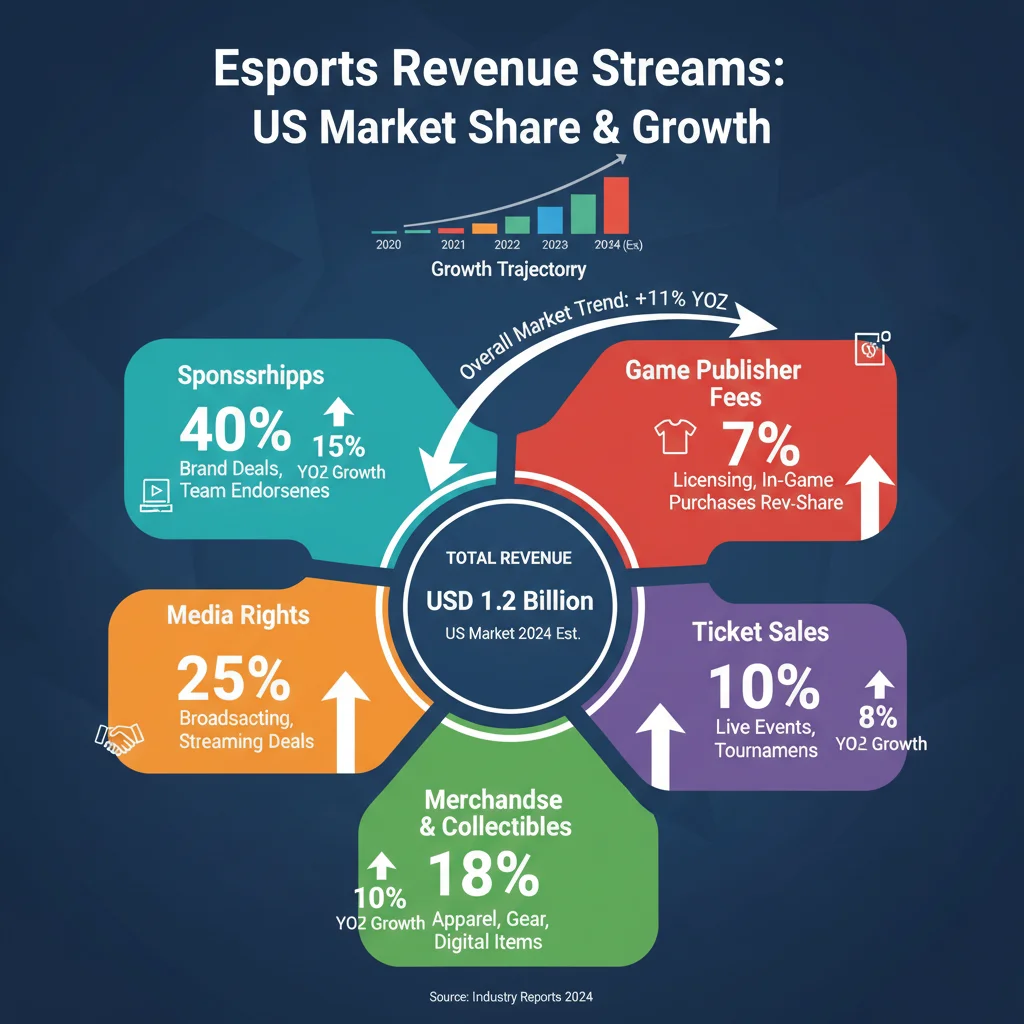
Before we delve into future projections, it’s crucial to grasp the current state of US Esports Revenue. The market has seen consistent year-over-year growth, driven by a combination of established revenue streams and emerging opportunities. Sponsorships remain the dominant force, with brands recognizing the immense marketing potential of aligning themselves with popular teams, players, and events. These sponsorships range from endemic gaming brands to mainstream consumer product companies, all vying for a slice of the esports pie.
Media rights, particularly streaming deals with platforms like Twitch and YouTube, also contribute significantly to the revenue pool. As esports content becomes more polished and professional, the value of these broadcasting rights continues to climb. Furthermore, the growth of dedicated esports channels and networks further solidifies this revenue stream. Merchandise sales, ticket sales for live events, and in-game purchases related to esports (e.g., team skins, battle passes) also play a crucial role in diversifying the revenue base.
The professionalization of the industry has also led to greater investment from traditional sports organizations and venture capitalists. This influx of capital has allowed for larger prize pools, better player salaries, and more sophisticated team operations, all of which contribute to the overall economic health and attractiveness of the sector. The US, with its strong entrepreneurial spirit and robust investment landscape, has been a fertile ground for these developments, positioning it as a global leader in esports economics.
Key Drivers Behind the Projected 20% Growth
The forecast of a 20% increase in US Esports Revenue by 2026 is not an arbitrary number; it’s a carefully calculated projection based on several powerful growth drivers. Understanding these drivers is essential for anyone looking to invest in, participate in, or simply comprehend the trajectory of the esports market.
Expanding Viewership and Engagement
At the heart of esports growth is its ever-expanding audience. The number of people watching competitive gaming, both casually and dedicatedly, continues to surge. This isn’t limited to a specific age group; while younger demographics form a significant portion, esports is increasingly attracting viewers across various age brackets. The accessibility of streaming platforms and the engaging nature of the content make it an attractive form of entertainment. As viewership grows, so does the value of advertising and sponsorship opportunities, directly impacting US Esports Revenue.
Furthermore, engagement goes beyond passive viewing. Esports fosters incredibly active communities through social media, online forums, and fan events. This deep level of engagement creates a loyal fan base that is more likely to purchase merchandise, attend live events, and support their favorite teams and players, thereby contributing directly to revenue generation.
Increased Investment and Infrastructure Development
The confidence in the esports market is evident in the substantial investments being poured into its infrastructure. This includes the construction of purpose-built esports arenas, the development of advanced broadcasting studios, and the establishment of sophisticated training facilities for professional players. These investments not only enhance the viewing experience but also create new revenue streams through ticket sales, venue rentals, and event hosting. Major brands and traditional sports organizations are increasingly seeing esports as a viable and lucrative investment, further solidifying its financial foundation.
Diversification of Revenue Streams
While sponsorships and media rights remain pivotal, the esports industry is actively diversifying its revenue streams. This includes innovative approaches to content monetization, such as subscription services for exclusive content, premium battle passes that offer in-game cosmetic items, and fan tokens that provide unique engagement opportunities. Furthermore, the integration of esports with other industries, such as fashion, music, and education, is opening up new avenues for commercialization. This diversification lessens reliance on any single income source, making the US Esports Revenue model more resilient and sustainable.
Technological Advancements and Innovation
Technological innovation is an intrinsic part of the esports narrative. Advances in gaming hardware, software, and network infrastructure continuously enhance the competitive experience for both players and viewers. Virtual reality (VR) and augmented reality (AR) are poised to introduce new dimensions to esports broadcasting and fan engagement, potentially unlocking entirely new revenue streams. The continuous evolution of game titles, with improved graphics, gameplay mechanics, and competitive balance, keeps the audience engaged and attracts new players, ensuring a fresh supply of competitive content. The integration of blockchain technology for in-game economies and digital collectibles also presents a promising frontier for revenue growth.
The Role of Sponsorships and Advertising in US Esports Revenue
Sponsorships and advertising are, without a doubt, the bedrock of US Esports Revenue. Brands are increasingly recognizing the unparalleled reach and engagement that esports offers, particularly among demographics that are traditionally hard to reach through conventional media. The authenticity and passion of esports fans create a highly receptive audience for brand messaging.
Brand Integration and Endemic vs. Non-Endemic Sponsors
Sponsorships in esports go beyond simple logo placement. They involve deep brand integration, from naming rights for leagues and tournaments to custom in-game content and player endorsements. We see a mix of endemic sponsors – brands directly related to gaming hardware, software, and accessories – and non-endemic sponsors, which include major corporations from sectors like automotive, food and beverage, telecommunications, and financial services. The influx of non-endemic sponsors is a clear indicator of the mainstream acceptance and commercial viability of esports. These partnerships not only inject significant capital into the ecosystem but also lend credibility and broaden the appeal of esports to a wider audience.
Targeted Advertising and Data Analytics
The digital nature of esports allows for highly targeted advertising campaigns. Platforms can collect vast amounts of data on viewer demographics, viewing habits, and preferences, enabling brands to deliver highly relevant advertisements. This data-driven approach maximizes the return on investment for advertisers, making esports an increasingly attractive platform for marketing spend. The ability to precisely measure campaign effectiveness further strengthens the case for continued and increased advertising investment, directly contributing to the upward trajectory of US Esports Revenue.
Media Rights and Content Monetization
The monetization of media rights is another critical component of the rapidly growing US Esports Revenue. As esports content becomes more sophisticated and professional, its value to broadcasters and streaming platforms escalates.
Streaming Platforms and Exclusive Deals
Platforms like Twitch, YouTube Gaming, and newer entrants are fiercely competing for exclusive broadcasting rights to major esports leagues and tournaments. These exclusive deals can be incredibly lucrative, providing significant revenue to event organizers and game publishers. The growth of these platforms has democratized content consumption, making esports accessible to a global audience, and the US market is a primary driver of this trend. The shift towards more premium content offerings, including high-definition streams, multiple camera angles, and interactive overlays, further enhances the value proposition for viewers and, consequently, for media rights holders.
Linear TV and Over-the-Top (OTT) Services
While streaming platforms dominate, traditional linear television and emerging Over-the-Top (OTT) services are also beginning to play a more significant role. Major sports networks are increasingly dedicating airtime to esports, recognizing its growing popularity and potential to attract younger demographics. This expansion into traditional media broadens the reach of esports, attracting new viewers and opening up additional advertising and subscription revenue streams, further bolstering US Esports Revenue.
Subscription Models and Premium Content
Beyond traditional advertising and media rights, content creators and organizations are exploring subscription models and premium content offerings. This includes paid access to exclusive behind-the-scenes content, advanced analytics, ad-free viewing experiences, and early access to game updates or esports-related merchandise. These direct-to-consumer monetization strategies empower organizations to build deeper relationships with their fan base while creating reliable and recurring revenue streams.
The Impact of Live Events and Merchandise
Live esports events are spectacles of competitive prowess and fan enthusiasm, contributing substantially to US Esports Revenue. These events offer a unique blend of entertainment, community, and high-stakes competition.
Ticket Sales and Venue Experiences
Major tournaments attract thousands of fans who are willing to pay for the experience of watching their favorite teams compete live. Ticket sales for these events represent a direct and significant revenue stream. Moreover, the experience at dedicated esports arenas is becoming increasingly sophisticated, offering VIP packages, interactive fan zones, and immersive viewing experiences that command premium pricing. The US has some of the most advanced and largest venues capable of hosting these grand events, further cementing its position in the global esports landscape.
Merchandise and Collectibles
The passionate fan base of esports translates directly into a strong market for merchandise. Team jerseys, branded apparel, gaming peripherals, and collectibles are highly sought after by fans eager to show their support. The growth of online retail and strategic partnerships with major brands for merchandise production and distribution has made this revenue stream increasingly robust. Limited edition drops and collaborations with popular artists or designers also create hype and drive sales, contributing to the overall US Esports Revenue.
Challenges and Opportunities in the US Esports Market
While the outlook for US Esports Revenue is overwhelmingly positive, the market is not without its challenges. Addressing these challenges effectively will be crucial for sustaining the projected growth.
Talent Development and Player Welfare
As the industry professionalizes, ensuring the long-term welfare of players is paramount. This includes providing fair compensation, adequate health benefits, and mental health support. Investing in robust talent development programs, from amateur leagues to professional academies, will ensure a continuous supply of skilled players, fostering a healthy competitive ecosystem. Fair labor practices and transparent contract agreements are also vital for the industry’s sustained growth and reputation.
Regulatory Landscape and Standardization
The rapid evolution of esports often outpaces regulatory frameworks. Issues such as gambling regulations, player contracts, intellectual property rights, and competitive integrity require careful consideration and standardization. A clear and consistent regulatory environment will foster greater trust and attract more investment, paving the way for continued growth in US Esports Revenue.
Audience Retention and New Game Development
Maintaining audience engagement in a constantly evolving gaming landscape is a continuous challenge. Game publishers and esports organizations must innovate to keep existing fans captivated while attracting new ones. This involves continuously improving game titles, developing new and exciting competitive formats, and fostering diverse content creation. The emergence of new blockbuster titles that can sustain a competitive scene is crucial for the long-term health of the industry.

The Future Outlook: Beyond 2026 for US Esports Revenue
Looking beyond the immediate projection of a 20% increase by 2026, the future for US Esports Revenue appears even brighter. Several trends are likely to shape the market in the latter half of the decade.
Mainstream Integration and Cultural Acceptance
Esports is increasingly shedding its ‘niche’ label and becoming a mainstream form of entertainment. This cultural shift will lead to greater acceptance, more widespread media coverage, and increased participation from individuals and institutions. As esports becomes more ingrained in popular culture, its commercial appeal will only grow, attracting even larger investments and broader audiences. Partnerships with traditional sports leagues and celebrities will further accelerate this integration.
Global Expansion and International Competitions
While this article focuses on the US market, the global nature of esports means that international competitions and collaborations will continue to drive revenue. US-based teams and players competing on the global stage, and international teams participating in US-hosted events, will enhance viewership and commercial opportunities. The cross-pollination of fan bases and cultures will further enrich the esports ecosystem and contribute indirectly to US Esports Revenue by elevating the sport’s overall profile.
Advanced Analytics and Personalization
The use of advanced data analytics will become even more sophisticated, allowing for highly personalized fan experiences and more effective monetization strategies. From tailored advertising to customized content recommendations and interactive viewing experiences, data will be key to unlocking new revenue potential. This personalization will deepen fan engagement and create more loyal consumers, directly impacting various revenue streams.
Metaverse and Web3 Integration
The nascent technologies of the metaverse and Web3 (blockchain, NFTs, decentralized autonomous organizations) hold immense potential for esports. Virtual esports arenas, digital asset ownership for in-game items and collectibles, and fan-governed organizations could revolutionize how esports is consumed and monetized. While still in early stages, these technologies could unlock entirely new revenue models and engagement opportunities, contributing significantly to future US Esports Revenue growth.
Conclusion
The projection of a 20% increase in US Esports Revenue by 2026 is a testament to the industry’s incredible momentum and untapped potential. Driven by expanding viewership, strategic investments, diversified revenue streams, and relentless technological innovation, the US esports market is poised for continued explosive growth. While challenges remain, the industry’s adaptability and the passion of its community suggest that these hurdles will be overcome, paving the way for an even brighter future.
For investors, brands, content creators, and fans alike, the coming years promise an exciting evolution of competitive gaming. The US will undoubtedly remain at the forefront of this revolution, shaping the global landscape and demonstrating the immense economic power of esports. The journey to 2026 and beyond will be one of innovation, collaboration, and unprecedented growth, solidifying esports’ position as a major player in the entertainment and sports industries.