The Evolution of Game Narratives: 3 Storytelling Innovations Dominating US Gaming Culture in 2026
The landscape of video games is in a perpetual state of flux, constantly pushing the boundaries of technology and creativity. As we hurtle towards 2026, the US gaming culture is on the cusp of a profound transformation, largely driven by groundbreaking game storytelling innovations. Gone are the days when narratives were mere backdrops for gameplay mechanics; today, stories are becoming the beating heart of the gaming experience, offering unparalleled immersion and personalization. This article delves into the three most significant game storytelling innovations that are not only shaping the present but are set to define the future of interactive entertainment in the United States.
From the subtle nuances of character development to the grand arcs of epic sagas, game developers are leveraging advanced technologies to craft narratives that resonate on a deeper, more personal level. The demand for richer, more engaging stories is higher than ever, and the industry is responding with inventive solutions that blur the lines between player and protagonist, between fiction and a deeply felt reality. Understanding these game storytelling innovations is crucial for anyone looking to stay ahead in the rapidly evolving world of gaming.
1. AI-Driven Dynamic Narratives: The Emergence of Adaptive Storytelling
One of the most revolutionary game storytelling innovations poised to dominate US gaming culture by 2026 is the widespread adoption of AI-driven dynamic narratives. Traditional game narratives, while often compelling, tend to be static. Players follow a predetermined path, occasionally making choices that lead to branching storylines, but the core narrative remains largely fixed. AI, however, is changing this paradigm entirely, introducing an unprecedented level of adaptability and personalization.
The Power of Procedural Story Generation
At its core, AI-driven dynamic narratives leverage advanced algorithms to generate story elements procedurally, in real-time, based on player actions, preferences, and even emotional states. Imagine a game where the non-player characters (NPCs) don’t just react to your immediate choices but remember your past interactions, your combat style, your moral compass, and even your emotional responses, tailoring their dialogue, quests, and even their allegiances accordingly. This isn’t science fiction; it’s the reality that AI is bringing to game development.
Developers are utilizing sophisticated machine learning models that can analyze vast datasets of narrative structures, character archetypes, and plot devices. This allows the AI to construct unique story arcs, generate dynamic dialogue, and even create entirely new side quests on the fly. The result is a gameplay experience where no two players will have precisely the same narrative journey, fostering a sense of genuine discovery and ownership over the story.
Personalized Player Experiences
The impact of AI on game storytelling innovations extends beyond mere procedural generation. It’s about creating truly personalized experiences. Consider a scenario where an AI observes your playstyle: if you prefer stealth, the narrative might subtly shift to offer more opportunities for covert operations; if you’re an aggressive player, more direct confrontations might arise. The AI can even adapt the emotional tone of the narrative, intensifying drama when it detects player investment or lightening the mood during periods of stress.
This level of personalization is achieved through complex feedback loops. The AI continuously collects data on player behavior – everything from dialogue choices and quest completions to movement patterns and item usage. This data then feeds back into the narrative generation system, allowing the AI to refine and adapt the story in ways that feel organic and deeply responsive to the individual player. This creates an unparalleled sense of agency and immersion, making players feel truly integral to the unfolding story.
Challenges and Ethical Considerations
While the potential of AI-driven narratives is immense, there are challenges. Ensuring narrative coherence and preventing disjointed storylines is a significant hurdle. Developers must strike a delicate balance between AI freedom and maintaining a compelling, overarching plot. Ethical considerations also arise, particularly concerning the potential for AI to manipulate player emotions or create experiences that are unintentionally distressing. As these game storytelling innovations mature, robust ethical guidelines and testing protocols will be essential to ensure responsible development.
Despite these challenges, the trajectory is clear: AI is set to become an indispensable tool for crafting dynamic, personalized, and endlessly replayable narratives, fundamentally reshaping how stories are told and experienced in games. By 2026, AI-driven dynamic narratives will be a hallmark of cutting-edge gaming, offering experiences that are as unique as the players themselves.

2. Enhanced Player Agency and Consequence Systems: Meaningful Choices, Lasting Impact
Another pivotal area of game storytelling innovations is the dramatic enhancement of player agency and consequence systems. For years, games have promised player choice, but often these choices felt superficial, leading to minor variations rather than truly divergent paths. By 2026, developers are moving towards systems where player decisions carry significant, long-lasting weight, profoundly altering the narrative and the game world.
Beyond Binary Choices: Nuance and Complexity
The evolution here isn’t just about offering more choices; it’s about making those choices more nuanced and complex. Instead of simple ‘good’ or ‘evil’ paths, players will face morally ambiguous dilemmas, where the ‘right’ answer is unclear and every decision has unforeseen repercussions. These choices will ripple through the narrative, affecting character relationships, political landscapes, and even the very fabric of the game world.
This is achieved through sophisticated narrative design frameworks that map out a vast web of potential outcomes. Developers are investing heavily in creating robust systems that track player decisions, not just as isolated events, but as part of a cumulative behavioral profile. This profile then informs subsequent narrative developments, ensuring that the consequences feel earned and organic. For example, saving a seemingly insignificant NPC early in the game might lead to a crucial alliance much later, or a small act of betrayal could haunt the player for their entire journey.
World-State Persistence and Dynamic Factions
A key component of enhanced player agency is world-state persistence. This means that the game world and its inhabitants remember and react to player actions over extended periods, not just within a single questline. If a player destabilizes a region, that instability might persist for dozens of hours, leading to new conflicts, economic shifts, or even the rise of new factions. This creates a living, breathing world that genuinely feels responsive to the player’s influence.
Dynamic faction systems are also becoming more prevalent. Player actions can directly influence the power balance between different groups, leading to shifting alliances and rivalries. A player might inadvertently empower one faction by completing their quests, only to find that faction becoming a tyrannical force later on, forcing them to confront the consequences of their earlier choices. This depth of consequence elevates the narrative from a passive experience to a truly interactive one, where players are not just spectators but active participants in shaping the world’s destiny.
Psychological Impact and Emotional Investment
The deeper the consequences, the greater the psychological impact on the player. When choices genuinely matter, players become more invested emotionally in the narrative. They agonize over decisions, feel the weight of their mistakes, and celebrate their triumphs with a heightened sense of accomplishment. This emotional resonance is a hallmark of truly compelling storytelling, and enhanced player agency is a powerful tool for achieving it in games.
By 2026, the expectation for meaningful choices and lasting consequences will be a standard for top-tier games. These game storytelling innovations will ensure that every playthrough feels distinct and that players are constantly engaged in a narrative that truly responds to their unique journey.

3. Cross-Media Integration and Transmedia Storytelling: Expanding Narrative Universes
The third significant area of game storytelling innovations is the burgeoning trend of cross-media integration and transmedia storytelling. In an increasingly interconnected world, game narratives are no longer confined to the console or PC screen. They are expanding into films, TV series, novels, comics, and even interactive real-world experiences, creating expansive narrative universes that offer multiple entry points and layers of engagement.
A Unified Narrative Experience
Transmedia storytelling is not simply about adapting a game into a movie or vice-versa. It’s about designing a unified narrative experience that unfolds across various platforms, with each medium contributing unique pieces to the overarching story. A game might explore the core narrative, while a companion novel delves into a character’s backstory, a comic series depicts events happening concurrently in another part of the world, and an animated short explores a pivotal moment from a different perspective. Each piece enriches the whole, rewarding players who engage with multiple facets of the universe.
This approach allows for a much deeper exploration of lore, characters, and thematic elements than any single medium could achieve alone. It caters to different preferences, allowing players to engage with the story in ways that suit them best, whether they prefer active gameplay, passive viewing, or immersive reading.
Interactive Extensions and AR/VR Experiences
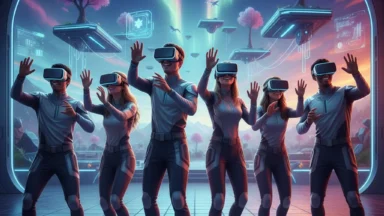
Beyond traditional media, cross-media integration is also leveraging emerging technologies like Augmented Reality (AR) and Virtual Reality (VR) to extend game narratives into the real world. Imagine a game where scanning a QR code in a real-world location unlocks a hidden quest in the game, or an AR app that overlays game lore onto historical landmarks, blurring the lines between fiction and reality.
VR experiences based on popular game universes offer unparalleled immersion, allowing players to step directly into beloved worlds and interact with characters in ways previously unimaginable. These interactive extensions not only deepen player engagement but also serve as powerful marketing tools, keeping the narrative universe alive and relevant across various touchpoints.
Community and Fandom Engagement
Transmedia storytelling also fosters incredibly strong community and fandom engagement. When a narrative spans multiple platforms, it creates more opportunities for discussion, theorizing, and collaborative exploration among fans. Players can share insights gained from different media, piece together clues, and collectively deepen their understanding of the universe. This collaborative aspect strengthens the community around the game, turning passive consumers into active participants in the narrative’s ongoing evolution.
By 2026, successful game franchises will almost certainly embrace a transmedia strategy, recognizing that the modern gamer seeks not just a game, but an entire universe to explore. These game storytelling innovations are transforming games into cultural phenomena that transcend their original medium, creating rich, layered experiences that captivate audiences across all forms of entertainment.
The Future is Now: Embracing Game Storytelling Innovations
The trajectory of game narratives is clear: towards greater immersion, personalization, and expansive world-building. The three game storytelling innovations discussed – AI-driven dynamic narratives, enhanced player agency and consequence systems, and cross-media integration – are not merely theoretical concepts but are already being implemented and refined by leading developers.
AI’s Role in Narrative Evolution
AI’s capacity to generate and adapt stories in real-time is perhaps the most transformative. It promises a future where games can genuinely respond to individual players, creating experiences that are uniquely tailored. This means that replayability will no longer just be about different difficulty settings or character builds, but about fundamentally different narrative journeys. The ethical implications and the technical challenges are significant, but the rewards—a truly personalized and endlessly surprising story—are too great to ignore. Developers are actively exploring how to harness AI’s power to maintain narrative coherence while still allowing for unparalleled dynamism. The goal is to make the player feel like the central figure in a story that is genuinely unfolding around them, rather than a character pushing through a pre-written script.
Consider the potential for character development. An AI could monitor a player’s interactions with NPCs, their moral choices, and their overall demeanor, and then subtly alter the personalities and responses of other characters in the game. This could lead to NPCs forming genuine attachments or grudges based on consistent player behavior, adding layers of depth that are currently difficult to achieve with static scripting. The emotional weight of these interactions would be immense, drawing players deeper into the game world.
The Weight of Player Choice
The emphasis on enhanced player agency is moving beyond simple A/B choices to complex, interwoven consequence systems. This means that every decision, no matter how small it seems at the moment, can have far-reaching implications. This encourages players to think critically, to consider the ethical dimensions of their actions, and to truly inhabit the role of their character. The emotional investment that comes from knowing your choices truly matter is a powerful driver of engagement, making players feel like genuine architects of their own destiny within the game world.
This level of agency also redefines what it means to ‘finish’ a game. With branching narratives that genuinely diverge, players might find themselves returning to a game multiple times to explore different paths and witness alternative outcomes. This not only extends the lifespan of a game but also fosters a deeper appreciation for the intricate design work that goes into creating such a responsive world. The sense of responsibility and impact can be profound, making the gaming experience more akin to interactive literature than traditional entertainment.
Expanding Beyond the Screen
Finally, cross-media integration is breaking down the walls between games and other forms of entertainment. It’s creating vast, interconnected universes that extend far beyond the confines of a single game. This not only broadens the appeal of game franchises but also offers fans multiple avenues to engage with their favorite stories and characters. The future of gaming is not just about playing a game; it’s about living within an expansive, multifaceted narrative universe. This approach acknowledges that modern audiences consume content across diverse platforms and seeks to provide a cohesive, enriching experience regardless of the medium.
Imagine a scenario where a pivotal character’s backstory is revealed in a graphic novel, which then provides a key clue to an in-game mystery. Or a live-action series that explores the sociopolitical ramifications of events depicted in the game, adding a layer of realism and depth. These interconnected narratives create a richer, more comprehensive world that fans can explore and discuss, fostering a vibrant and dedicated community. The synergy between different media amplifies the overall impact and longevity of the narrative.
Conclusion: A New Golden Age for Game Storytelling
As we look towards 2026, the US gaming culture is poised for a new golden age of storytelling. These game storytelling innovations are not just technological advancements; they are fundamental shifts in how narratives are conceived, developed, and experienced. They promise a future where games are more personal, more impactful, and more expansive than ever before.
Developers are no longer content with merely entertaining; they are striving to create experiences that resonate, provoke thought, and leave a lasting impression. From the adaptive intelligence of AI to the profound weight of player choice and the boundless possibilities of transmedia universes, the tools are in place to craft stories that will captivate, challenge, and inspire millions. The journey ahead for game narratives is exciting, and the innovations emerging today will undoubtedly shape the interactive stories of tomorrow, making every play a unique and unforgettable adventure.
The continuous innovation in this space means that the definition of a ‘game’ itself is expanding. It’s no longer just a challenge to be overcome, but a world to be explored, a story to be lived, and a character to be embodied. These advancements are not just for the hardcore gamer; they are making games more accessible and engaging for a broader audience, blurring the lines between gaming and other forms of immersive entertainment. By embracing these game storytelling innovations, the industry is not just building better games, but forging new frontiers in the art of storytelling itself.