The Cultural Impact of VR Gaming: What 10% Adoption Means for US Players by 2026
The world of entertainment and technology is in a constant state of flux, always pushing the boundaries of what’s possible. Among the most exciting and transformative advancements is virtual reality (VR), particularly its application in gaming. What was once the stuff of science fiction is now becoming an increasingly tangible and influential part of our daily lives. As we look towards 2026, projections indicate that VR gaming is on the cusp of reaching a significant milestone: 10% adoption among US players. This isn’t just a statistical blip; it represents a profound shift in the cultural landscape, redefining how Americans play, interact, and experience digital worlds. The cultural impact of VR gaming at this adoption level will be multifaceted, touching upon social dynamics, educational paradigms, economic opportunities, and even our understanding of reality itself.
For years, VR has been heralded as the next big thing, often met with a mix of excitement and skepticism. Early iterations were clunky, expensive, and lacked the compelling content needed to truly capture mainstream attention. However, with rapid advancements in hardware, more accessible price points, and a burgeoning library of high-quality games, VR is shedding its niche status. The 10% adoption rate in the US by 2026 suggests a critical mass, a point where VR gaming transitions from an enthusiast’s hobby to a recognized and integrated form of entertainment. This level of adoption will have ripple effects, creating new social norms, fostering novel communities, and challenging traditional media consumption patterns. Understanding the cultural impact of VR gaming at this juncture requires a deep dive into various aspects of society, from individual psychology to broad societal trends.
This article will explore the anticipated cultural shifts brought about by this significant increase in VR gaming participation. We will delve into how social interactions are being reshaped, the emergence of new forms of entertainment, the economic implications for developers and hardware manufacturers, and the broader societal changes that come with a more immersive digital experience. The journey of VR from a fringe technology to a mainstream phenomenon is a testament to human innovation and our enduring desire for new ways to connect and explore. The VR gaming culture is evolving rapidly, and its influence is only set to grow.
Redefining Social Interaction: The Rise of Virtual Communities
One of the most significant cultural impacts of VR gaming will be its profound effect on social interaction. As 10% of US players embrace VR, virtual spaces will become increasingly vibrant and populated. Unlike traditional online multiplayer games where interactions are often limited to text chat or voice communication over a flat screen, VR offers an unparalleled sense of presence. Users feel truly ‘there’ with others, embodied by their avatars, making social interactions far more natural and engaging. This enhanced presence facilitates deeper connections and more nuanced communication, mirroring real-world social dynamics to a degree previously impossible.
Imagine attending a virtual concert, playing a board game with friends scattered across the globe, or collaborating on a creative project, all within an immersive 3D environment. These aren’t futuristic fantasies; they are current realities within the VR ecosystem, and they will only become more common as adoption grows. The VR gaming culture is fostering the creation of entirely new social rituals and etiquette. Players are learning to navigate virtual body language, understand spatial audio cues, and build relationships with avatars that feel as real as their offline counterparts. This has implications for how we form friendships, maintain long-distance relationships, and even conduct professional meetings.
The rise of dedicated VR social platforms and games designed specifically for interaction will accelerate this trend. These platforms offer not just gaming experiences but virtual hangouts, event spaces, and creative hubs. As more people enter these spaces, the social fabric of the internet will begin to weave itself with threads of virtual reality. We might see the emergence of ‘virtual neighborhoods’ or ‘digital districts’ where communities form around shared interests, games, or even virtual real estate. This blurring of lines between physical and virtual social spaces will challenge traditional notions of community and belonging, creating a more interconnected, albeit digitally mediated, global society. The implications for social psychology and sociology are immense, as researchers begin to study how these new forms of interaction shape identity and well-being.
The Evolution of Entertainment: Beyond the Flat Screen
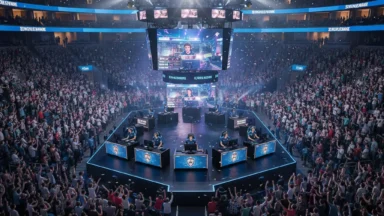
With 10% US adoption, VR gaming is poised to revolutionize the entertainment industry. For decades, gaming has primarily been a 2D experience, confined to screens. VR shatters this paradigm, offering immersive, 360-degree worlds that players can step into. This shift from viewing to experiencing fundamentally alters the nature of entertainment. Games are no longer just played; they are inhabited. This changes everything from narrative design to gameplay mechanics, pushing developers to innovate in unprecedented ways.
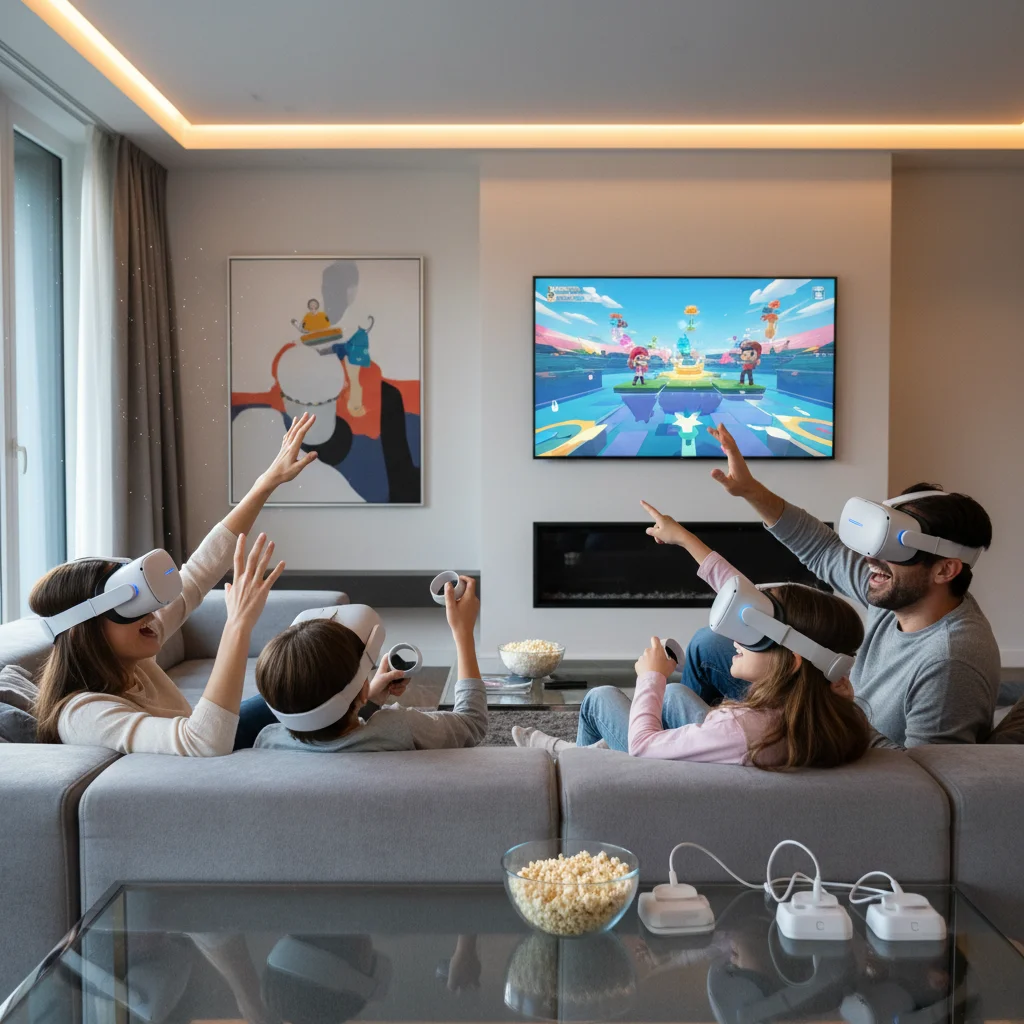
The genre landscape within VR is also expanding rapidly. Beyond traditional action and adventure titles, we are seeing the emergence of entirely new categories, such as ‘experience’ games that prioritize exploration and emotional resonance over combat, or ‘fitness’ games that turn exercise into an engaging virtual adventure. The appeal of VR extends to a broader demographic than often assumed, attracting not just hardcore gamers but also casual players seeking novel experiences. The accessibility of standalone VR headsets has been a major catalyst, removing the need for expensive PCs and intricate setups, thus lowering the barrier to entry for millions.
Furthermore, VR’s influence is spilling over into other forms of entertainment. We are already seeing VR concerts, interactive cinematic experiences, and virtual tourism applications. As the technology matures and adoption increases, these will become more commonplace, offering audiences new ways to consume media. Imagine attending a live concert from the best seat in the house, regardless of your physical location, or exploring ancient ruins with a virtual guide, all from the comfort of your home. This evolution of entertainment promises a future where passive consumption gives way to active participation, making every experience deeply personal and engaging. The VR gaming culture is leading this charge, demonstrating the potential for truly immersive digital entertainment.
Economic Ripples: New Industries and Job Markets
The 10% adoption rate of VR gaming in the US by 2026 will not just be a cultural phenomenon; it will also be a significant economic driver. This level of market penetration signals a maturing industry capable of sustaining larger investments and fostering innovation. We can expect to see a substantial growth in the VR hardware market, with increased competition leading to more powerful, comfortable, and affordable headsets. This will, in turn, drive down prices and further accelerate adoption, creating a virtuous cycle of growth.
The software development sector will also experience a boom. Game studios, both independent and AAA, will increasingly pivot towards VR content creation, leading to a demand for specialized talent in 3D modeling, VR interaction design, haptic feedback programming, and spatial audio engineering. This will create new job markets and educational pathways, as universities and technical schools begin to offer curricula tailored to the VR industry. Beyond gaming, the tools and techniques developed for VR games will find applications in other sectors, such as architectural visualization, medical training, and industrial design, further expanding the economic footprint of VR technology.
Moreover, the rise of virtual economies within VR games and social platforms presents entirely new economic opportunities. Players can buy, sell, and trade virtual goods, real estate, and services, creating a metaverse economy that mirrors and sometimes even transcends real-world markets. Content creators can monetize their creations within these virtual worlds, from designing custom avatars to building interactive environments. This entrepreneurial spirit within the VR gaming culture is fostering a new generation of digital artisans and business owners. Companies will also find new avenues for advertising, marketing, and brand engagement within these immersive spaces, leading to innovative business models and revenue streams. The economic impact will be far-reaching, transforming how businesses operate and how individuals earn a living in the digital age.
Addressing Challenges: Accessibility, Ethics, and Digital Divide
While the prospect of widespread VR gaming adoption is exciting, it also brings forth a set of challenges that need to be addressed. One primary concern is accessibility. Despite advancements, VR hardware can still be a significant investment for many, potentially creating a digital divide where only those with sufficient economic means can fully participate in the evolving digital landscape. Efforts to make VR more affordable and inclusive, perhaps through public access points or subsidized programs, will be crucial to ensure equitable participation in the burgeoning VR gaming culture.
Ethical considerations are another critical area. As VR experiences become more immersive and realistic, questions arise about the psychological impact of prolonged exposure to virtual worlds. Issues such as addiction, desensitization, and the blurring of lines between reality and simulation will require careful study and ethical guidelines. The potential for harassment and toxic behavior in virtual social spaces also needs robust moderation tools and community guidelines to ensure safe and welcoming environments for all users. Data privacy and security, always a concern in digital spaces, become even more pertinent when dealing with highly personal and immersive VR data.
Furthermore, the integration of VR into daily life raises questions about screen time and physical well-being. While VR fitness games promote activity, prolonged sedentary use of VR headsets could lead to physical strain or eye fatigue. Developers and users alike will need to practice responsible usage, balancing virtual engagement with real-world activities. Addressing these challenges proactively will be essential for the sustainable growth and positive cultural impact of VR gaming. It requires a collaborative effort from technology companies, policymakers, researchers, and the user community to build a VR future that is both innovative and responsible.
The Future of Storytelling and Education in VR
Beyond pure entertainment, the 10% adoption of VR gaming in the US by 2026 will significantly influence storytelling and education. The immersive nature of VR offers an unparalleled medium for narrative experiences. Imagine not just watching a story unfold, but being a character within it, making choices that directly impact the plot, and experiencing emotions with a visceral intensity. This level of engagement can transform how we consume stories, moving from passive observation to active participation. VR filmmakers and interactive storytellers are already experimenting with new narrative structures and techniques, pushing the boundaries of traditional media.
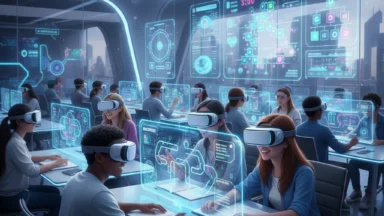
In education, VR holds immense potential to revolutionize learning. Complex scientific concepts can be visualized and interacted with in 3D, historical events can be relived, and surgical procedures can be practiced in a risk-free virtual environment. Students can embark on virtual field trips to distant lands or even to the surface of Mars, gaining experiential knowledge that textbooks simply cannot provide. The gamified nature of many VR educational applications makes learning more engaging and effective, catering to diverse learning styles. As VR becomes more accessible, schools and universities are likely to integrate it into their curricula, preparing students for a future where virtual skills are increasingly valuable.
The impact on skill development will also be profound. VR can be used for training in high-stakes professions, from aviation to medicine, allowing individuals to hone their skills in realistic simulations without real-world consequences. This practical application of VR, initially driven by gaming technology, will have a lasting effect on workforce development and professional training. The evolving VR gaming culture is not just about playing games; it’s about pioneering new ways to learn, create, and experience the world around us, blurring the lines between education, training, and entertainment.
The Blurring of Realities: Metaverse and Beyond
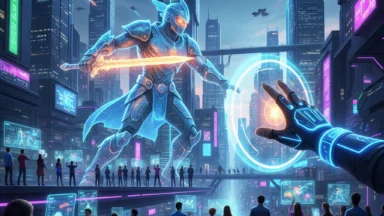
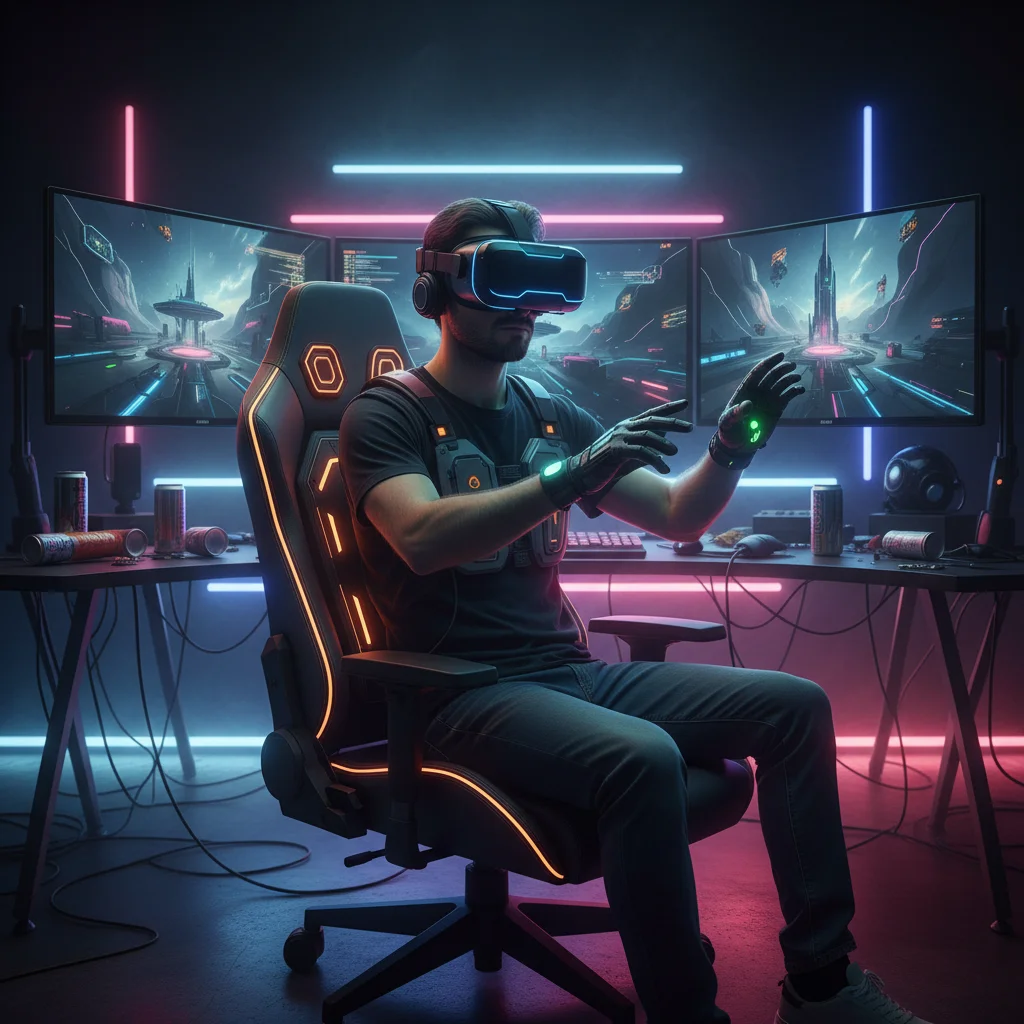
With 10% VR gaming adoption, the concept of the metaverse moves closer to becoming a tangible reality for a significant portion of the US population. The metaverse, often described as a persistent, interconnected network of 3D virtual worlds, is being built piece by piece, and VR gaming is a cornerstone of its foundation. As more people regularly enter these virtual spaces for entertainment, social interaction, and even work, the distinction between our physical and digital lives will continue to blur. This isn’t about replacing reality but augmenting it, providing parallel experiences that enrich and expand our human potential.
The cultural implications of this blurring are vast. Our identities might become more fluid, expressed through customizable avatars and virtual personas. Our sense of place could expand beyond geographical boundaries, as we regularly inhabit virtual spaces with people from all over the world. The very definition of ‘presence’ and ‘being together’ will evolve, encompassing both physical proximity and virtual co-presence. This shift will require new philosophical and psychological frameworks to understand its full impact on human cognition and societal structures. The VR gaming culture is at the forefront of this evolution, normalizing the idea of living a portion of our lives in virtual realms.
Looking beyond 2026, the trajectory of VR suggests an even deeper integration into society. As technology advances, VR headsets will become lighter, more comfortable, and eventually indistinguishable from regular eyewear. Haptic feedback suits could make virtual experiences tactile, and brain-computer interfaces might allow for even more direct interaction. While these advancements are further down the road, the 10% adoption rate in VR gaming by 2026 serves as a crucial stepping stone, preparing society for a future where virtual and augmented realities are woven into the very fabric of our existence. This cultural shift, initiated by gaming, will redefine how we perceive reality, interact with technology, and ultimately, how we live.
Conclusion: A New Era of Digital Engagement
The projected 10% adoption of VR gaming among US players by 2026 marks a pivotal moment in the evolution of digital culture. This isn’t merely a technological upgrade; it’s a fundamental shift in how we engage with entertainment, each other, and even ourselves. The VR gaming culture is a powerful catalyst, driving innovation across various sectors and reshaping societal norms at an accelerating pace. From redefining social interactions through immersive virtual communities to revolutionizing the entertainment industry beyond the flat screen, VR is proving to be far more than just a niche pursuit.
The economic ripples of this adoption will create new industries, generate specialized job markets, and foster innovative business models within nascent virtual economies. Simultaneously, it compels us to confront significant challenges related to accessibility, ethical considerations, and the potential for a digital divide. Addressing these issues proactively will be crucial to ensure that the benefits of VR are broadly shared and that its integration into society is responsible and equitable. Furthermore, VR’s transformative power extends to storytelling and education, offering unprecedented opportunities for immersive learning and narrative experiences that can profoundly impact personal development and skill acquisition.
As we move towards a future where the metaverse becomes an increasingly tangible reality, VR gaming is laying the groundwork for a blurring of physical and digital existences. This cultural impact is not just about enhancing leisure time; it’s about expanding human potential, redefining our understanding of presence, and creating new avenues for connection and exploration. The 10% adoption rate in 2026 is a clear signal: VR is here to stay, and its influence will continue to grow, shaping a new era of digital engagement that promises both exciting possibilities and complex considerations for the future of American culture.