Beyond VR Headsets: 5 Wearable Technologies Shaping Future Gaming in 2026
The gaming world is constantly pushing the boundaries of immersion, and while virtual reality (VR) headsets have certainly made their mark, the future of gaming extends far beyond bulky head-mounted displays. We are on the cusp of a revolution, where future gaming wearables will seamlessly blend the digital and physical, offering experiences previously confined to science fiction. By 2026, expect a paradigm shift as innovative wearable technologies redefine what it means to play.

How would you like to receive it?
Select the option that suits you best.
This article delves into five groundbreaking wearable technologies that are set to shape the future of gaming. From enhanced sensory feedback to direct brain-computer interfaces, these advancements promise to make gaming more intuitive, immersive, and truly unforgettable. Get ready to explore the cutting edge of interactive entertainment and see how these devices will transform your gaming sessions.
1. Advanced Haptic Feedback Suits and Gloves: Feeling the Game
Imagine not just seeing and hearing the action in a game, but truly feeling it. Advanced haptic feedback suits and gloves are poised to transform gaming by providing a tactile dimension that current controllers can only hint at. These sophisticated wearables go beyond simple vibrations, offering nuanced sensations that mimic real-world interactions.
Current haptic technology, often found in controllers, provides rudimentary feedback. However, the next generation of haptic suits and gloves integrates an array of micro-actuators and sensors across the user’s body and hands. This allows for localized and varied sensations, from the gentle patter of rain on your virtual character’s arm to the impactful recoil of a futuristic weapon. Picture a sword fight where you feel the clash of steel, or a stealth mission where you sense the texture of the wall you’re pressing against. This level of haptic immersion is critical for truly believable virtual environments.
The Evolution of Haptics for Future Gaming Wearables
The development of haptic technology is accelerating rapidly. Researchers are experimenting with different forms of feedback, including:
- Vibrotactile Feedback: More advanced than simple rumble, these systems can create varying frequencies and amplitudes to simulate different textures and impacts.
- Force Feedback: Gloves and suits that can resist movement or apply pressure, allowing users to feel the weight of a virtual object or the tension of drawing a bow.
- Thermal Feedback: Early prototypes are exploring ways to simulate changes in temperature, adding another layer of realism to environmental interactions within games. Imagine feeling the warmth of a virtual fire or the chill of a snowy landscape.
- Electrotactile Stimulation: While still in early stages for gaming, this involves using small electrical impulses to stimulate nerves, creating a wider range of sensations.
Companies like HaptX and Teslasuit are already at the forefront, developing full-body haptic suits that provide precise and powerful feedback. These suits are currently expensive and primarily aimed at professional training and enterprise applications, but as technology advances and production scales, we can expect more affordable and consumer-friendly versions to hit the gaming market by 2026. The integration of such advanced haptics will make every explosion, every touch, and every environmental effect in a game a visceral experience. This will be a cornerstone of future gaming wearables.
The impact on gameplay will be profound. For action games, the increased realism of combat and environmental interaction will elevate the adrenaline. In horror games, the ability to feel unseen threats or subtle changes in the environment will intensify fear and immersion. Even in more serene simulation games, the tactile feedback of interacting with objects or navigating virtual spaces will add a layer of authenticity that is currently missing. The future of gaming with haptic suits promises a deep, multisensory engagement that transcends traditional visual and audio cues.
2. Augmented Reality (AR) Glasses and Contact Lenses: Blending Realities
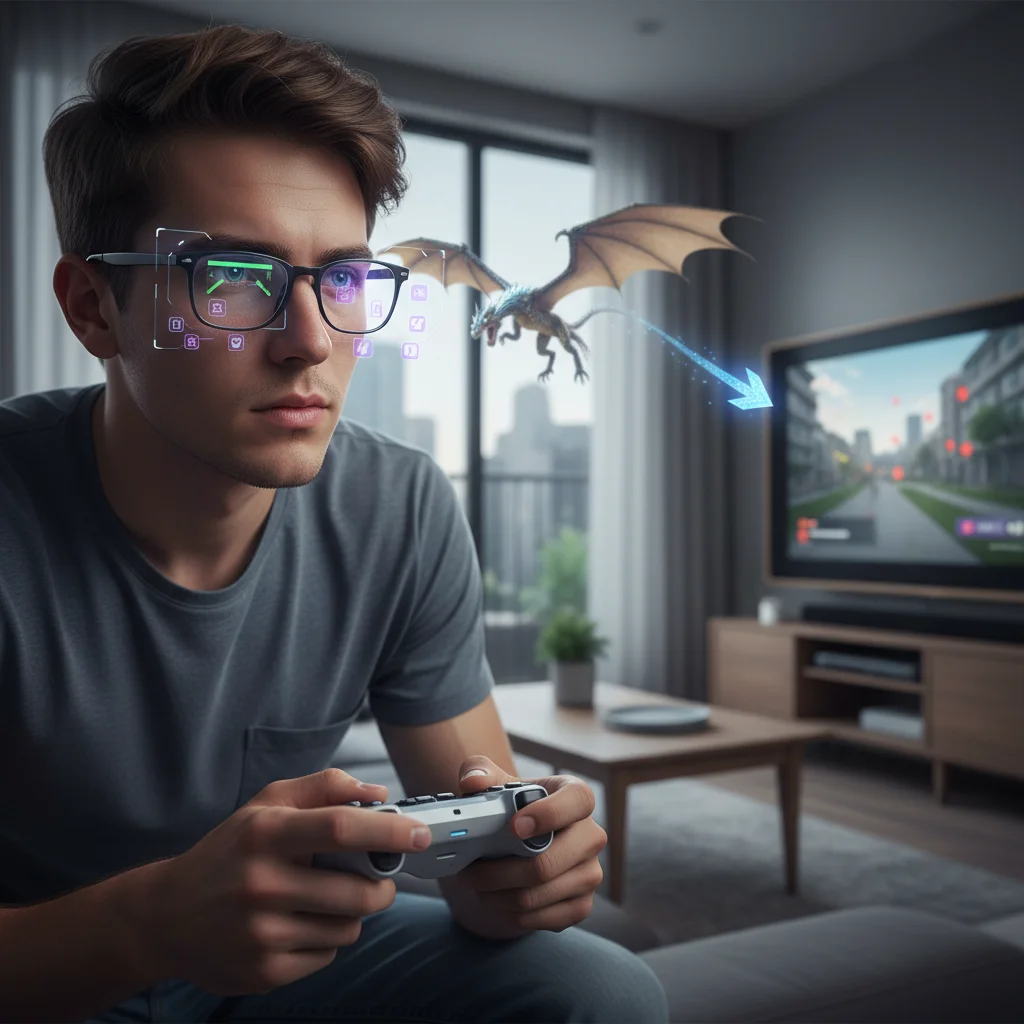
While VR aims to transport you entirely to another world, augmented reality (AR) seeks to enhance your current reality with digital overlays. AR glasses, and eventually AR contact lenses, are set to become pivotal future gaming wearables, offering a seamless blend of the physical and digital worlds for gaming experiences.
Imagine playing a strategy game where your living room table becomes the battlefield, complete with holographic armies and real-time data projected onto its surface. Or a treasure hunt game where virtual clues are scattered around your neighborhood, visible only through your AR eyewear. This isn’t just a distant dream; it’s rapidly becoming a reality. Companies like Magic Leap and Microsoft (with HoloLens) have already demonstrated the potential of AR glasses, albeit in early, enterprise-focused iterations. However, consumer-grade AR glasses are becoming sleeker, lighter, and more powerful.
The Promise of AR Contact Lenses for Future Gaming
The ultimate goal for AR in gaming is the development of AR contact lenses. These discreet devices would eliminate the need for glasses altogether, projecting digital information directly onto the wearer’s retina. This would offer an unparalleled level of immersion, making virtual elements appear as if they are truly part of the real world, without any peripheral device obstruction. The potential for AR gaming with contact lenses is immense:
- Ubiquitous Gaming: Games could be played anywhere, anytime, seamlessly integrated into daily life.
- Contextual Gameplay: Games could react to real-world environments, using location data and object recognition to create dynamic and personalized experiences.
- Social Gaming: Multiplayer AR games could allow friends to interact with the same virtual elements in a shared physical space.
- Enhanced Realism: Virtual characters and objects would appear more solid and integrated into the environment than through glasses, reducing the ‘screen door’ effect.
Challenges remain, particularly in power consumption, miniaturization, and eye safety for contact lenses. However, significant research and development are underway, driven by tech giants and innovative startups alike. By 2026, we can expect to see sophisticated AR glasses becoming common, with early prototypes of AR contact lenses beginning to emerge, paving the way for a new era of blended reality gaming. These devices will not just overlay graphics; they will understand and interact with the physical world, making them truly intelligent future gaming wearables.

3. Brain-Computer Interface (BCI) Headbands and Implants: Mind-Controlled Gaming
Perhaps the most revolutionary of all future gaming wearables, Brain-Computer Interfaces (BCIs), promise to revolutionize how we interact with games by allowing direct control through thought. While full neural implants are still some years away from mainstream consumer gaming, non-invasive BCI headbands are already demonstrating incredible potential.
BCIs work by detecting and interpreting brain activity, often through electroencephalography (EEG) sensors. These signals can then be translated into commands for a game. Imagine moving your character, casting spells, or navigating menus simply by thinking about it. This level of direct control eliminates the need for physical controllers, creating an unprecedented connection between player and game world. Early applications of BCI in gaming have focused on simple commands, but as the technology matures, the complexity of achievable actions will increase exponentially.
Non-Invasive BCI Headbands Leading the Way
Companies like Neurable and Emotiv are developing advanced EEG headbands that can detect various brain states and intentions. These devices are becoming more accurate and user-friendly, moving beyond medical applications into consumer electronics. For gaming, this means:
- Enhanced Accessibility: BCI can open up gaming to individuals with physical disabilities, allowing them to participate fully in virtual worlds.
- Intuitive Control: Imagine a game where your character reacts to your fear or excitement, or where you can perform complex actions with a mere thought, making gameplay more fluid and natural.
- Deeper Immersion: The psychological connection fostered by direct thought control will deepen immersion, making players feel truly integrated into the game’s narrative and challenges.
- Adaptive Difficulty: BCIs could potentially monitor player frustration or engagement levels, dynamically adjusting game difficulty or content to optimize the experience.
While invasive BCIs (implants) like those being developed by Neuralink offer even greater precision and bandwidth, ethical considerations and the need for surgical procedures mean they are unlikely to be mainstream gaming devices by 2026. However, non-invasive BCI headbands will continue to advance, offering increasingly sophisticated control options and a glimpse into the truly mind-bending future of mind-controlled gaming. The integration of such powerful future gaming wearables will blur the lines between thought and action in the digital realm.
4. Biometric Feedback Wearables: Games That Respond to You
Beyond external controls, the next wave of future gaming wearables will focus on internal data: your body’s own responses. Biometric feedback wearables, such as smartwatches, rings, and specialized sensors, will monitor your heart rate, skin conductivity, gaze, and even emotional state, allowing games to dynamically adapt to your physiological and psychological reactions.
Imagine a horror game that becomes scarier as your heart rate rises, or a puzzle game that subtly adjusts its difficulty based on your frustration levels. This personalized and adaptive gameplay creates a truly unique experience for each player. These wearables, often in the form of discreet rings, wristbands, or even embedded into existing gaming peripherals, gather real-time data that can be fed directly into game engines.
How Biometric Data Enhances Future Gaming Wearables
The applications of biometric feedback in gaming are vast and exciting:
- Dynamic Difficulty Adjustment: Games can become harder when you’re relaxed and confident, or easier when you’re stressed, maintaining optimal engagement.
- Personalized Narrative: Storylines could branch or characters could react differently based on your emotional state, creating a deeply personal narrative journey. For instance, a game might detect fear and trigger a jump scare, or sense relaxation and offer a moment of calm.
- Health and Wellness Integration: Gamified fitness challenges could use real-time heart rate data to ensure you’re in your target zone, blending entertainment with personal health goals.
- Enhanced Immersion: When a game responds to your genuine physiological reactions, the sense of being ‘present’ in the game world intensifies dramatically. The game is no longer just something you interact with; it’s something that interacts with you on a fundamental, biological level.
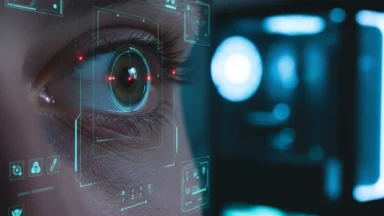
- Gaze Tracking: Advanced eye-tracking sensors, integrated into AR/VR headsets or even standalone wearables, can determine where a player is looking. This allows for incredibly intuitive interactions, such as targeting enemies with a glance or highlighting points of interest simply by looking at them.
While some current wearables offer basic heart rate monitoring, the future involves more sophisticated sensors and algorithms capable of inferring emotional states and cognitive load. Companies like Affectiva are already exploring emotion AI, which could be integrated into gaming platforms. By 2026, expect to see biometric gaming becoming a significant trend, with games that are not just played, but truly experienced and adapted to your unique self. These future gaming wearables will make games feel more alive and responsive than ever before.
5. Olfactory and Gustatory Wearables: Scent and Taste in Gaming
To achieve ultimate immersion, gaming needs to engage all five senses. While sight, sound, and touch are well on their way to being fully integrated, the senses of smell (olfactory) and taste (gustatory) represent the next frontier for future gaming wearables. Though still in early stages, significant research is being poured into devices that can stimulate these often-overlooked senses.
Imagine exploring a lush virtual forest and catching the scent of damp earth and pine, or walking through a futuristic city and smelling ozone and synthetic spices. For taste, consider a cooking simulation where you can actually sample the virtual dishes you create, or an adventure game where a magical potion has a distinct, simulated flavor. These additions would add an unparalleled layer of realism and depth to gaming experiences.
Pioneering Olfactory and Gustatory Experiences for Future Gaming
Current developments in olfactory wearables often involve small, localized scent emitters that can be attached to VR headsets or worn as necklaces. These devices contain cartridges of various scent compounds that can be precisely mixed and released on demand. Researchers are working on smaller, more efficient systems with a wider range of scents. For gustatory experiences, the technology is even more nascent, often involving electrical or thermal stimulation of the tongue to create basic taste sensations (sweet, salty, bitter, sour).
While full-spectrum scent and taste replication is a long-term goal, by 2026, we can anticipate:
- Basic Scent Integration: Select immersive games, particularly VR/AR titles, may begin to incorporate a limited range of environmental scents to enhance atmosphere and emotional impact. Think the smell of gunpowder in a shooter or blooming flowers in a fantasy world.
- Early Gustatory Experiments: Specialized peripherals might offer rudimentary taste sensations for specific in-game events, such as consuming a health potion or trying a virtual food item. These will likely be more symbolic than truly realistic initially.
- Enhanced World-Building: The addition of these senses will significantly contribute to the believability and richness of virtual worlds, making them feel more tangible and alive.
- New Gameplay Mechanics: Imagine puzzles that require identifying scents, or quests that involve tracking down specific flavors. This opens up entirely new avenues for game design.
The challenges include miniaturization, safety, and the sheer complexity of replicating the vast array of scents and tastes. However, the potential for truly multisensory gaming is a powerful driver for innovation. As these future gaming wearables mature, they will provide a level of immersion that transcends our current understanding, making virtual worlds indistinguishable from reality in terms of sensory input. The integration of olfactory gaming and gustatory gaming will mark a significant leap forward in interactive entertainment.
The Road Ahead for Future Gaming Wearables
The landscape of gaming is undergoing a profound transformation, moving rapidly beyond the confines of traditional screens and even current VR headsets. The convergence of advanced hardware, sophisticated AI, and innovative design is paving the way for a future where gaming is not just an activity, but an all-encompassing experience. By 2026, the five categories of future gaming wearables discussed above – advanced haptics, AR glasses/lenses, BCIs, biometric feedback, and olfactory/gustatory devices – will fundamentally alter how we interact with digital worlds.
These technologies are not developing in isolation. The true power lies in their synergy. Imagine a game where you wear AR contact lenses to see virtual elements overlaid on your real environment, while haptic gloves allow you to feel those elements, and a BCI headband lets you control them with your thoughts. Your biometric data adjusts the game’s intensity, and subtle scents enhance the atmosphere. This integrated approach will create a sensory tapestry that makes the digital world indistinguishable from the physical, or perhaps even more captivating.
Challenges and Opportunities in the Era of Future Gaming Wearables
Of course, the journey is not without its hurdles. Miniaturization, battery life, processing power, and affordability remain significant challenges. Ethical considerations around data privacy for biometric and BCI devices, as well as the potential for sensory overload or addiction, will also need careful navigation. However, the immense opportunities for creativity, accessibility, and unprecedented immersion are driving relentless innovation.
Developers will need to rethink game design from the ground up, moving beyond flat screen paradigms to create experiences that fully leverage these new sensory inputs. Storytelling will evolve, becoming more personal and reactive. The lines between player and avatar, and between reality and game, will become delightfully blurred.
The future of gaming is not just about better graphics or faster processors; it’s about deeper connection, richer sensation, and more profound engagement. The future gaming wearables of 2026 are set to deliver just that, promising an era where gaming transcends entertainment and becomes a truly transformative experience. Get ready to step into a new dimension of play.